Reporting snapshot · 9 November 2026 (Asia/Karachi). The changes were announced after a review meeting on 8 November, but no notification, bank circular or start date has been published. The markup rate, collateral requirements and the mechanism for enforcing the 30 per cent quota for women remain unspecified, and the disbursement totals are government figures that have not been independently audited.
What changed
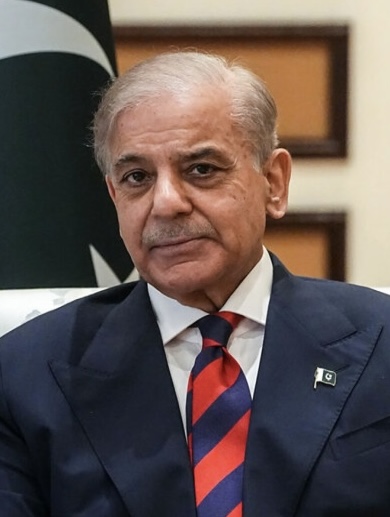
Prime Minister Shehbaz Sharif raised the maximum individual loan under the Prime Minister’s Youth Business Loan Scheme and the Prime Minister’s Youth Agriculture Loan Scheme from Rs7.5 million to Rs25 million, and directed that the minimum age for applicants be reduced from 21 to 18, at a review meeting in Islamabad on Sunday, 8 November. The Prime Minister’s Office said the loans would be repaid in easy instalments, according to The Express Tribune and Pakistan Today.
The meeting also directed that 30 per cent of the loans under the programme be reserved for women, and asked the Small and Medium Enterprises Development Authority (SMEDA) to provide young applicants with start-up guidance, consultancy and technical assistance. The prime minister ordered a nationwide awareness campaign to explain the schemes. Finance Minister Muhammad Aurangzeb, Special Assistant to the Prime Minister on Youth Affairs Rana Mashhood Ahmed Khan and Special Assistant on Political Affairs Talha Burki attended, according to both reports.
The numbers behind the decision
The government has allocated Rs292 billion for the two schemes in the 2026-27 financial year and estimates that about 266,700 young people will receive loans from that amount, the meeting was told. Since January 2023, 581,341 people have received loans worth Rs313.9 billion, a beneficiary count the government says is ten times the number recorded over the preceding decade.
Those totals put the new ceiling in context. Rs292 billion spread across 266,700 borrowers works out to an average of roughly Rs1.1 million per loan, well below even the previous Rs7.5 million cap. The Rs313.9 billion disbursed since 2023 averages about Rs540,000 across 581,341 borrowers. Raising the ceiling therefore changes the top end of the programme rather than the size of the typical loan, and the government has not said how many borrowers it expects to use the larger limit.
The figures also describe a programme that has grown quickly. The comparison with the previous decade is the government’s own, and the briefing did not publish a year-by-year breakdown, default rate or the share of loans that went to businesses rather than agriculture. The 266,700 figure for this year is a target, not a record of disbursements.
Why the ceiling matters
A higher maximum matters most to borrowers whose plans are too large for the old cap: a small manufacturer buying machinery, a food processor adding cold storage, or a farm business financing irrigation and equipment. For those applicants, the constraint has been the size of the loan relative to the investment, not only the interest rate.
The wider problem the programme addresses is access to formal credit. Small firms in Pakistan often borrow from informal sources or not at all, and lenders cite collateral, documentation and the cost of assessing small loans as reasons to stay out. The International Finance Corporation and Habib Metropolitan Bank set up a risk-sharing facility in February specifically to encourage more SME and agricultural lending by sharing part of the loss on eligible loans, as KhabarWire reported. A larger ticket size can make a loan more attractive to a bank, but it does not by itself resolve the collateral or documentation barriers.
The 30 per cent reservation for women addresses a separate gap. The State Bank of Pakistan said this month that financial inclusion had reached 71 per cent and that the gender gap had narrowed to 27 per cent, though the published accounts of the governor’s remarks did not give the male and female rates behind the headline, as KhabarWire reported. A quota sets an allocation target; whether it changes lending practice depends on how banks market the scheme and how applications from women are assessed.
Lowering the age floor to 18 widens the pool to university-age applicants and people entering the workforce directly after intermediate college. It also puts more borrowers with little or no credit history into a programme that relies on banks to screen applications, which makes the assessment process more important.
What is still unclear
The first unknown is implementation. Neither report says when the new ceiling and age floor take effect, whether banks have been notified, or whether applications submitted under the old rules will be reconsidered. Until a circular or product update appears, the decisions are directions from the prime minister rather than terms a branch can apply.
The second is cost. The reports give the loan ceiling and the size of the allocation but not the markup rate, the subsidy, if any, or the tenor of the loans. They also do not say whether the Rs292 billion is new money or the existing allocation restated. Without those details, the fiscal cost of lending at the new ceiling cannot be calculated.
The third is credit risk. A larger maximum loan concentrates more exposure in individual borrowers, and the programme’s default and recovery figures have not been published. Banks may respond by asking for more collateral or guarantors, which would limit who can use the new limit. The government has not said whether it will guarantee a share of the larger loans.
The fourth is the women’s quota. It is not clear whether the 30 per cent applies to each scheme, to each bank, or to the programme as a whole, or what happens if applications from women fall short. Nor is it clear how SMEDA’s support will be funded or delivered across districts.
What to watch
The next signals are administrative rather than political: a notification from the Finance Division or the State Bank, revised product sheets from the participating banks, and the first disclosures of loans made at the new ceiling. The programme’s own reporting will show whether the average loan rises or whether, as the 2026-27 target implies, most borrowers continue to take amounts closer to Rs1 million. The government has said it will review implementation again; the useful test is whether the larger limit reaches borrowers who could not previously finance their plans, and whether the women’s quota changes the share of lending that goes to them.