Reporting snapshot · 18 September 2026. The Security Council vote took place on 17 September 2026 (New York time) and was carried by Pakistani outlets on 18 September. Because Russia and China vetoed the resolution, the panel's mandate — already inoperative for about a year — will lapse on 26 September unless the council changes course. The practical consequence for Pakistan's mediation of the US–Iran file was not yet clear when this article was published.
What happened
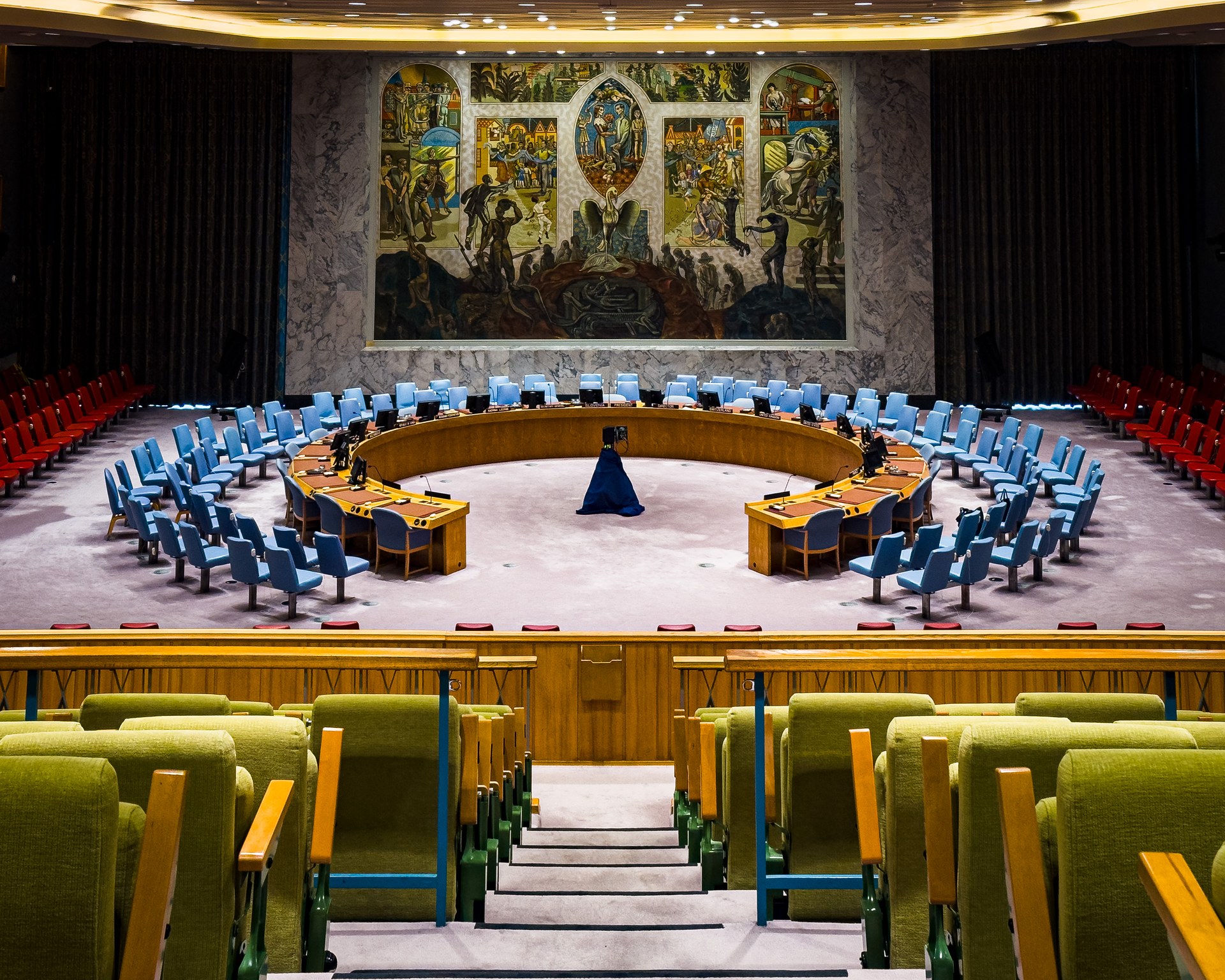
The United Nations Security Council failed on Thursday to renew the mandate of the Panel of Experts that monitors UN sanctions on Iran, after Russia and China vetoed a United States-drafted resolution. Eleven of the council’s 15 members voted in favour; Pakistan and Somalia abstained, and the two permanent members’ negative votes defeated the text.
The panel was established in 2010 to help the Security Council’s 1737 Committee investigate alleged sanctions violations, illicit transfers and evasion, and to recommend further action. Its current mandate was due to expire on 26 September, but the body has not been operational for about a year because the council could not reach the consensus required to appoint its experts. The United States said the vetoes would leave what it called a monitoring gap; the UN Meetings Coverage account of the meeting recorded several members warning that the council now loses “its principal source of impartial, evidence-based reporting on sanctions violations”.
The dispute over ‘snapback’
The vote was the latest round in a long-running argument over whether the UN measures against Tehran are legally in force at all. In 2015, the council endorsed the Joint Comprehensive Plan of Action through resolution 2231 (2015), which offered sanctions relief in exchange for limits on Iran’s nuclear programme and included a “snapback” mechanism designed to restore UN sanctions automatically in the event of non-compliance. The United States withdrew from the deal in 2018, and Iran later reduced its commitments.
In September 2025, as the ten-year framework neared its end, France, Germany and the United Kingdom cited alleged non-compliance and said the snapback mechanism had been triggered. The UN Secretariat subsequently said the previously lifted sanctions were re-applied on 27 September 2025. Russia and China dispute that position, arguing that the snapback was never validly invoked and that resolution 2231 “terminated” on 18 October 2025, when the council’s consideration of the Iranian nuclear issue had, in their view, ceased. The council has been deadlocked over the question ever since, with the same 11–2–2 split appearing at procedural votes in March, June, July and earlier in September, according to the UN’s meeting summary.
After Thursday’s vetoes, Russia’s UN ambassador, Vassily Nebenzia, urged Western colleagues to stop “very dangerous actions on the Iran front”, saying the only way to resolve disagreements over Iran’s nuclear programme was through political and diplomatic efforts. Washington’s deputy ambassador, Jennifer Locetta, countered that without an independent panel the council loses its principal source of impartial reporting on sanctions violations, “creating a monitoring gap that only benefits the Iranian regime and those who profit from evading those measures”. Iran’s UN mission thanked Moscow and Beijing for blocking what it called a “politically motivated” draft, Al Jazeera reported.
Why Pakistan abstained
Pakistan’s permanent representative, Ambassador Asim Iftikhar Ahmad, explained the abstention in detail after the vote, saying Islamabad remained concerned that the Iran nuclear issue had become further complicated over time. “We have clearly come a long way from the spirit of cooperation and peaceful settlement of disputes that characterised the adoption of resolution 2231 more than a decade ago,” he said, according to The News International.
He recalled that in September 2025 the council had faced two options: continuing the termination of sanctions as envisaged under the JCPOA, or a six-month technical extension of resolution 2231 to create more space for diplomacy. “Regrettably, a non-consensual path was chosen with far-reaching consequences that have since continued to reverberate in this chamber and beyond,” he said, in remarks reported by Reuters and carried by The Express Tribune. Pakistan, he added, “continues to believe that diplomacy and dialogue remain the guiding principle for resolution of outstanding issues concerning Iran’s nuclear programme”, and he voiced support for the International Atomic Energy Agency (IAEA) as the technical body “implementing the respective safeguards agreement… independently and without political interference”.
The abstention sits inside a larger Pakistani diplomatic project. The United States and Israel went to war with Iran in February, and Islamabad has spent months trying to broker a settlement, culminating in the Islamabad Memorandum of Understanding, an accord whose final text Pakistan’s prime minister said was agreed in June. Ambassador Ahmad closed his explanation by calling on all parties to implement the Islamabad MoU, return to the negotiating table, and “allow diplomacy to deliver for the sake of regional and international peace and security”. By abstaining rather than voting, Pakistan kept out of both the Western-backed majority and the Russian-Chinese veto bloc, a stance consistent with its repeated public insistence that it backs neither confrontation nor sanctions escalation and prefers to preserve room for negotiation.
What is still uncertain
With the veto, the panel’s mandate will expire on 26 September, and the 1737 Committee remains effectively paralysed: it has been unable for months even to agree on its subsidiary body chairs, let alone staff an expert panel. The underlying sanctions remain in place on the Western reading, but there is now no UN-appointed body tasked with independently verifying violations and recommending action.
The IAEA, which operates under a separate safeguards framework, remains the principal independent source of technical reporting on Iran’s nuclear programme, and Pakistan’s envoy explicitly endorsed its role. Whether the end of the UN panel changes the practical enforcement picture, or affects the stalled US–Iran negotiations that Pakistan has been trying to revive, was not answered in the council meeting. Iran’s mission welcomed the outcome as a blow to what it called Washington’s politicisation of the Security Council; Western members called it a loss for oversight. Both characterisations capture the same fact: the Security Council is now divided, and its Iran sanctions committee has no functioning independent watchdog.
Sources & reporting notes
This is a synthesis of published material, not eyewitness reporting. Sources were reviewed on 18 September 2026.
- UN Meetings Coverage — Security Council Fails to Renew Iran Sanctions Panel amid Dispute over 'Snapback'17 September 2026 · Primary record of the vote, the 11–2–2 result, and Pakistan's statement in explanation of its abstention.
- The Express Tribune (Reuters) — Pakistan abstains as China, Russia veto Iran sanctions monitoring resolution18 September 2026 · Independent report of the veto and the full text of Pakistan's explanation of vote.
- The News International — Pakistan abstains as Russia, China block UN Iran sanctions panel renewal18 September 2026 · Independent report of Pakistan's position, the panel's expired status, and the February US–Israel–Iran war context.
- Al Jazeera English — Russia, China veto UN mandate to monitor Iran sanctions17 September 2026 · Independent international report on the vote, the monitoring gap, and Iran's response.
- The Hindu (AP) — Russia, China veto U.S. proposal for UN experts to keep monitoring sanctions on Iran18 September 2026 · Independent wire report confirming the vote and the legal dispute over 'snapback'.