Reporting snapshot · 4 October 2026 (Asia/Karachi). This article covers the diplomatic response to the 2 October border killing near Kasur. Pakistan lodged its protest on Saturday, 3 October, and India issued a counter-statement the same day. Both accounts are official positions; neither has been independently verified, no independent reconstruction of the border incident has been published, and neither government has released the evidence behind its version of events.
What happened
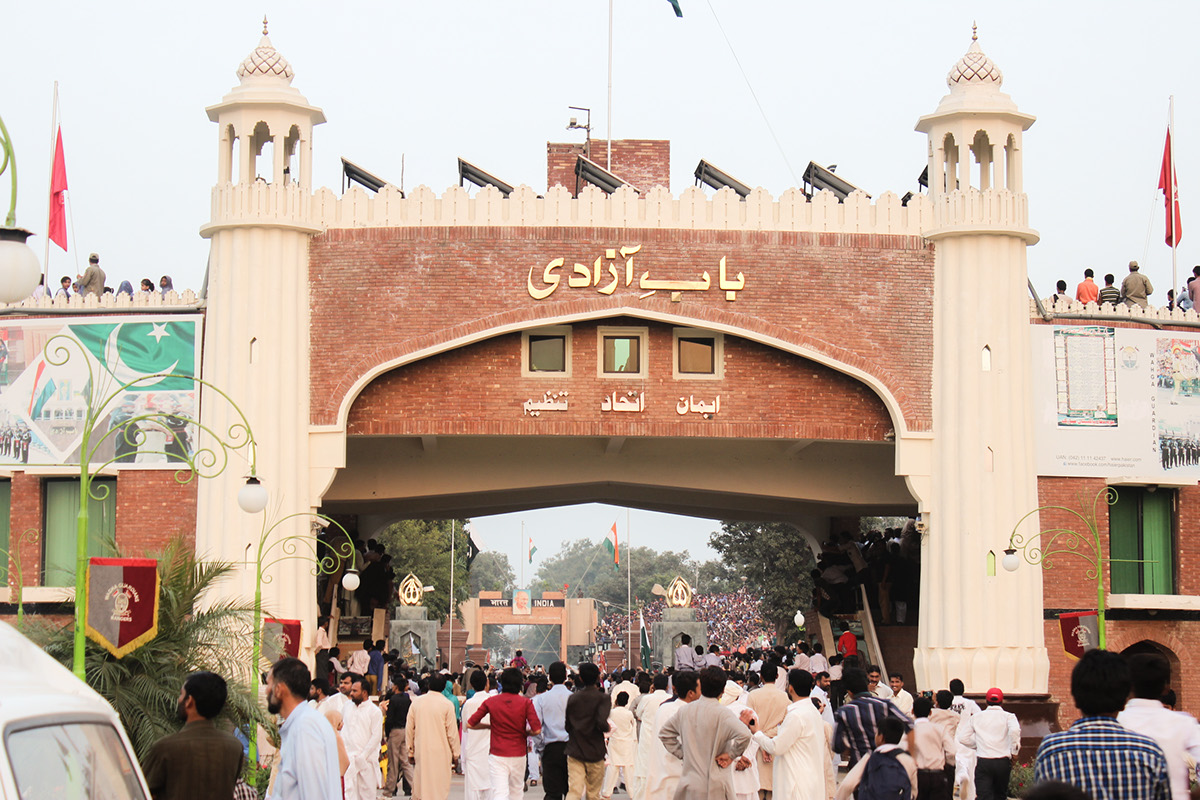
Pakistan’s Ministry of Foreign Affairs (MoFA) summoned India’s Chargé d’Affaires in Islamabad on Saturday, 3 October, and lodged a formal protest over the killing of two unarmed Pakistani civilians by Indian Border Security Force (BSF) personnel in the Bedian sector of the Pakistan-India international border, a day after the shooting near Kasur in Punjab. The state broadcaster and security sources named the dead as Azmat Rasool and Mohsin Jutt, both residents of Jattan Wali Haveli in Ladhar village, and said a third man was wounded and taken to hospital. KhabarWire reported the incident on 3 October, at which point no protest had been confirmed.
The Foreign Office statement, carried by The Express Tribune and Geo News, said the BSF “resorted to unprovoked lethal force against unarmed civilians”, describing the use of force as “wholly unjustified and grossly disproportionate”. Pakistan, it added, “categorically rejects any attempt to mischaracterise the deceased as ‘infiltrators’”.
Islamabad said the incident amounted to a serious violation of fundamental human rights, including the right to life, and raised concerns about the protection of civilians under international law. It called on India to conduct an “immediate, transparent and credible investigation”, to take disciplinary and legal action against those found responsible, and to formally communicate its findings and the action taken to the Government of Pakistan. It also urged New Delhi to observe established border procedures, exercise “maximum restraint” and take steps to prevent a recurrence.
The account of what happened rests on Pakistani security sources, as relayed by the state broadcaster and reported by Pakistani outlets. Those sources said the three men had moved a few steps beyond a border pillar and were fired on without warning, and that none had tried to cross the border fence. No independent on-the-ground verification of that sequence has been published.
India’s counter-statement and counter-summon
India rejected the Pakistani account. Its Ministry of External Affairs called the allegations “baseless and motivated”, according to Al Jazeera, and said it had in turn summoned the Chargé d’Affaires of the Pakistan High Commission to protest what it described as “the continued facilitation of illegal cross-border infiltration from Pakistan”.
India’s version is that three people crossed into Indian territory in the Ferozepur sector of Punjab and continued moving towards the border fence despite repeated warnings from the BSF to turn back. “The BSF was compelled to engage them for posing an imminent security threat,” the Indian ministry said. It further said the episode reflected “a clear pattern of repeated cross-border movement by armed narcotics syndicates operating from Pakistan”, and urged Islamabad to investigate cross-border infiltration and drug-smuggling activity. Pakistan Today separately carried Pakistan’s statement in full.
The two accounts agree on the location — the border near Kasur — and on the fact that two people died and a third was hurt. They differ on almost everything else: whether the men were civilians or infiltrators, whether they crossed the boundary or merely approached a pillar, whether they were warned, and whether the BSF fired without provocation or in response to an imminent threat.
Why the exchange matters
The reciprocal summonses are the most visible diplomatic step either side has taken since the shooting. They matter because the channel is narrow: India and Pakistan have not exchanged ambassadors since New Delhi revoked Jammu and Kashmir’s special status in August 2019, and the two missions have since been headed by chargés d’affaires. A protest delivered to a chargé d’affaires is, in practice, the highest routine form of bilateral complaint available without an ambassador in place.
The protest lands in a week of heightened friction. On 1 October, India’s Shanghai Cooperation Organisation (SCO) envoy arrived in Islamabad for national-coordinator meetings as Pakistan prepares to host the SCO summit — a rare instance of Indian official participation in a Pakistan-hosted forum. On 2 October, the Inter-Services Public Relations (ISPR) director-general presented a retired Special Services Group soldier as alive, in a Pakistani rebuttal of an Indian claim that he had been killed in a staged encounter in Indian Illegally Occupied Jammu and Kashmir (IIOJK). Pakistan framed that episode as an Indian “false flag”; India has not accepted that characterisation. On the same weekend, the two countries traded accusations again at a United Nations General Assembly committee over Kashmir, following their right-of-reply exchange in September.
For residents of the Kasur border belt, the practical question is whether the frontier stays calm enough for farmers and villagers to work near the fence, and whether the two militaries use their flag-meeting mechanism to lower the temperature. For the wider relationship, the test is whether a fatal border episode is contained as a local incident or folded into the broader dispute over Kashmir, water and cross-border militancy that has kept the two nuclear-armed neighbours at odds since April 2025, when an attack in Pahalgam killed 26 civilians and triggered a four-day military confrontation that was halted by a ceasefire.
What is still uncertain
Several things remain open. First, the facts of the shooting: neither government has published evidence, no independent investigation has been reported, and the exact position of the three men relative to the border pillar is disputed. Second, India’s response to Pakistan’s demand for an investigation: New Delhi has not said whether it will open one, and its public position is that its forces acted against a security threat. Third, the condition of the wounded man, whose name and medical status have not been released. Fourth, whether either side will request a border flag meeting or use existing military-to-military contacts, and whether the incident is treated as a one-off or as part of a pattern.
Also unresolved is the effect on the diplomatic calendar. The SCO summit that Pakistan is preparing to host would be one of the largest gatherings of foreign leaders in the country in years, and the presence of Indian officials has already been a delicate point. Whether the Kasur killing and the parallel protests change that calculation is not yet clear. Until evidence is published or the two sides meet, the episode should be read as a fast-moving, attributed dispute rather than a settled account.
Sources & reporting notes
This is a synthesis of published reporting and official statements, not eyewitness reporting. Sources were reviewed on 4 October 2026 (Asia/Karachi). The Pakistani account rests on the Foreign Office statement as reported by Pakistani outlets; the Indian account rests on the Ministry of External Affairs statement as reported by Al Jazeera. Neither government has published the underlying evidence.
- The Express Tribune — FO summons Indian envoy over civilian killings4 October 2026 · The Foreign Office statement in full: the BSF's "unprovoked lethal force" against unarmed civilians, the rejection of the "infiltrators" label, and Pakistan's demand for an investigation and formal communication of the findings.
- Geo News — Pakistan lodges 'strong protest' with India over civilians' killing in unprovoked firing3 October 2026 · The summons of India's Chargé d'Affaires, the victims' names and village, the security-source account that the men were unarmed and fired on without warning, and the human-rights framing of the protest.
- Al Jazeera — Pakistan, India summon diplomats after two people killed in border incident3 October 2026 · India's counter-statement: the rejection of the Pakistani account, the reciprocal summons of Pakistan's Chargé d'Affaires, the Ferozepur-sector infiltration claim, the "imminent security threat" justification and the armed narcotics syndicates allegation.
- Pakistan Today — Pakistan summons Indian diplomat over killing of two civilians at Kasur border3 October 2026 · Independent corroboration of the Foreign Office summons, the Bedian-sector location, the victims' details and the full set of demands made to India.