Reporting snapshot · 29 October 2026. Drug inspectors have not said how much vaccine was recovered, where it was found or who the two suspects are, and no laboratory result has been published, so the scale of the counterfeit trade is still unknown. The federal cabinet has also not yet approved revised maximum retail prices for the two multinational influenza vaccines, which DRAP officials say is why those products cannot be imported.
What happened
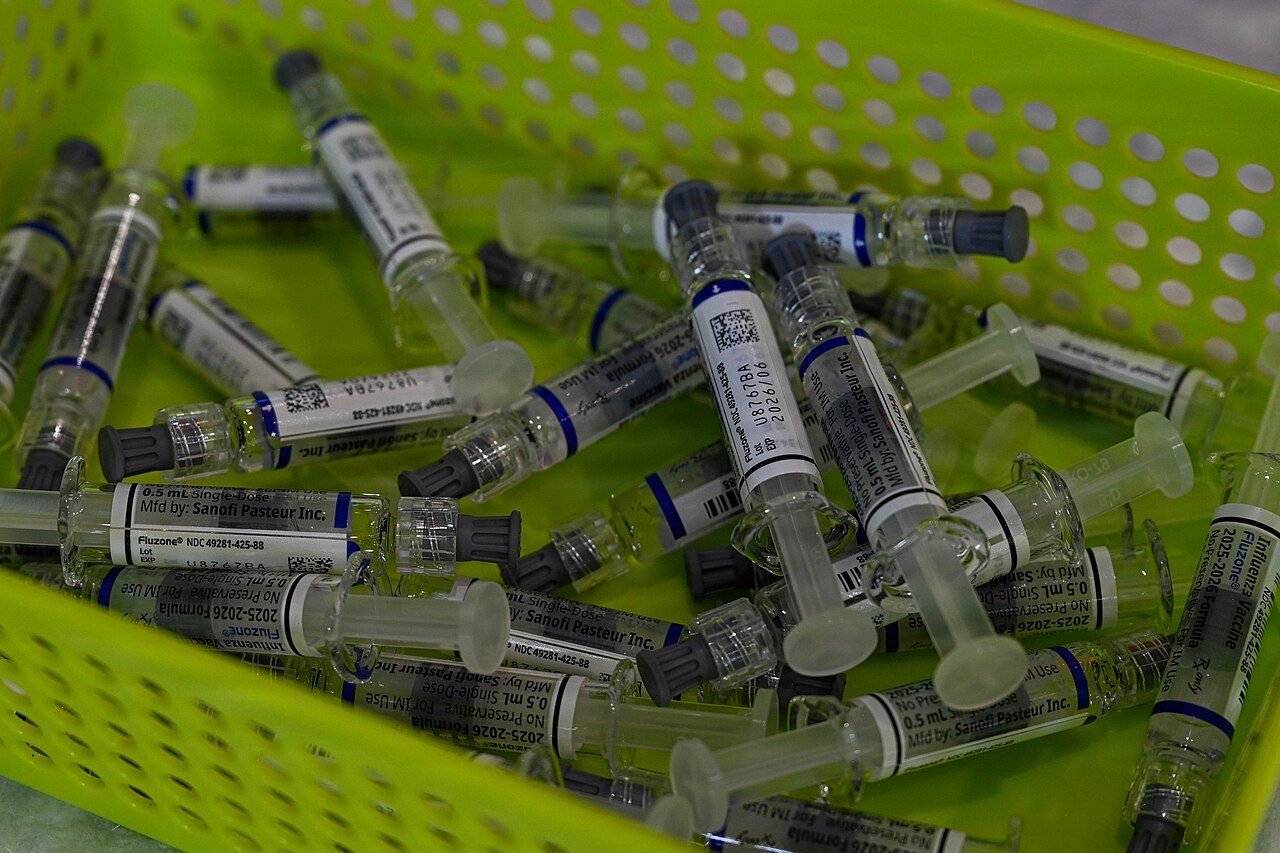
Drug inspectors in Lahore have seized a large stock of suspected counterfeit flu vaccines, with two suspects apprehended on the spot during the raid, an official said, in a seizure Geo News reported on 29 October. The official did not disclose the location of the raid, the quantity recovered or the identities of the two men, and said the investigation was continuing, with a first information report to be registered against the accused under the Drugs Act, 1976.
The same official, at the office of the Chief Drug Controller Punjab, said the shortage of genuine doses extends to vaccines from every major supplier. Multinational flu vaccines from two companies might reach the market only in limited quantity towards the end of November or in December, and Chinese-made vaccines, which would normally fill part of the gap, are also unavailable because their limited stocks have been exhausted.
The official urged the public to buy flu vaccines only from licensed pharmacies, and advised buyers to confirm that the cold chain has been maintained, to check the batch number and to verify the manufacturer’s seal. Geo News also reported that The News International, citing drug control officials, said spurious vaccines have flooded the gap left by the missing stock.
Why the doses are missing
The shortage runs through price approval rather than through any failure of supply. Drug Regulatory Authority of Pakistan officials told Geo News that the regulator determined the proposed price in December last year and forwarded the matter to the federal health ministry, after which it passed through government committees but has still not received final approval from the federal cabinet. Two multinational companies’ vaccines could not be imported for that reason.
Federal Health Minister Mustafa Kamal rejected reports of a flu vaccine shortage when Geo News spoke to him on 23 October, saying vaccines remained in the market despite the absence of particular multinational brands. “The flu vaccine is present in the market, and there are several brands of flu vaccines available,” he said, and noted that one brand had refused to continue selling at the existing price and sought an increase that “may well be justified.”
Medical store owners in Lahore told Geo News that flu vaccines were largely unavailable, with only a Chinese-manufactured vaccine reaching the market in limited quantities, and that the constrained supply pushed the price of a vaccine previously available for Rs1,200 to Rs1,640.
The pricing dispute has since widened. Dr Musadik Malik said on 24 October that DRAP had been asked to reassess some of its 52 drug pricing proposals, including the proposed increase in influenza vaccine prices, after a review uncovered inconsistencies in price calculations and reference costs. The review found the landed cost reflected in the latest shipment of seasonal influenza vaccines was considerably lower, raising questions about the justification for the higher proposed retail price, and revised recommendations were to go to the federal cabinet for final approval.
The government’s position was restated in a Radio Pakistan report on 26 October, when Minister for Economic Affairs Ahad Cheema chaired a meeting in Islamabad. Officials briefed him that the trivalent flu vaccine recommended by the World Health Organization was available in sufficient quantities in the market, and Cheema said any increase in prices without valid justification was unacceptable.
In a separate procurement failure in the same week, the health ministry scrapped its ‘flawed’ vaccine tender and dismantled the Border Health Services vaccination setup used for pilgrims and overseas job seekers, and confirmed that officials who had floated the unauthorised tender had been arrested. The ministry said the new procurement tender for meningococcal meningitis and influenza vaccines for overseas travellers would be issued within a month. That contract, awarded as a public-private partnership, was the subject of a five-member inquiry ordered by the prime minister after allegations that it raised the cost to about Rs4,500 per pilgrim from around Rs1,250 a dose.
What the surge looks like
Karachi hospitals are already treating a rising number of flu patients as winter sets in. Aga Khan University Hospital has recorded about 400 influenza cases this year, The Express Tribune reported on 29 October, while Civil Hospital is receiving 70 to 80 patients with flu-like symptoms every day, a number that has nearly doubled in recent days, with more than ten suspected influenza cases reported there each month.
Professor Faisal Mahmood, who heads infectious diseases at AKUH, said the H1N1 strain of influenza was circulating in Karachi, and cautioned that the reported figures do not reflect the full extent of the outbreak because diagnostic tests were reserved for patients with more severe illness. Medical experts have warned that cases could increase further by the end of the year.
Pakistan Today reported that children, elderly people and patients with underlying medical conditions were considered particularly vulnerable to complications from the virus, and a separate report noted that doctors had advised residents to wear face masks and maintain physical distance.
What is still uncertain
The seized stock has not been publicly tested and the official declined to say how much was recovered or from where it was bought, so it is not yet established how large the counterfeit trade is, or whether the suspect doses were genuinely influenza vaccine. The two suspects have been arrested and an FIR is expected under the Drugs Act, but no charges have been reported.
Two further questions remain open. The cabinet still has to approve revised maximum retail prices for the multinational influenza vaccines before those products can be imported, and the minister’s rejection of a shortage has not been withdrawn even as drug inspectors report a shortfall across every supplier. Separate supply pressures are also unresolved: Parliamentary Secretary Nelson Azeem told the National Assembly that an insulin shortage linked to an imported product from Germany had cut Pakistan’s supply from 3,500 kits to 1,000.
The regulatory gap is also unfinished. A cabinet decision in June required a nationwide medicine track-and-trace system with 2D barcodes to curb exactly this problem, and DRAP has separately asked the telecom authority to block websites and accounts selling unregistered and smuggled medicines. The medicines whose prices remain unnotified, including a block of 40 registered drugs, are still held off the market by the same stalled approval chain.