Reporting snapshot · 30 October 2026 (Asia/Karachi). The announcement was made at the inauguration on Thursday, 29 October, and the facility's operating date, budget and staffing have not been published, so the arrangement may change before beds are filled. The main limitation is that no document has been released: the government has said an audit will be commissioned but has not named who will carry it out or when.
What the government decided
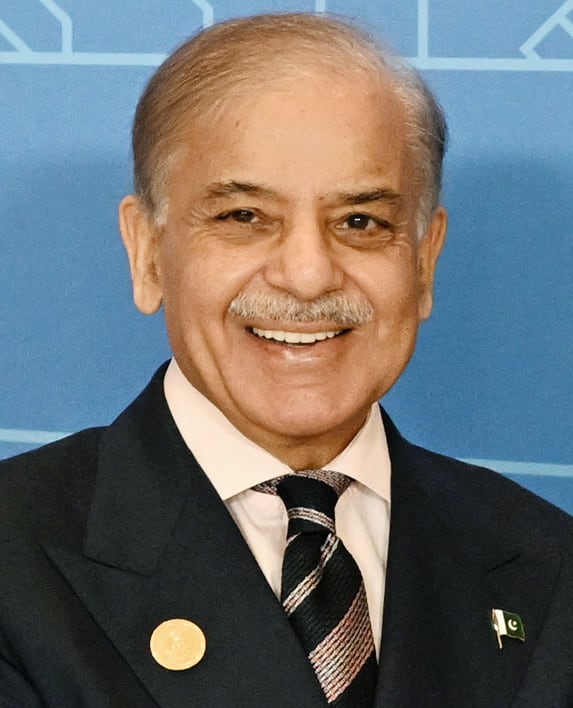
Prime Minister Shehbaz Sharif inaugurated the revamped Pakistan-China Friendship Hospital in Islamabad on Thursday, 29 October, and directed the authorities to ensure free, quality healthcare for patients, Pakistan Today reported on Friday from a statement issued by the prime minister’s office. The Express Tribune reported the same decision, that the government will bear 100 per cent of treatment costs at the 182-bed facility.
The hospital has 182 beds, including 50 intensive care beds, and is expected to take patients from Islamabad and Rawalpindi as well as Khyber Pakhtunkhwa, Gilgit-Baltistan and Azad Jammu and Kashmir, the Express Tribune reported. Under the arrangement, the government finances patient care while the Indus Hospital and Health Network (IHHN) provides management and medical expertise under a public-private partnership, Pakistan Today reported.
The prime minister also ordered a third-party performance audit of the hospital, the Express Tribune reported, a step he framed as a way of making the facility a benchmark for other public institutions.
How a COVID-19 gift became an idle hospital
The building was not built as a general hospital. China gifted it to Pakistan during the Covid-19 pandemic as the Isolation Hospital and Infectious Treatment Centre, and it served its purpose only for as long as the pandemic did. Pakistan Today reported that once the emergency subsided, the facility became non-operational and stayed closed for years.
Shehbaz said at the ceremony that he took immediate notice after reading a newspaper report about the hospital’s condition and directed Federal Minister for National Health Services, Regulation and Coordination Syed Mustafa Kamal to restore it, Pakistan Today reported. He described the closure as a painful example of neglect towards poor and vulnerable patients, and apologised to Chinese Ambassador Jiang Zaidong and the people of China for the years the facility stood unused.
The hospital’s name nearly went another way, on the prime minister’s account. He said it had been designated Margalla Hospital when the bids for its management were opened, and that he then changed the nameplate, deciding it would be known permanently as the Pakistan-China Friendship Hospital, Pakistan Today reported.
Who runs it, and who pays
The management contract is the part of the decision with the longest history behind it. Shehbaz said his experience of hospitals run by the Indus network had convinced him that entrusting public facilities to competent organisations improves service delivery, efficiency and accountability, Pakistan Today reported. He pointed to the Recep Tayyip Erdogan Hospital in Muzaffargarh, which he handed to Indus Hospital in 2010-11, and to hospitals in Multan and Lahore.
Dr Abdul Bari Khan, chief executive of the Indus Hospital and Health Network, said the network runs 15 hospitals, 140 primary healthcare clinics, four blood centres and four physical rehabilitation centres, serving roughly 700,000 patients a month, Pakistan Today reported. He said the organisation’s annual budget had grown from Rs1 billion in its first year to Rs68 billion this year, with about 70 per cent of the total raised inside Pakistan, and that the network planned to open a blood centre in Islamabad.
The ambassador welcomed the inauguration, saying the facility had been transformed from an isolation hospital into a general hospital under the prime minister’s attention, Pakistan Today reported. Jiang also referred to Pakistan’s economic indicators - reserves, exports, foreign direct investment and credit ratings - and expressed China’s wish to advance cooperation under the second phase of the China-Pakistan Economic Corridor.
What the hospital is meant to do
Health Minister Syed Mustafa Kamal said the capital’s population has grown substantially since the hospital was built, and that patients from Gilgit-Baltistan, Khyber Pakhtunkhwa, Azad Jammu and Kashmir and Rawalpindi still travel to Islamabad for treatment, Pakistan Today reported. He said 182 beds would ease pressure on other facilities, and that a separate 200-bed cancer hospital at the Pakistan Institute of Medical Sciences had been prepared and was expected to become operational next year.
The health ministry’s recent record gives the audit order some context: after a nursery fire at PIMS killed 14 newborns in August, the government suspended eight officials and ordered criminal proceedings, and ordered fire-safety audits of public-sector hospitals. The revived hospital is a separate federal facility in the same capital, under the same ministry, and the audit order shows the government extending that scrutiny to a building it has just handed to a private operator.
The wider health relationship with China is also being deepened in parallel: Pakistan and China signed a medical cooperation memorandum in Beijing in May.
What is still uncertain
No document has been published. The government has not released the annual budget it negotiated with the Indus network, the size of the clinical team, or a date from which outpatient and inpatient services will actually begin. The Express Tribune reported that the prime minister said he negotiated a discount on the annual running and capital expenditure, but no figure has been made public.
The audit has been ordered without a name, a scope or a timetable. Neither outlet reported who will conduct it, whether it will cover staffing and procurement as well as clinical standards, or when its findings will be made public.
There is also no published answer on what “free” covers. The commitment is to bear 100 per cent of treatment costs, but neither report details whether diagnostics, medicines, implants and long-stay charges fall inside that promise for every patient, or whether access to free treatment will be limited in any way.
And the hospital’s own history is the reason for caution. Pakistan Today quoted the prime minister’s assessment that the facility had become completely redundant once the pandemic ended. Restoring a building is generally quicker than staffing it with specialists and keeping it supplied, so the pace at which the 182 beds open, and whether they stay open, remains the open question in the decision announced on Thursday.