Reporting snapshot · 28 September 2026. This article reflects what Suparco officials told Reuters and what the agency has confirmed publicly by 28 September. Neither the winning pilot nor a launch date has been announced, and the timeline could still move.
What happened
Two Pakistani pilots are training in Beijing for a short-duration mission to China’s Tiangong space station, and a decision on which of them will fly is expected in mid-to-late October, Pakistan’s national space agency has said.
Reuters reported on 28 September that the two men, Zeeshan Ali and Khurram Daud, have spent months at the China Astronaut Research and Training Centre learning Mandarin, working in centrifuge drills, and practising how to eat, sleep and repair equipment in weightlessness. The account, based on interviews with two Suparco officials, was the first detailed briefing the agency has given to foreign media since the pilots were selected and deployed to China.
The report quotes Amer Gilani, who oversees human-spaceflight cooperation at the Space and Upper Atmosphere Research Commission (Suparco), saying that China has not disclosed which pilot will fly or when, but that a final selection decision is expected in mid-to-late October. Uzair Ansari, Suparco’s director of artificial intelligence, told Reuters that the choice reflects a rare mix of skills: the pilots were screened for medical fitness, psychological resilience and a tolerance for the high g-forces of launch and re-entry that few scientists possess.
The names of the two candidates were first confirmed publicly in April 2026, when Suparco and the China Manned Space Agency (CMSA) announced that both had cleared multiple rounds of selection. KhabarWire’s April report on the named candidates set out the selection process; the new briefing adds detail on what the training involves and when the flight crew will be decided.
What the mission involves
The Pakistani flyer will serve as a “payload specialist” rather than as a pilot, Ansari said — a role focused on running Pakistan’s science experiments in orbit rather than operating the spacecraft.
Gilani told Reuters that Suparco received more than 300 experiment proposals from universities in Karachi, Lahore and Islamabad over a year-long campaign, and that Chinese institutes selected four for the mission: biotechnology experiments intended to help address food insecurity and climate change. Each is built and pre-tested in Suparco’s own laboratories before Chinese engineers sign off, Ansari added — an arrangement he described as a rare case of Pakistani technology being validated on an international platform.
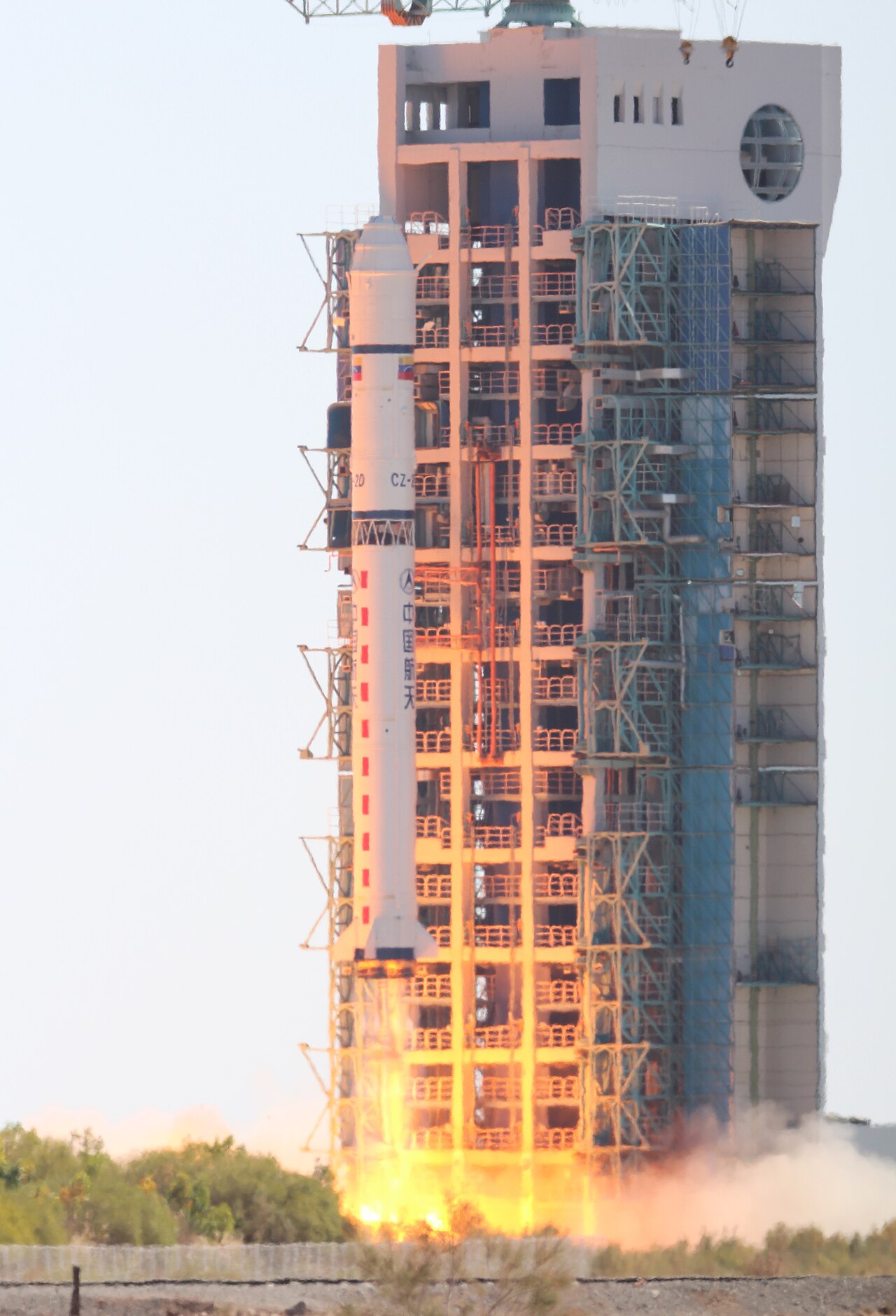
The stay itself will be short, about a week, compared with the roughly six-month rotations served by career Chinese crew members. The Pakistani astronaut is to fly on a Chinese-built spacecraft from a Chinese launch site, communicate in Mandarin, and return to Earth alongside two members of a Chinese crew that arrived at the station in May, Gilani said. The third member of that crew is expected to remain on the station for a year to support research into long-duration human physiology in space.
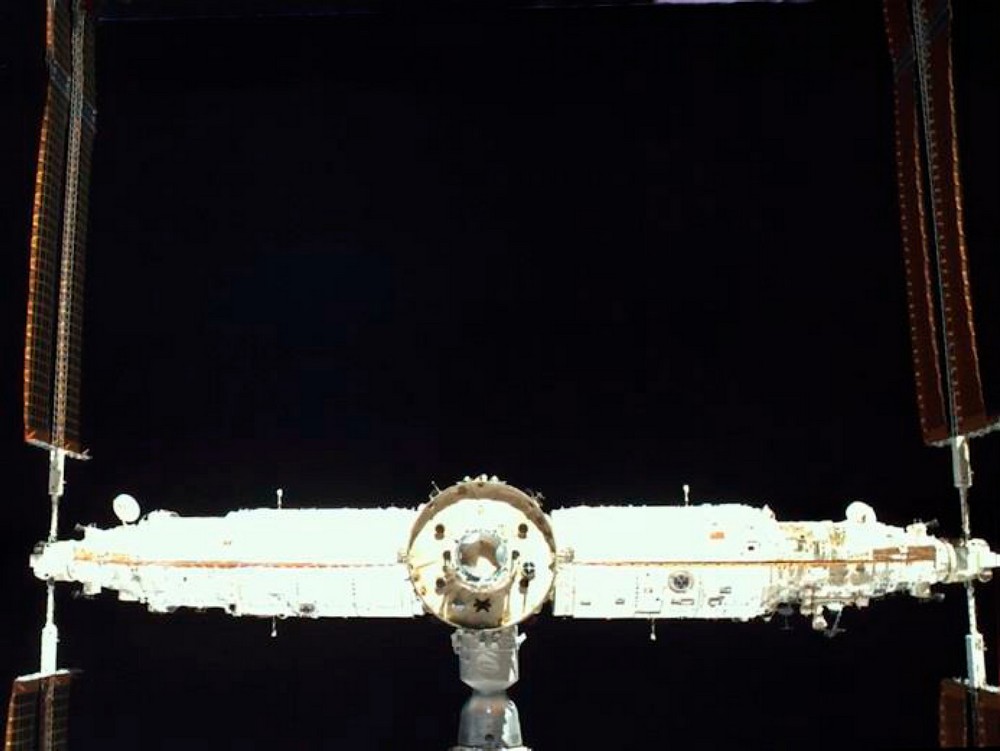
Gilani put the station’s three modules — Tianhe, Wentian and Mengtian — at about 77 metric tons combined, with roughly 14 experiment racks spanning life sciences, materials, fluid physics, combustion and radiation exposure, including some mounted outside the station.
Why it matters — and what it depends on
If it proceeds, the mission would be Pakistan’s first human spaceflight and the first time China has carried a foreign astronaut on one of its own crewed spacecraft. Since Yuri Gagarin’s flight in 1961, citizens of about 50 countries have reached space, but only Russia, the United States and China have launched their own crewed vehicles.
The flight sits within a broader pattern of China–Pakistan space cooperation that spans the Belt and Road Initiative: Chinese-launched Pakistani satellites, a joint satellite-navigation system, and a Pakistani-built rover due to fly on China’s Chang’e 8 lunar mission around 2028. KhabarWire has reported on the naming of that rover, Jinnah-1, which is intended to use AI-based stereo imaging to navigate the lunar surface.
The Reuters account also makes plain the asymmetry of the arrangement. Pakistan has no independent launch vehicle or crewed spacecraft of its own, so the mission depends on Chinese hardware, trainers, launch facilities and language. Asked whether Islamabad had secured any promise to send an astronaut to the Moon under the same partnership, Gilani said there was “no official commitment or discussion on this matter”, adding that what follows will depend on how the first mission performs.
What is still uncertain
Several core facts remain open. Neither Suparco nor CMSA has named the pilot who will fly, and no launch date has been published. CMSA did not respond to a request for comment from Reuters about the selection process, the wire reported, and there has been no separate Chinese confirmation of the October timeline.
Much of the Pakistani coverage of the story is the same Reuters copy carried by domestic outlets, rather than independent reporting, and Suparco has not published a standalone English-language statement with the same details. The “about a week” duration and the composition of the return crew rest on Gilani’s account; they have not been independently confirmed. The four experiment areas are described in general terms, without published experiment titles or principal investigators.
What can be said with confidence is narrower: two pilots are in training, one will be chosen, and the decision is due within weeks. Everything beyond that — the flight date, the final science manifest and the mission’s outcome — remains to be confirmed.
Sources & reporting notes
This is a synthesis of published material, not eyewitness reporting. Sources were reviewed on 2026-09-28. The Reuters report was read in full through two allowlisted Pakistani republications (Geo News and The Express Tribune), which carry the same wire text; Reuters' own page was not directly retrievable from this environment.
- Reuters — China's space diplomacy lifts Pakistani astronaut toward orbitPublished 28 September 2026 · Primary wire report: the Reuters exclusive by Saad Sayeed and Ariba Shahid, carrying the first Suparco briefing to foreign media on the pilots' training, the payload specialist role, the four experiments and the expected mid-to-late October selection.
- Geo News — Pakistan's space dream nears liftoff as China prepares to choose first astronautPublished 28 September 2026 · Full text of the Reuters report as carried by an allowlisted Pakistani outlet; supports the training details, the four experiment areas, the station's module and rack figures, and the "no official commitment" response on a future Moon mission.
- The Express Tribune — China's space diplomacy lifts Pakistani astronaut toward orbitPublished 28 September 2026 · Independent allowlisted republication used to cross-check the same claims, including the roughly 20 finalists, the g-force screening rationale and the about-one-week mission duration.
- The News International — Pakistan astronaut likely to join China's short-term space missionPublished 30 October 2025 · Background: the Suparco–CMSA cooperation agreement, the two-candidate training plan and the payload-specialist designation that underlie the 2026 selection.