Reporting snapshot · 2 November 2026. The tokenisation plan is at a pre-approval stage: no cabinet decision, request for proposals or transaction terms have been published. The main limitation is that the finance minister spoke in a virtual keynote and the government has not released a full transcript or timetable; the industry's estimates of Pakistani crypto users and exposure are also unverified.
What happened
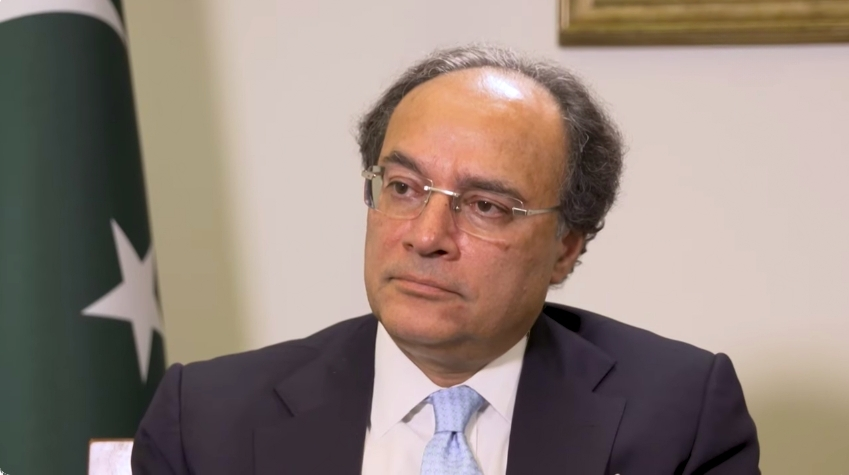
Finance Minister Muhammad Aurangzeb said on Monday, 2 November, that the government is reviewing whether to tokenise Pakistan’s existing Eurobond debt and will seek cabinet approval before inviting proposals for the work.
“We are in discussions at this point in time, and we are looking forward to the Cabinet approval on this before we move ahead with issuing the RFP on this front,” he said in a virtual keynote to the “Dialogue on Digital Assets and the Future of Banking”, organised by the Pakistan Banks’ Association and LUMS, The Express Tribune reported.
An RFP, or request for proposals, is the formal stage at which a government asks firms to set out how they would deliver a project. Aurangzeb’s wording places the Eurobond plan before that point: the idea is under discussion inside the government, and cabinet approval would be needed before the finance ministry publishes terms or invites bidders. The announcement adds a specific procedural step to a tokenisation discussion that had previously been described in broader terms.
He presented tokenisation as one part of a wider digital-finance agenda rather than an end in itself. The test, he said, should be whether a family can receive money from abroad more cheaply, whether a business can be paid sooner, whether an entrepreneur can obtain financing on reasonable terms, and whether Pakistan can attract productive investment without compromising financial stability.
Remittances are the second use case he named. Pakistan received $41.6 billion in remittances in the previous fiscal year, and inflows in the first quarter of the current year suggested the total could exceed $44 billion this year, he said. That flow, he argued, makes remittances a natural candidate for tokenised settlement.
Aurangzeb also drew distinctions that matter for regulation. A tokenised bank deposit remains a claim on a bank, while a stablecoin’s risk depends on its issuer, backing and redemption arrangements, and an unbacked cryptoasset carries a different set of risks, he said. A regulatory approach should reflect those differences and the economic activity behind each product.
Pakistan has already begun to build that framework. The Virtual Assets Act 2026 created the Pakistan Virtual Assets Regulatory Authority, known as PVARA, to license and supervise virtual-asset service providers. Aurangzeb said the State Bank of Pakistan has provided a conditional route for banking services to businesses licensed by PVARA, subject to due diligence and the segregation of client funds, while restrictions on banks investing, trading or holding virtual assets with their own funds or customer deposits remain in place.
Separately, the president of Asia Web3 Alliance Japan, Hinza Asif, said Pakistan needs a unified industry body to safeguard digital-asset investors and to improve coordination with international cryptocurrency exchanges, The News reported.
Asif pointed to Pakistan’s third place in the 2025 Global Crypto Adoption Index compiled by Chainalysis, and to estimates of about 40 million crypto-linked accounts and digital-asset exposure of between $10 billion and $20 billion. She acknowledged that those figures had not been officially verified as individual investor numbers.
She said the reported multibillion-dollar breach at Binance had exposed the absence of an organised mechanism to represent Pakistani users if an international exchange faces a cybersecurity or financial crisis. The extent of that incident and its impact on Pakistani investors remained unclear and required independent verification, she said.
Asif welcomed PVARA’s regulatory role and described an industry association as complementary: the regulator would act within its legal mandate, while a representative body could give fintech companies, blockchain businesses, technology professionals and investors a channel to raise concerns with policymakers. She called for a national digital finance platform, reliable market research, a coordinated investor grievance mechanism, cybersecurity awareness and formal partnerships with international industry organisations.
Why it matters
Pakistan relies on external financing, and Eurobonds are one of the instruments the government uses to raise foreign currency. In September 2026 it raised $3 billion through a dual-tranche Eurobond issue with maturities of five-and-a-half and 10 years, as KhabarWire reported. Tokenising existing bonds would not by itself reduce the debt. It could, in theory, change how the debt is held and traded: ownership could be recorded on a blockchain, transfers could settle faster, and smaller or overseas investors could buy into instruments that are usually traded in large blocks.
For Pakistan, the most concrete potential gain is access to its diaspora. The government has already been exploring tokenised sovereign notes for overseas Pakistanis, and PVARA has taken the tokenisation agenda to the World Bank, KhabarWire reported in October. Remittances are a larger and more regular source of foreign exchange than bond issuance, and lowering the cost of sending money home would reach households directly.
The plan also carries risks that the announcement did not address. Tokenised instruments depend on custody, settlement and identity systems that must work across borders. If the legal claim on the underlying bond is not clear, or if the platform holding the token fails, investors could face losses that are difficult to enforce in a Pakistani court. The finance minister’s distinction between tokenised deposits, stablecoins and unbacked cryptoassets is a starting point for regulation, but it does not settle how a tokenised government bond would be treated in insolvency, tax or securities law.
The Binance episode has made the investor-protection question more urgent. Binance reopened withdrawals this week after about $6.3 billion was taken from its wallets, and customers pulled roughly $3.6 billion in net outflows, as KhabarWire reported. Pakistan’s crypto market is large by adoption but thin on official data. PVARA licenses and supervises service providers; Asif’s proposal addresses a different gap, arguing that no industry body currently represents Pakistani users in dealings with offshore exchanges.
That is the gap Asif’s proposal tries to fill. A unified body could collect complaints, publish verified data and give Pakistani users a counterpart when an exchange changes withdrawal rules or suffers a breach. It could also give regulators a single interlocutor. But an industry body funded and governed by the companies it represents would face the same conflict-of-interest questions as any self-regulatory organisation, and its authority would depend on whether PVARA and the government recognise it.
What is still uncertain
The government has not published the cabinet memo, the draft RFP, a timetable or the legal structure of the proposed tokenisation. It is not clear whether the plan would cover the September 2026 Eurobonds, earlier bonds or only future issuance; whether it would create a new digital instrument or a tokenised wrapper around existing debt; how existing bondholders would be treated; and which institution would oversee trading, custody and settlement.
The finance minister credited the State Bank and the Securities and Exchange Commission of Pakistan with helping to develop the existing regulatory framework, but did not set out which institution would oversee trading, custody and settlement of a tokenised bond. Cross-border tokenised bonds would raise questions about which country’s law governs the token, how foreign investors are identified, how taxes are withheld and what happens if a platform operator becomes insolvent. None of those details was part of his public remarks.
The industry’s numbers are another limitation. The claim that Pakistan has about 40 million crypto-linked accounts and $10 billion to $20 billion in exposure is an estimate, not an official count. The government has not said how many Pakistani residents used Binance, how much they held there or whether they have been repaid. Binance has said it covered most of the stolen assets, but the allocation to Pakistani customers has not been disclosed.
Nor is it clear what form the proposed industry body would take. It could be a self-regulatory organisation with delegated powers, a trade association with no formal authority, or a government-backed council. Its funding, governance, membership and relationship with PVARA would determine whether it can act independently when an exchange or a member company is the subject of a complaint.
For now, the Eurobond plan remains a statement of intent. The next test is whether the cabinet approves it and whether the RFP sets out terms that protect investors as well as raise money.