Reporting snapshot · 2 November 2026. The proposal is at the licensing and project-preparation stage. No final investment decision, financing package, construction contract or binding equity commitment has been announced, no Ogra decision on the licence application has been published, and no public announcement from a US government agency has confirmed support for this specific project.
What happened
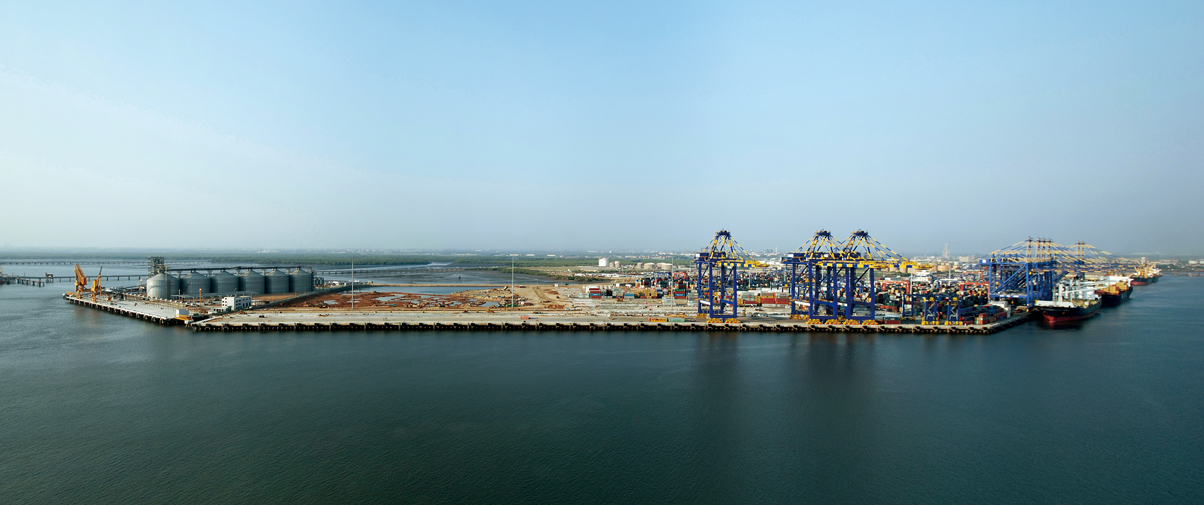
A private consortium of US companies is proposing an integrated liquefied natural gas project worth up to $4.4 billion at Port Qasim, including a storage and regasification terminal and a 1,100-kilometre pipeline, according to a Dawn report published on 2 November. Dawn said the group has the backing of the Trump administration; no public announcement from a US government agency has confirmed that backing.
The consortium comprises Global Vision Energy Partners (GVEP) and Khanjee Holdings, which Dawn described as related firms, alongside Luxembourg-based General Mediterranean Holding and strategic co-investors from other countries. Dawn reported that the sponsors had secured consent from the Port Qasim Authority for the site and had applied to the Oil and Gas Regulatory Authority (Ogra) for a provisional licence, citing documents it saw. A special purpose vehicle has been incorporated, and government facilitation has been conveyed through the Ministry of Maritime Affairs and the Petroleum Division.
The project has been approved for consideration under the US Trade and Development Agency’s project preparation programme, Dawn reported. It may also receive partial financing from the US Development Finance Corporation, backed by export credit guarantees from the US Export-Import Bank for equipment, technology and services. Those are potential channels rather than commitments. Profit by Pakistan Today reported the same ownership, financing and tariff details.
What the project would build
The proposal is in two phases. The first is a $1.7 billion LNG import, storage and regasification terminal at Port Qasim with four tanks of 140,000 cubic metres each, giving 560,000 cubic metres of static storage. At three inventory turns a year, the sponsors project throughput of about 35.6 billion cubic feet of LNG annually. The second phase is a 1,100-kilometre pipeline, 42 to 48 inches in diameter, with capacity of about 1.2 billion cubic feet a day, taking the total cost to $4.4 billion.
Unlike a conventional terminal built around a single government-backed purchase contract, the sponsors propose a merchant platform offering storage, regasification, transmission, tolling and transshipment to multiple customers. Domestic regasification tariffs would require Ogra’s approval; storage, tolling and other commercial services would be priced on market terms. The sponsors have proposed a terminal and storage tariff of $4.93 per million British thermal units and a transmission tariff of $1.91 per mmBtu for the first ten years, falling to $2.20 and $0.92 respectively thereafter, Dawn reported.
The proposed financing is 70 per cent debt and 30 per cent equity. GVEP would hold 26 per cent, General Mediterranean Holding 24 per cent, and Khanjee Holdings and strategic co-investors 20 per cent each, with Pakistani investors offered the remaining 10 per cent. The consortium is seeking local commitments starting at $50 million per investor. It has identified possible international investors including Grey Rock Investment Partners, KKR, Blackstone, Saudi Arabia’s Public Investment Fund and the Kuwait Investment Authority, but Dawn reported that their participation remains subject to due diligence, internal approvals and definitive agreements, and that no binding equity commitments have been confirmed.
Why it matters for Pakistan’s gas squeeze
Pakistan’s gas system is short of both molecules and buffer. QatarEnergy has extended its force majeure on LNG supplies to Pakistan until 29 December, and the government is planning ten cargoes for December and January against an estimated requirement of 20, as KhabarWire reported. A Qatar-owned LNG carrier, the Al Mayeda, was hit near the Strait of Hormuz on 30 October after Pakistan had negotiated safe passage, and spot cargoes cost more than three times pre-war levels.
The proposed terminal would not close that immediate winter gap. It is infrastructure, not a supply contract, and it would take years to build. Its relevance is to the longer argument about storage, import capacity and a second commercial model for gas. Pakistan already has LNG import and regasification terminals at Port Qasim, but Dawn reported that the sponsors see a gap in dedicated storage and in a merchant trading hub of the kind the project would provide.
The sponsors describe Port Qasim’s location outside the Strait of Hormuz as an advantage for a storage and trading hub serving US and Middle Eastern suppliers. Qatari LNG would still have to transit the strait to reach the terminal, so the project does not remove the shipping risk that has disrupted Pakistan’s supplies this year. What it would add is a larger storage buffer and a merchant platform that could serve more than one supplier, rather than a terminal tied to a single long-term offtake.
The proposal follows an earlier project that did not proceed. Energas, a consortium involving the Lucky Group and QatarEnergy, abandoned a similar LNG project citing fundamental changes in Pakistan’s energy policy and requirements, along with unresolved policy and fiscal issues, Dawn reported. That exit is a warning for the new consortium: Pakistan’s gas market has been shaped by price controls, circular debt and shifting policy, and a merchant model depends on regulators allowing cost-recovery tariffs and on customers signing long-term agreements.
The project also lands in a broader US-Pakistan energy conversation. On 26 October, Petroleum Minister Ali Pervaiz Malik asked the US chargé d’affaires in Islamabad for financing for a $5 billion refinery upgrade programme and raised long-term LNG supply, as KhabarWire reported. The Port Qasim proposal is a private infrastructure venture rather than a government-to-government supply deal, and Dawn’s account does not say it was discussed in those talks. But if the financing and licensing move forward, it would be a concrete US-linked energy investment in Pakistan’s energy sector.
What is still uncertain
Nothing has been decided. There is no final investment decision, no financial close, no engineering, procurement and construction contract, and no binding equity commitment. No Ogra decision on the licence application or the proposed tariffs has been published, and the timeline for either phase has not been disclosed. The US backing described by Dawn has not been confirmed by a public announcement from the White House, State Department, USTDA, DFC or EXIM, and the agencies’ involvement remains conditional. The project’s commercial case also depends on demand from large gas consumers and on the regulator’s treatment of the proposed tariffs.
One figure in Dawn’s account does not reconcile. The report describes $1.32 billion as 70 per cent of the $1.7 billion first-phase cost; 70 per cent of $1.7 billion is $1.19 billion. The discrepancy may reflect a different cost base or a financing detail not fully described, but it means the first-phase funding split should be treated as provisional until the sponsors publish a term sheet.
The immediate test is procedural: whether Ogra accepts the application, whether the sponsors can convert the USTDA consideration and the conditional US financing into commitments, and whether they can persuade Pakistani investors and gas buyers to sign. Until then, the $4.4 billion figure is a proposal, not a project.