Reporting snapshot · 6 November 2026 (Asia/Karachi). The United States closing figures are from the 5 November session. Asian markets were still trading when this article was published, so the regional losses described here are early-session figures and may change. The selloff is a market reaction to the midterm result and to concerns about artificial-intelligence spending; it does not show that the policies investors fear have already been enacted.
What happened
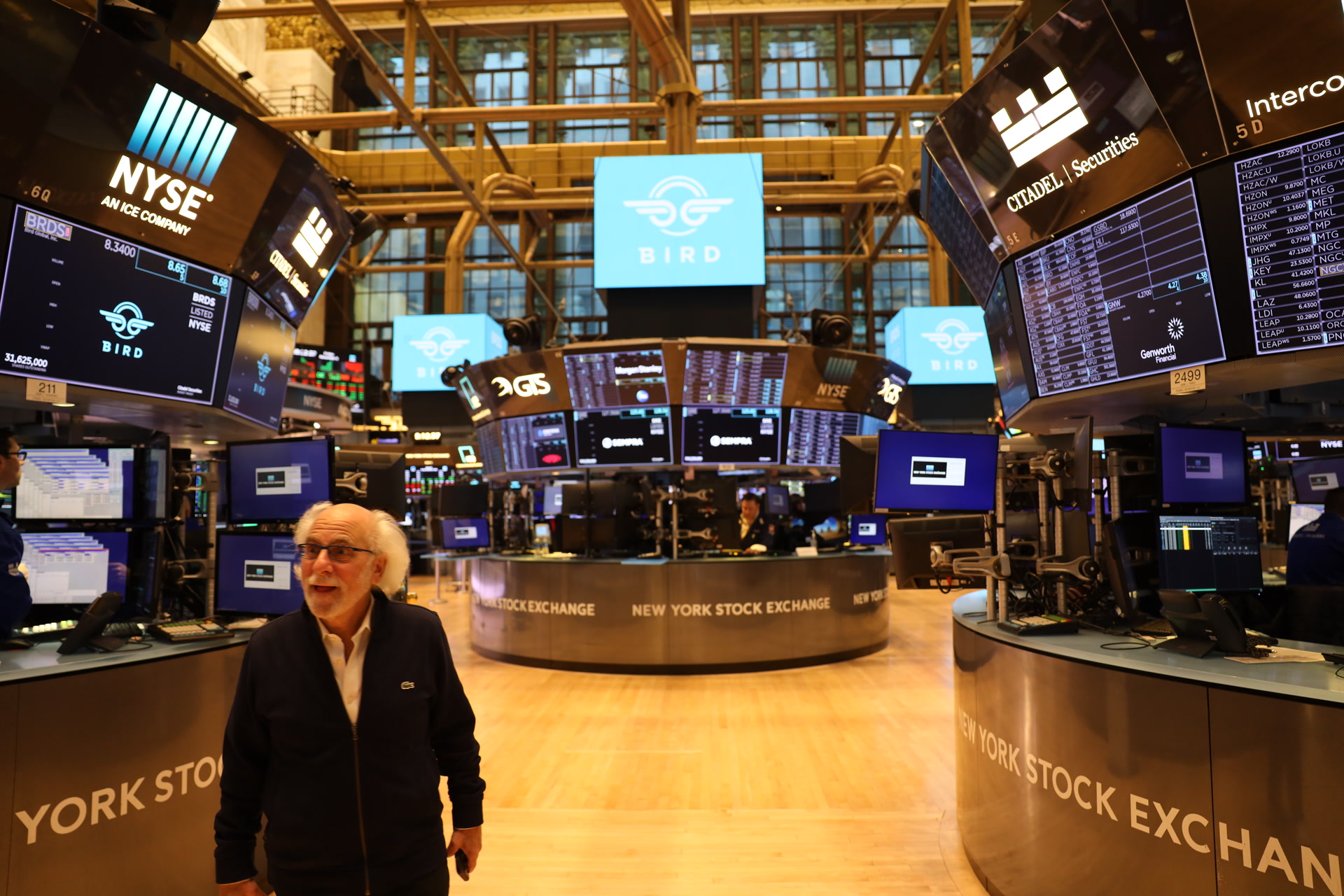
The Nasdaq Composite fell 5.5 per cent on Thursday, 5 November, its worst trading day in 18 months, as investors sold technology and semiconductor shares after the Democratic Party completed a sweep of the United States midterm elections. The index closed more than 10 per cent below its recent record, entering correction territory, The Guardian reported.
The wider market fell with it. The S&P 500 lost 4.3 per cent, and the Dow Jones Industrial Average dropped more than 1,800 points, or 3.4 per cent, to 51,868, according to The Guardian. DW put the Nasdaq decline at 5.52 per cent and the S&P 500 at 4.4 per cent, and estimated that as much as $2.5 trillion in market value was wiped off the Nasdaq. The Guardian put the loss at more than $2 trillion.
Chipmakers led the fall. Nvidia, the company most closely associated with the AI boom, fell 9.2 per cent, The Guardian reported. Memory maker SanDisk fell 22 per cent and hard-drive maker Western Digital fell 17 per cent. Earlier in the session, Geo News reported Nvidia down 8.7 per cent, Advanced Micro Devices down 15.5 per cent and CoreWeave down 12.5 per cent. Wall Street’s volatility index, the VIX, jumped 61 per cent, a sign that investors were buying protection against further losses.
The move reversed the previous day’s rally. On Wednesday, the Dow had risen more than 1,500 points as investors initially read the Democratic victory as a check on the White House, and President Donald Trump publicly celebrated the record highs. By Thursday, the market’s attention had shifted from the politics of the election to the policies that a Democratic Congress and a new group of Democratic governors might pursue towards AI data centres.
Why AI stocks fell
The trigger was not a single company result or a change in interest rates. It was a reassessment of the political risk attached to the physical buildout of artificial intelligence: the data centres, chips, power supplies and cooling systems that the technology depends on.
Several Democratic governors-elect campaigned on slowing or pausing data-centre construction, citing electricity consumption, water use and the effect on local communities, DW reported. Voters in a series of local ballots also rejected data-centre projects, The Guardian reported. Investors concluded that projects which had been priced as certain could face longer approvals, tougher conditions or opposition.
That signal landed on a trade already under strain. Technology companies have committed billions of dollars to AI infrastructure, The Guardian reported, and investors have become less patient about how quickly those sums produce profits. The Guardian quoted Ted Parkhill of Incline Investment Management saying the market was moving “from the promise of AI to the price of AI”. Neil Wilson of Saxo UK described a “complete capitulation-level event” in tech stocks, while cautioning that the move looked overdone.
The selloff is therefore best understood as a repricing of companies tied to the AI buildout, not a judgment that artificial intelligence has no long-term value. Companies that sell chips, servers and data-centre equipment fell hardest because their revenues are most directly tied to the pace of construction. The political paradox is that the same election result that initially reassured the broad market about checks on the White House also raised the specific risk that the AI buildout will be scrutinised more closely.
How Asia followed
The selloff did not stay in New York. Asian technology markets, which sit at the centre of the global chip supply chain, opened sharply lower on Friday. Japan’s Nikkei 225 fell 5.5 per cent in early trading, according to DW, while South Korea’s Kospi slid as much as 8.8 per cent, triggering a circuit breaker that suspended trading for 20 minutes. Taiwan’s TAIEX was down more than 8 per cent.
The casualties were the region’s semiconductor and hardware champions. Samsung Electronics fell nearly 10 per cent, SK Hynix more than 11 per cent, Tokyo Electron about 9 per cent and Kioxia 13 per cent, DW reported. European stock futures also fell about 1 per cent, indicating that the risk-off move was likely to reach Europe when its markets opened.
For Asia, the transmission is direct. Samsung, SK Hynix, TSMC and their suppliers sell into the same AI supply chain whose spending plans investors are now questioning. A slower data-centre buildout would not only hit American technology shares; it would feed through to orders for memory, foundry capacity and equipment across East Asia.
What it means for Pakistan
Pakistan has little direct exposure to the Nasdaq-listed companies at the centre of the selloff. Its stock market, currency and banking system are not plugged into the AI trade in the way South Korea’s or Taiwan’s are. The transmission to Pakistan is therefore indirect, through global risk appetite, the cost of capital and the mood of investors who also hold Pakistani assets.
That indirect channel still matters. Pakistan’s benchmark KSE-100 had jumped 3,995 points, or 2.38 per cent, to 172,013.48 on 4 November, partly on expectations that the US midterms would produce a less volatile American policy environment and that US-Iran talks might ease the energy shock, as KhabarWire reported. A sustained global technology selloff could test that rally by weakening appetite for risk across emerging markets, but the direction of Pakistan’s next trading session was not established when this article was published.
The AI trade is now a global financial story, not only a Silicon Valley one. Pakistan’s technology ambitions, its IT exports and its ability to attract investment in data and digital infrastructure depend on stable global demand and financing. A sharp, sustained repricing of AI-related assets would make that environment less forgiving. A one-day selloff may prove to be a correction rather than a change in trend; the difference will depend on whether the political signals from the midterms turn into actual restrictions on data-centre construction, and on whether AI spending starts to produce the profits investors have been promised.
The Democratic victory also changes the oversight environment in Washington. A Congress controlled by the party can hold hearings, request documents and pressure regulators, even if it cannot dictate planning decisions in individual states. The Democratic takeover of Congress therefore matters to the AI trade less for what it can legislate than for the scrutiny it can generate. For Pakistan, that is a secondary effect, but it adds another layer of uncertainty to an already difficult global economic backdrop.
What is still uncertain
The first unknown is whether Thursday’s move was a one-day repricing or the start of a longer unwind. The Guardian reported that the Nasdaq had its worst day since Trump’s “liberation day” tariffs in April 2025, a comparison that captures the scale of the move but not its duration. The VIX’s 61 per cent jump shows that investors were repositioning quickly rather than calmly reassessing fundamentals.
The second is whether the political threat to data centres will become concrete. Democratic governors can influence state permitting and local approvals, but the federal government retains significant authority over energy, trade and financial regulation, and any new legislation would still need to clear the Senate’s 60-vote threshold and survive a presidential veto. The market has priced a risk that has not yet been written into law.
The third is how much of the Asian move reflects the US selloff and how much reflects local conditions. The Kospi’s circuit breaker and the double-digit falls in Korean and Taiwanese chip stocks are early-session figures, and they may change before the close. The final Asian closes, the European response and the next US session will give a clearer picture of whether this is a global repricing or a short, sharp shock.
For Pakistan, the immediate question is whether the global risk-off move spills into the KSE-100 and the rupee. That had not happened when this article was published, and it should not be assumed. The safer conclusion is that the AI trade has become a source of global market volatility, and that Pakistan is exposed to the consequences of that volatility even though it is not part of the trade itself.