Reporting snapshot · 28 November 2026. The alliance has not published the membership criteria it discussed or any annex setting out command, force composition or deployment rules, and the Houthis have not responded publicly to the Islamabad statement. Those gaps may be filled at later meetings.

Pakistan, Saudi Arabia and Türkiye closed their second meeting of the Makkah alliance’s senior political and military committee in Islamabad on 27 November by naming Yemen’s Houthi militia in a joint statement and condemning what they called persistent and “heinous” attacks on civilians and civilian infrastructure in Saudi Arabia. The statement did not announce a new troop deployment, a joint operational command or a change to the pact’s force posture, and officials gave no timetable for deciding those questions. The joint statement was issued after the Strategic Political and Defence Committee (SPDC) met for about two hours; The Express Tribune reported that the session announced no new deployment or joint operational command.
The meeting brought together Deputy Prime Minister and Foreign Minister Ishaq Dar, Defence Minister Khawaja Muhammad Asif and Chief of Defence Forces Field Marshal Asim Munir for Pakistan; Saudi Defence Minister Prince Khalid bin Salman, Foreign Minister Prince Faisal bin Farhan and Chief of the General Staff General Fayyadh bin Hamed Al-Ruwaili; and Turkish Foreign Minister Hakan Fidan, Defence Minister Yasar Güler and Chief of the General Staff General Selçuk Bayraktaroğlu, according to The Express Tribune. It followed a week of Houthi attacks on Saudi energy and port infrastructure, including the 26 November strike on Saudi Aramco’s Jazan refinery that killed a Nepali worker, which KhabarWire reported.
A statement that names the adversary
The most concrete shift was in the language. Dawn reported that the Islamabad statement identified the Houthis specifically as a threat to the kingdom for the first time, compared with earlier alliance statements that referred to attacks on Saudi Arabia without naming the adversary. The joint statement condemns “persistent and heinous attacks by the Houthi militia” and reaffirms the three countries’ resolve to support Saudi Arabia “in safeguarding its security in accordance with the collective defence provisions of the Agreement,” the text says.
The statement also recorded progress on the alliance’s permanent secretariat in Riyadh, which it described as important for institutional work and coordination, and repeated commitments to cooperate on defence industries, joint technology development, training and capacity-building. It called for continued consultations, de-escalation and the peaceful resolution of disputes through dialogue and diplomacy, according to the joint statement. Prime Minister Shehbaz Sharif, who received the visiting delegations, welcomed what his office called the three countries’ “strong unity and determination” to defend their security, sovereignty and territorial integrity, and reaffirmed Pakistan’s support for Saudi Arabia, The Express Tribune reported.
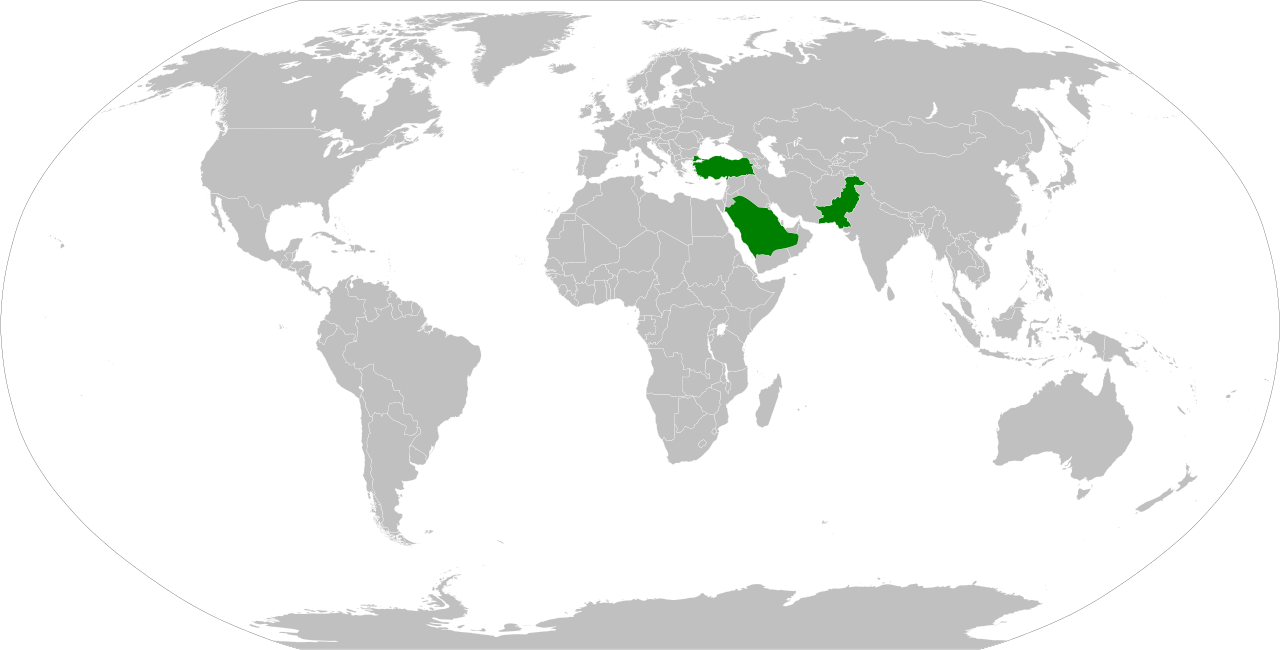
Naming the Houthis does not by itself change the alliance’s obligations. The Makkah Joint Defence Agreement, signed on 7 August 2026 by Pakistan, Saudi Arabia and Türkiye, treats an armed attack on one member as an attack on all three and obliges the others to extend assistance through available means, including military support. What the 27 November statement did not do was translate that pledge into a published operational plan.
The deployment question the meeting left open
Both Dawn and The Express Tribune reported that the Islamabad meeting produced no fresh decision on troop deployment or a joint military response. Dawn noted that the statement made no reference to specific deployment arrangements, force composition, command structures or procedures for a collective military response, questions that officials had been expected to address. The Express Tribune put it directly: the meeting “did not announce any new military deployment or joint operational command,” with the focus remaining on institutionalising the alliance.
That leaves the pact’s most consequential promise without a public rulebook. In earlier interviews, Pakistani officials described the alliance as being at a “nascent stage” and said it would need frequent meetings over the coming months to put its structures in place. Dawn reported that Asif said the alliance needed to meet often so that “in the next couple of months we have everything in place.” The pact has still not publicly defined its doctrine, the composition of forces, command arrangements or the procedures governing a collective response.
For Pakistan, that ambiguity is also a form of protection. Islamabad has framed the Makkah pact as defensive and not directed against any country, including Iran, while Saudi Arabia is exposed to continuing Houthi attacks. The Associated Press reported that Pakistan is working with Qatar and other regional states to urge the United States and Iran back to negotiations, building on the interim deal it helped broker in June. A public decision to join a military response in Yemen would complicate that mediation and expose Pakistan’s own border and energy interests. The meeting therefore delivered solidarity without a new military commitment.
Membership principles without a list
The meeting also opened a second track: expansion. Turkish Foreign Minister Hakan Fidan said after the talks that the three countries had discussed a roadmap for admitting new members and had agreed on some principles, Reuters reported through Gulf Times. Fidan did not identify any prospective member or publish the criteria, and the joint statement itself did not mention expansion. The omission leaves the scope of any enlargement unclear, even as the alliance says it is open to new partners.
Türkiye’s ratification process was completed in parallel. President Recep Tayyip Erdogan formally approved the Makkah Joint Defence Agreement, the Official Gazette said on 27 November, after parliament ratified it earlier in the month, Reuters reported through The Express Tribune. A ruling party lawmaker has said Ankara would also seek a separate parliamentary mandate before Turkish personnel could be deployed to Saudi Arabia, and Turkish officials have insisted the pact is defensive.
What the communique leaves to the next meeting
The immediate test is whether the Riyadh secretariat, headed by retired Pakistani Lieutenant General Nauman Mahmood, turns the statement into working channels for intelligence-sharing, planning and procurement. The joint statement says only that progress was reviewed and that the secretariat’s operationalisation is important. It gives no date for full staffing or for the next meeting.
A second test is whether the Houthis respond to being named. The group has continued to claim attacks on Saudi ports and energy sites, and Saudi Arabia has confirmed some of them while disputing others. The alliance’s statement does not say what support, beyond existing consultations and defence cooperation, it would provide if attacks continue.
For now, the Islamabad meeting has done what the alliance has done at each stage: it has named the threat more precisely and tightened the institutional scaffolding around the pact, while leaving the military answer unwritten. The Makkah defence pact hub follows the file, including the earlier decision to prepare rapid force deployments.