Reporting snapshot · 19 November 2026. The casualty figure and district breakdown come from the Inter-Services Public Relations statement. The dead have not been named, no independent account of the fighting has emerged, and the military has not said whether its figure is final.
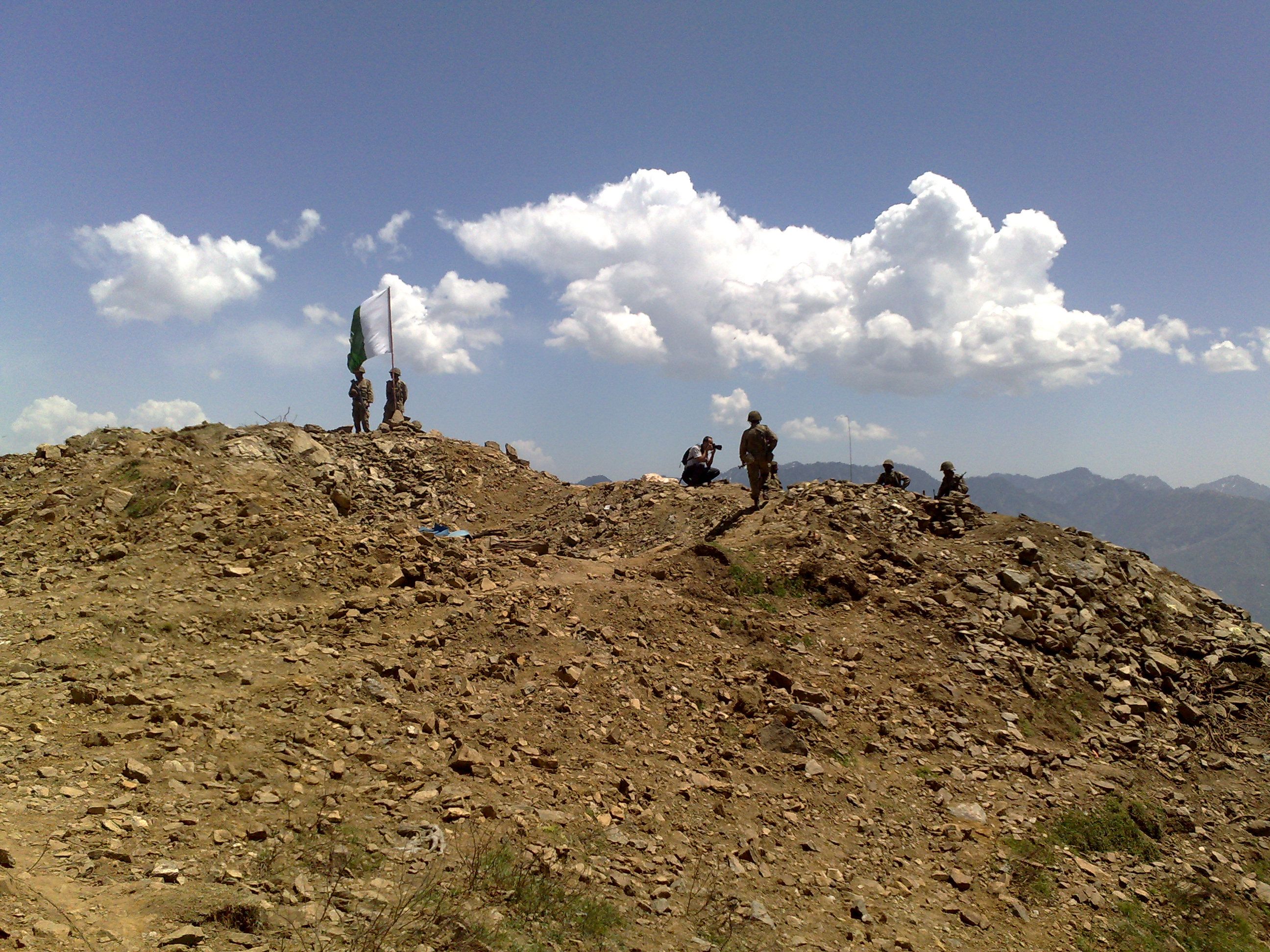
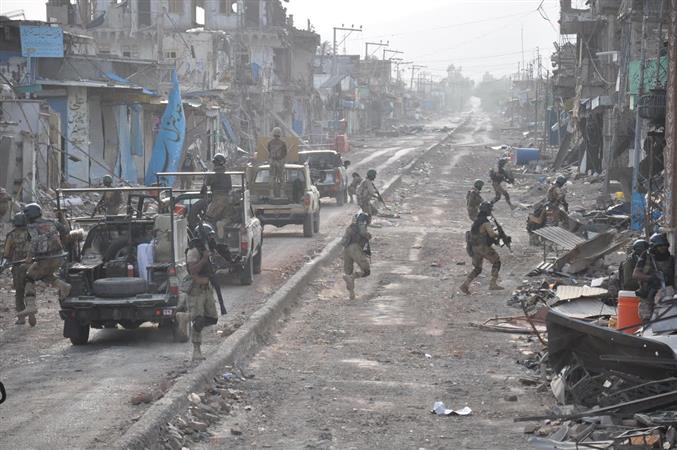
Pakistan’s military said on Thursday, 19 November, that security forces killed 22 militants in three districts of Khyber Pakhtunkhwa during intelligence-based operations on 16 and 17 November, and that weapons and ammunition were recovered from the sites. The Inter-Services Public Relations (ISPR), the military’s media wing, said 15 of the dead were killed in South Waziristan, six in two separate encounters in Bannu and one in Tank, The News reported.
The statement described all 22 as “Indian-sponsored Fitna al-Khawarij”, the label the state uses for the banned Tehreek-i-Taliban Pakistan (TTP) and for groups it says are backed by India. It did not name any of the dead, give their nationalities or publish evidence for the Indian-sponsorship claim. The Express Tribune reported the same district-by-district breakdown and said the military had recovered weapons and ammunition from the dead, whom it described as having been involved in “numerous terrorist activities”.
President Asif Ali Zardari, Prime Minister Shehbaz Sharif and Interior Minister Mohsin Naqvi separately praised the security forces after the announcement, according to The Express Tribune. Zardari called the operations commendable in the effort to eliminate Fitna al-Khawarij; Sharif said the forces had “foiled terrorists’ designs” and that the nation stood with them; Naqvi said the country was proud of the personnel involved. The statements repeated the government’s framing of the campaign without adding operational detail.
Three districts, one announcement
The 22 deaths are spread across three different fights. South Waziristan, which borders Afghanistan, accounted for the largest group, 15, in what the military called an intelligence-based operation launched on reports that militants were present in the area. Bannu, immediately to the east, accounted for six in two encounters. Tank, further south along the road towards Dera Ismail Khan, accounted for one. The military said sanitisation operations were continuing in the areas where the engagements took place.
That framing matters. The figure is a compilation across districts and separate encounters, not the toll of a single battle, and the military did not say how long each engagement lasted or whether the operations are complete. It also did not say whether any soldiers were killed or wounded, or whether civilians were hurt. The statement’s only description of the fighting is that troops “effectively engaged” militant locations and that the engagements involved “intense exchange of fire”.
South Waziristan, Bannu and Tank have all been repeatedly targeted by the TTP and allied groups in recent years. South Waziristan was the scene of a long military campaign against the Pakistani Taliban after 2009 and shares a long, porous border with Afghanistan. Bannu and Tank sit on the approach routes from the border to the settled districts of Khyber Pakhtunkhwa and have seen repeated attacks on police, check posts and security convoys. KhabarWire reported on 16 militants and two soldiers killed in a North Waziristan operation earlier this month, one of several engagements in the same belt.
The claim behind the label
“Fitna al-Khawarij” is not a neutral description. It is a state designation that places the dead inside a proscribed organisation and, in the military’s wording, inside a foreign-backed network. The TTP is a banned group that has carried out many of the attacks on Pakistani security forces since it broke with the state more than a decade ago, and the military has used the label in statements after operation after operation. But the label is also an assertion about affiliation and intent that the public record does not independently establish.
The same applies to the Indian-sponsorship claim. Pakistan has accused India of supporting militants on its soil for years, and the military’s statements routinely describe the TTP as “Indian-sponsored” or “Indian-backed”. The 19 November statement did not say what evidence it had, whether the dead included Afghan nationals or Pakistani citizens, or how it had established that all 22 belonged to a single network. There is a wider diplomatic context. Pakistan has repeatedly accused the Afghan Taliban authorities of allowing the TTP to operate from Afghan territory, and a United Nations Security Council monitoring report published in February 2026 supported Islamabad’s concerns that attacks from Afghanistan had increased and that the group enjoyed greater liberty there, The Express Tribune noted. The report addresses the regional picture, not the identity of the 22 people killed this week. The distinction is easy to lose when senior officials repeat the “Indian-sponsored” formulation in the same breath as praise for the operation.
A campaign under pressure
The announcement came amid a sustained tempo of operations. On 13 November, the military said it had killed 74 militants in operations in Khyber Pakhtunkhwa and Balochistan, including 43 in Mir Ali and Orakzai and 31 in the Kurram area of Quetta district, KhabarWire reported at the time. Last week, the military reported two soldiers martyred and 16 militants killed in North Waziristan. The 22 deaths announced on 19 November are a smaller total, but they fit the same pattern of frequent intelligence-based operations across the province.
Quarterly data from the Centre for Research and Security Studies points to the scale of the problem. According to the research centre, Khyber Pakhtunkhwa and Balochistan together accounted for nearly 96 per cent of all violence-related fatalities in the second quarter of 2026, The News reported. Khyber Pakhtunkhwa recorded 475 deaths, more than 61 per cent of the total, and 151 violent incidents, 57 per cent of the nationwide total; Balochistan recorded 265 deaths and 94 incidents. Those figures are quarterly and cumulative, not a count of this week’s operations, but they explain why the military keeps describing the campaign as unfinished.
The operations are presented as part of Azm-e-Istehkam, the counter-terrorism campaign approved by the Federal Apex Committee under the National Action Plan. The military’s statements after each operation say sanitisation will continue “at full pace” until militant networks are eliminated. The numbers alone do not show whether that is happening: the same districts have produced repeated operations and repeated attacks, and a body count measures the engagements the military chooses to announce, not the ones it does not. KhabarWire follows the campaign, its casualty claims and the districts involved in the Pakistan Counter-Militancy Operations hub.
What the statement leaves open
The most important unanswered questions are about the dead themselves. Were they TTP fighters, members of a local cell, or people caught up in the fighting? Were they Pakistani citizens or foreign fighters? Did the operations produce any security-force casualties, and were any civilians hurt? The military has not said, and no independent account from South Waziristan, Bannu or Tank has emerged that would allow the figure to be checked.
The political reaction does not fill those gaps. The president, prime minister and interior minister praised the forces in general terms and repeated the government’s description of the enemy. None of them addressed the evidence for the Indian-sponsorship claim or the identities of the dead. That is consistent with previous announcements, but it leaves the public with a casualty figure and little else.
The next test is whether the military follows up. A second statement could name the dead, describe the recovered weapons or explain how the operations were sequenced. A wider operation could produce more announcements in the coming days. A pause would suggest the engagements were limited to the three districts named this week. For now, the only public account is the military’s own: 22 people were killed in South Waziristan, Bannu and Tank, and sanitisation operations are continuing.