Reporting snapshot · 28 October 2026 (Asia/Karachi). Just over half of the ballots had been counted when this was written, so the seat totals are provisional and can still move by several. The larger limitation is that neither camp is close to the 61 seats needed to govern, so the government Israel ends up with is not yet knowable.
What the count showed
Exit polls from Israel’s three main television networks put Benjamin Netanyahu’s governing bloc and the opposition alliance led by Gadi Eisenkot level on about 51 seats each in the 120-seat Knesset, with Channel 12 later giving Netanyahu’s side a narrow 52-49 edge, The Guardian reported. Neither figure reached the 61 seats a majority government needs, The News International reported.
Partial official results have moved differently, and the difference matters. With just over 55 per cent of ballots counted, Netanyahu’s bloc stood at 56 seats and Eisenkot’s alliance at 49, Al Jazeera reported, citing the Times of Israel. The Guardian reported the same count at 55 seats for Netanyahu’s bloc and 49 for the opposition, with 16 for the Palestinian parties. Israeli exit polls are unofficial, and the final count has often swung by several seats, The Guardian noted.
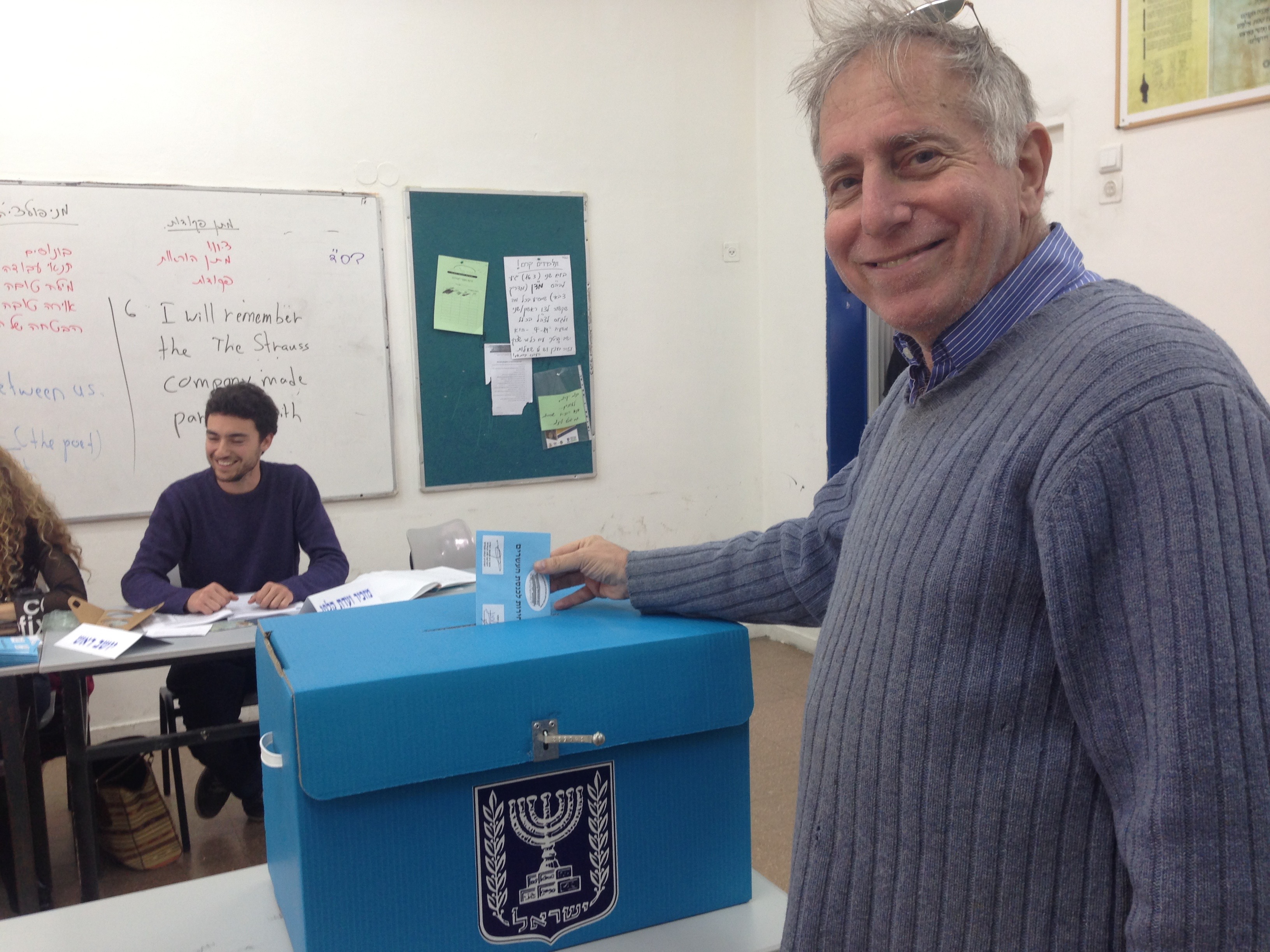
Turnout was the other headline. Israel’s Central Elections Committee said 77.7 per cent of eligible voters cast ballots, the highest in more than two decades and around 7 per cent higher than in 2022, Geo News reported. Turnout among Palestinian citizens of Israel, who make up about a fifth of a population of 10 million, was estimated at around 80 per cent, breaking records set in 1999, Al Jazeera reported citing Channel 12. The Joint List and Ra’am are projected to take between 17 and 19 seats, against 10 in 2022, The Guardian reported.
Likud stayed the largest single party on the Channel 12 and 13 projections, at an estimated 27 seats against 21 for Eisenkot’s Yashar, Al Jazeera reported. The far-right parties of Itamar Ben-Gvir and Bezalel Smotrich were projected to take 13 seats between them, with no major gains for either, Geo News reported.
Two claims, one result
Both camps claimed the vote in the hours after polls closed. Speaking at 3am at Likud headquarters in Jerusalem, Netanyahu said “We must put in place a strong government of the right”, The Guardian reported, and he tied the moment to Donald Trump, saying Israel has a singular historical opportunity to remove “the existential threat of Iran once and for all”, Geo News reported. Eisenkot told supporters in Tel Aviv that “people decided in favour of change” and that a worthy leader would have announced his retirement, The Guardian reported. Yair Lapid called it a crushing defeat for the government, while Foreign Minister Gideon Saar said the opposition claims were premature, Al Jazeera reported.
The Arab parties said they would now decide. Mansour Abbas, who leads Ra’am, said “With the numbers we have now, there is no government”, Al Jazeera reported. Faten Gattas, a Joint List candidate in Nazareth, said the high Arab participation was meant to block the return of Netanyahu’s nationalist coalition, Al Jazeera reported. Alon Pinkas, a former Israeli ambassador, warned that there is a price to pay because “Arabs can’t be kept outside and only being considered and co-opted when you need their votes”, Al Jazeera reported.
What happens next
President Isaac Herzog will name the candidate he believes has the best chance of forming a government, which need not be the leader of the largest party, Al Jazeera explained. The candidate has 28 days to assemble a majority and can be granted 14 more. If nobody reaches 61 seats, a candidate could try to govern as a minority, and Netanyahu could stay on as caretaker while talks run, Geo News reported. It took him 58 days to form a government after the November 2022 election, The News International reported, and another vote may be needed if the talks fail, Geo News reported.
Eisenkot’s route runs through the parties that say they will not work with him without conditions. He has set out four, including recognising Israel as a Jewish and democratic state and denouncing Hamas, The Guardian reported. Amjad Shbita, general secretary of Hadash, the largest faction in the Joint List, countered that “Laying down conditions won’t work with the Joint List” and that “We will negotiate as equals because we need each other”, The Guardian reported. The Joint List has said it would be unlikely to join a coalition outright but has offered a safety net for anyone who ousts Netanyahu, while Ra’am has been a kingmaker before, joining the short-lived 2021-2022 Bennett-Lapid government, The News International reported. Political commentator Tal Elovitz said it appears there is a possibility of forming a minority government headed by Eisenkot, “but this could still shift depending on the final results”, The News International reported.
Even the timetable is unsettled. Reuters reported that final results were expected on Thursday or Friday, 29 and 30 October, Geo News reported, while Al Jazeera put the final vote tally at 4 November, Al Jazeera reported.
What it means for Pakistan and the region
The arithmetic is domestic; the campaign was not. Netanyahu tied his victory speech to Iran and to Trump, and the same speech that claimed the votes also claimed a renewed strike, Geo News reported. That is the risk Islamabad has been managing all week. The vote was widely read as a referendum on Netanyahu’s leadership, Al Jazeera reported, and for Pakistan it came down to the mediation channel run with Tehran, Doha and Riyadh and to the Palestine position already on the record, as we set out on the eve of the vote (our pre-vote guide).
That channel came under strain in the same week. At the Security Council briefing on Iran on 27 October, Pakistan’s acting permanent representative, Ambassador Usman Jadoon, urged Washington and Tehran to honour the Islamabad Memorandum of Understanding and return to negotiations, warning that the nuclear file “has sharply deteriorated” and that a negotiated settlement “has become more critical than ever”, The Express Tribune reported. We reported that statement on the same count.
The parallel Gulf track moved as well. Gulf states are working on a multipart plan to reopen the Strait of Hormuz within four days of sanctions relief and a Houthi withdrawal from Yemen, with Iran cutting its own demand from seven days to four, The Guardian reported. If that holds, it removes much of the pressure a renewed Israeli strike would otherwise put on Pakistan through energy prices. If it collapses, an Israeli government without a settled majority, and a president free to pick either camp, has more room to gamble. The State Bank of Pakistan, which raised the policy rate by 50 basis points to 12 per cent on 26 October on energy-driven inflation risk, has already priced part of that exposure (our report on the rate decision).
What is still uncertain
The count is not final. More than half the votes were counted when this was written, and the exit polls published earlier in the evening had briefly given Eisenkot’s bloc a slight lead, so the arithmetic can still move.
Herzog has not said whom he will approach first, and the order matters: a candidate who fails is replaced, potentially after weeks. Eisenkot has not said whether he would sit down with the Joint List, and Hadash has already said his four conditions will not work.
Nothing in Israeli policy toward Iran has actually changed. Netanyahu’s speech is a political claim about an alliance rather than a decision, and the two governments that could act on it are both in the middle of their own political cycles.
Finally, the Central Elections Committee said it had seen no evidence of systematic tampering after Netanyahu suggested publicly that efforts were being made by “the left and Arabs” to steal the election, The Guardian reported.