Reporting snapshot · 27 October 2026 (Asia/Karachi). Polls had not opened in Israel when this was written, so no result exists; this is a pre-vote snapshot. The main limitation is that polling stopped on Friday and that claims about Israeli plans for further strikes on Iran come from unnamed sources and are denied by the Israeli government.
What Israel is voting on today
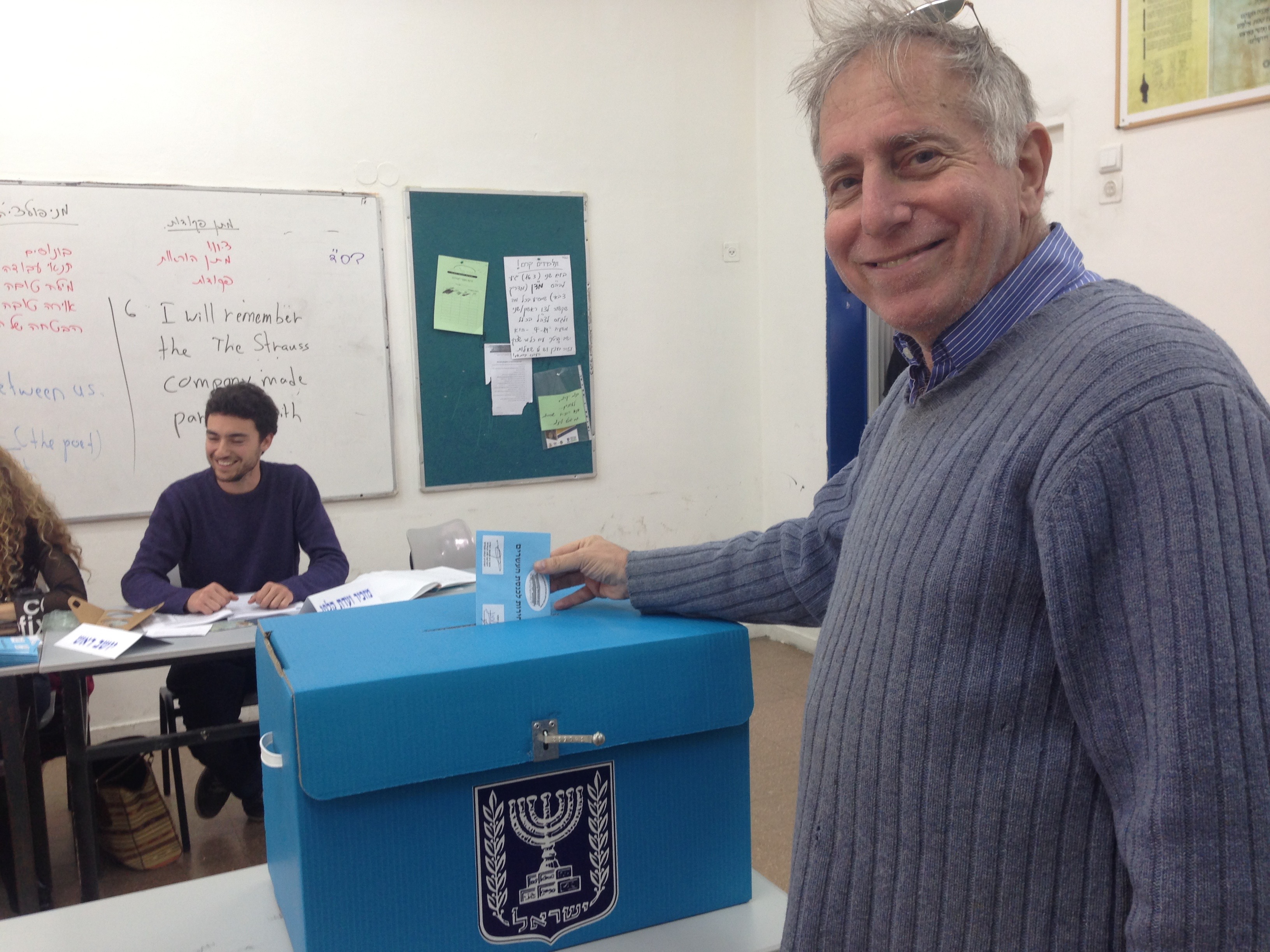
Israel holds a general election on Tuesday, 27 October 2026 — its first since the Hamas-led attacks of 7 October 2023, which killed about 1,200 people, most of them civilians, The Guardian reported. All 120 Knesset seats are contested by proportional representation, so a government needs 61, BBC News explained.
The polls published on Friday, when Israeli election law stopped new surveys, put the two blocs close together: Al Jazeera reported a KAN projection of 52 seats for an opposition alliance against 50 for Prime Minister Benjamin Netanyahu’s bloc. Neither side is on course for a majority, and about 70,000 Israelis are reported to be flying in from abroad to vote, the BBC reported.
Timing matters for anyone tracking the result. BBC News reported that Israeli broadcasters publish exit polls at 22:00 local time on election day, 20:00 GMT or about 1am in Pakistan on Wednesday, with preliminary results expected the next day and official results scheduled for 4 November. President Isaac Herzog then invites the leader he believes can form a government, a process that can take more than a month; Israel held five elections between 2019 and 2022. If no bloc reaches 61 seats, the country could get a minority government or another election, with Netanyahu as interim prime minister. The Guardian added that two small parties — Amcha Yisrael and the Reservists — sit close to the 3.25 per cent threshold and could decide who governs.
The blocs, and the parties that could decide it
Netanyahu’s coalition is Likud with United Torah Judaism, Shas, Otzma Yehudi and Religious Zionism-Zehut. The opposition is Eisenkot’s Yashar, or “Honesty”, the Democrats, Yisrael Beiteinu and the Together alliance under Naftali Bennett and Yair Lapid, Al Jazeera reported.
Gadi Eisenkot, a former head of the Israel Defense Forces whose son and two nephews were killed in Gaza in 2024, leads the bloc most polls put narrowly ahead, The Guardian reported. He has promised a state commission of inquiry into the 7 October attacks and, the BBC reported, has warned against escalating the war with Iran for political purposes.
The Arab lists are the wild card. Al Jazeera reported that the Central Elections Committee barred Ra’am and the Joint List last month, that Israel’s top court reversed that but forced Balad leader Sami Abu Shehadeh to withdraw, and that turnout among Palestinian citizens of Israel could reach 60 per cent, giving the lists up to 15 seats at 65 per cent. Both blocs have ruled out a coalition with them.
Who cannot vote is part of the arithmetic. The Guardian estimated that more than 500,000 Israeli settlers in the occupied West Bank can vote, and that two million people in Gaza have no vote. Al Jazeera put the eligible electorate at about 7.3 million, including roughly 1.2 million Palestinian citizens of Israel.
Why Iran is on the ballot
Netanyahu’s campaign has run on security. He posted a computer-generated image of a nuclear mushroom cloud over Tel Aviv, telling voters that “anyone who cares about their own physical existence, that of their family, and their loved ones should have a trembling hand before voting for [the opposition]”, The Guardian reported. The same account described a clash between Netanyahu and the army chief, Lieutenant General Eyal Zamir, over a directive that Channel 12 reported could “potentially spark an immediate conflagration with Iran”; both Netanyahu and the defence ministry denied it.
The Guardian reported that CNN said Netanyahu had pressed Donald Trump to launch a renewed assault on Iran, and that Trump ruled it out until after the US congressional elections. Trump has written that “if Israel has the wrong Leader, which would be anyone other than Bibi, America will have to do this work ourselves, and I am not inclined to do so”, the BBC reported, whose diplomatic correspondent, James Landale, wrote that Trump appears to have intervened to restrain Netanyahu before polling day, fearing a spike in energy prices.
The consequences are not confined to Israel. Iran’s foreign minister, Abbas Araghchi, wrote in the Financial Times that new attacks would put “civilian lives and the wellbeing of all regional states and the global economy at great risk”, and the BBC reported Iranian threats to hit airports, pipelines, undersea cables, energy facilities and US bases. France 24 reported that Trump said on Friday that Washington “may do another little Epic Fury”, and that Netanyahu said on Sunday he had intelligence signs that Iran and its proxies could “challenge us with attacks in order to disrupt the elections”.
What the result would mean for Pakistan
On the eve of the Israeli vote, Pakistan’s army chief, General Asim Munir, travelled to Tehran with Saudi Arabia’s defence minister, Prince Khalid bin Salman, and Turkish intelligence chief Ibrahim Kalin — the first joint visit to Tehran by the three Makkah pact countries since they formed their alliance in August, France 24 reported. Iran described the talks as “very good”: security chief Mohsen Rezaei said the parties agreed regional security “should be achieved by the countries themselves, and that we must prevent any kind of foreign intervention”, naming the Israeli occupation of southern Lebanon, southern Syria, Gaza and the West Bank among the issues. The talks ended without concrete announcements, with all sides agreeing to continue discussions, as we reported.
The Guardian reported that Oman’s foreign minister, Badr Albusaidi, used the same day to call for a security pact covering the six Gulf states, Iran and Iraq, saying the United States would no longer be the primary provider of regional security. UN Secretary General António Guterres said in Cairo: “the risk to have the combination of an overwhelming military attack on Iran, and an overwhelming military attack by Iran on the countries of the Gulf, needs to be avoided at all costs”, France 24 reported.
So an Israeli result followed by renewed strikes on Iran would reach Pakistan twice: it would undercut the mediation channel Islamabad has been running with Qatar, and it would push up the energy bill the State Bank of Pakistan cited when it raised the policy rate to 12 per cent on Monday, as we reported.
On Palestine, none of the leading parties is offering what Pakistan has demanded. Al Jazeera listed Netanyahu promising that “there will be no Palestinian state”, Eisenkot saying “the principle of two states for two peoples is a mistake”, Smotrich seeking to cancel the Oslo Accords and Bennett promising to “cancel all the legal revolution laws immediately upon the convening of the Knesset”. Pakistan’s own position is on the record: on 16 October its Foreign Office and 18 other states declared Colombia’s embassy in Jerusalem “null and void” and reaffirmed support for “a just and lasting peace based on the two-State solution”, in a joint statement that we reported.
And on Monday the UN’s Independent International Commission of Inquiry said in a report that Israeli authorities had kept committing “genocidal acts with the genocidal intent to destroy, in whole or in part, the Palestinians in Gaza” after the October 2025 ceasefire, and that Palestinians killed in West Bank airstrikes rose from six between 2008 and 6 October 2023 to 254 by 30 September 2026. Israel’s mission in Geneva called the report part of a “misinformation campaign”, Reuters reported.
What is still uncertain
No one knows yet how close the vote is. Polling stopped on Friday, the exit polls will only indicate the direction of voting, and the final margin and any governing majority will not be clear for days.
Whether an attack on Iran comes before or after the vote is also open. The Guardian noted Israeli media reports that Netanyahu has been trying to press the military into provoking a war before Tuesday’s election, and the BBC described Israeli speculation that an attack could be engineered after the poll by a caretaker government. No such operation has been announced, and both men have denied pushing for it.
An Israeli result does not settle the Palestine question for Pakistan. The UN commission’s findings are contested by Israel, and whether they change any government’s position at the General Assembly is not yet clear. An electoral defeat would also leave Netanyahu, on trial for corruption and subject to an International Criminal Court warrant, Al Jazeera noted, more exposed to both.