Reporting snapshot · 21 September 2026. Goods transporters and wholesale dealers say police have seized around 1,000 commercial containers and trucks in Islamabad and Rawalpindi for use as roadblocks ahead of four long marches scheduled for the week of 20-27 September. They report that food, medicine and other cargo is starting to spoil inside the impounded vehicles, that arrivals of fresh supplies have stopped, and that shortages and price rises are possible if the seizures continue. The figures and the economic warnings come from the transport and wholesale associations; the police have not published a total of vehicles held.
What happened
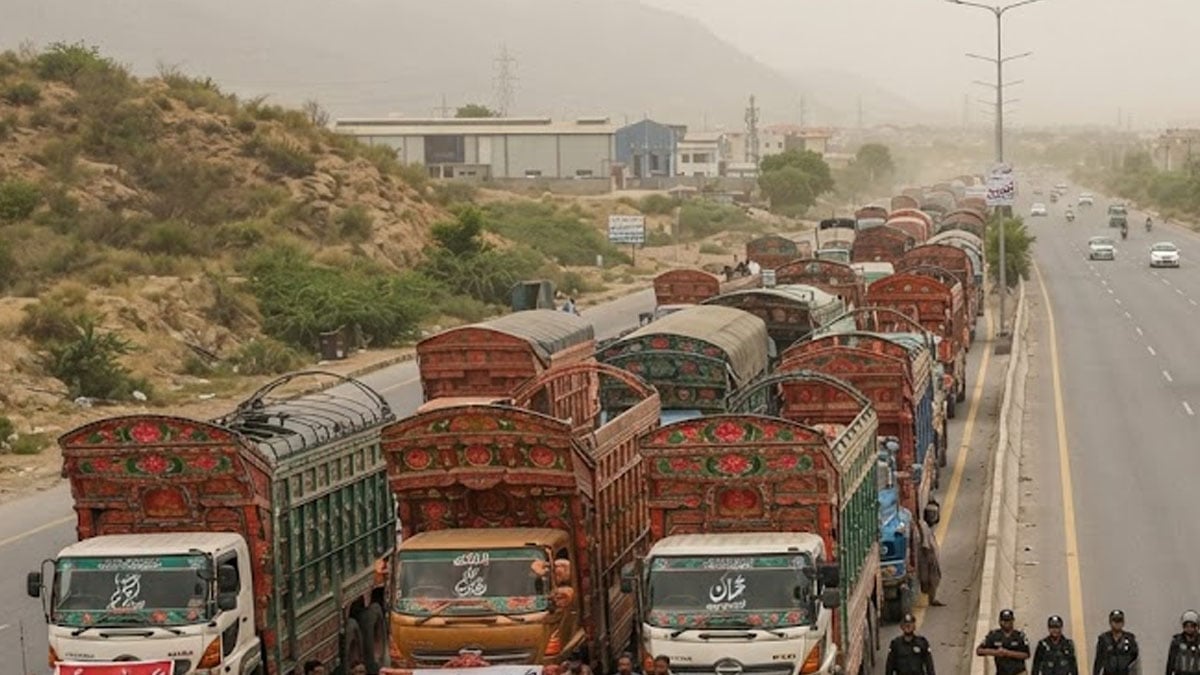
Goods transporters and wholesale dealers say police have taken custody of around 1,000 containers, heavy vehicles, trailers and trucks in Islamabad and Rawalpindi to seal roads ahead of four long marches expected in the week of 20-27 September, according to The Express Tribune on 21 September. The impounded vehicles were reportedly carrying food items, medicines, dry fruits and other essential goods, and dealers now say that cargo is beginning to spoil.
The seizures have not been limited to empty containers. Transport associations say vehicles loaded with vegetables, fruits, medicines and dry fruits have been held for use as barricades, and that the closure has started to affect wholesale markets. According to the Goods Transport Federation and wholesale dealers, arrivals of heavy goods transport into the markets of Rawalpindi and Islamabad have stopped, creating shortages of vegetables, fruits and grocery items. Supplies of food and essential items from Karachi, Faisalabad and Sargodha to the twin cities have been suspended, and container rents have started to rise.
Why the seizures matter
The impounding of commercial freight is a pre-emptive security measure, not a normal traffic or customs action. Authorities are fortifying entry points to the federal capital ahead of four separate mobilisations: the Jamaat-e-Islami long march that began from Karachi on 20 September, a farmers’ march called by Kisan Ittehad, a million-march announced for 25 September, and Pakistan Tehreek-e-Insaf’s march on 27 September. Shipping containers have long been the standard tool for blocking Islamabad’s roads and sealing the Red Zone, but this time they are being drawn from active commercial operations rather than from rented stocks.
Transporters object that their vehicles and cargo are private assets being used for political-security purposes without their consent. The All Pakistan Goods Transport Owners Association said earlier in September that the seizures had begun in early September and had grown to nearly 1,000 vehicles by mid-month. Wholesale dealers now warn that if the situation continues, vegetables, fruits, pulses, sugar and flour brought from other districts will become scarce and more expensive.
What the wholesalers are saying
Wholesale Dealers Association Vice President Sajid Khan said that after the seizures, vehicle owners had stopped sending vegetables, fruits, meat and milk from Quetta, Karachi and Faisalabad to Rawalpindi and Islamabad. He demanded that the government stop seizing the nearly 1,000 containers and allow the vegetables, fruits and dry fruits already loaded to be unloaded before they spoil. He said goods could rot and become unfit for consumption if they remained inside sealed containers for 72 hours.
Khan also warned of price consequences. He asked that more containers carrying food items be allowed to enter the twin cities, even if they were checked at sale points, saying otherwise prices could increase by another 100 per cent by the end of the week and a shortage of essential items could develop. The heavy presence of containers at Faizabad, Rawat and within the city has also begun to affect supplies of sugar, flour, vegetables and fruits to other districts, and the seizures have left thousands of workers involved in loading and unloading goods without work.
The Goods Transport Federation Vice President Haji Iqbal described the pressure on the sector as compounding existing difficulties. “On the one hand, we are being ruined by petrol and diesel prices, and now our containers and vehicles have also been seized,” he was quoted as saying. “Where should we go? Our businesses have been ruined for the past three years and now we have no option except to bring the goods transport system to a halt.” The Goods Transport Association has sent letters to the prime minister and the Punjab chief minister protesting the seizures and demanding the immediate release of the vehicles.
The medicines issue
The effect on medicines drew official attention even before the supply warnings intensified. In mid-September, Islamabad police detained containers that owners said were carrying medicines from Karachi to Rawalpindi and Islamabad, including insulin and medicines for the treatment of various diseases, Pakistan Today reported. Owners said police had taken vehicle keys, driving licences, consignment receipts and other paperwork, and that they had not been told how long the containers would remain detained or who would be responsible if medicines worth millions of rupees were damaged.
Federal Interior Minister Mohsin Naqvi took immediate notice. He contacted the Inspector General of Islamabad Police and the Chief Commissioner Islamabad, ordered the immediate release of all detained containers carrying medicines, and made clear that medicine containers and vehicles transporting medicines must not be stopped under any circumstances. The minister also directed the relevant authorities to ensure strict compliance and facilitate the uninterrupted movement of medicines.
The wider pattern of seizures has been documented since early September. All Pakistan Goods Transport Owners Association President Muhammad Owais Chaudhry told Dawn that around 100 container vehicles had initially been taken into custody from areas including Sangjani and Tarnol, and that they were being kept to block roads during anticipated political activity. He said authorities should rent empty containers rather than seize commercial vehicles, and that the association had received complaints alleging some seized vehicles were released after money was paid. The association demanded a transparent investigation and warned that forced use of commercial vehicles for political purposes created “an impression of state coercion”.
What is still uncertain
Several numbers are in dispute and none has been officially reconciled. The Goods Transport Federation cites around 1,000 seized vehicles in the twin cities; the All Pakistan Goods Transport Ittehad gave a figure of around 700 for vehicles and containers taken into custody; and the earlier association statement referred to an initial batch of around 100. Islamabad police have not published a comprehensive total of vehicles or containers held, the exact locations of all impounded cargo, or a timeline for release. The Interior Ministry has ordered the release of medicine-carrying containers, but the extent to which that order has been implemented, and whether food and other essential cargo is being released on the same basis, was not independently confirmed in the reporting reviewed.
The economic estimates are also associations’ figures rather than official calculations. The wholesale warning of possible price increases is a projection based on continued seizures, not a statement of measured price movements so far. Container rents rising, labourers left without work, and supplies suspended from several provinces are all reported effects whose full scale has not been quantified.
Whether the seizures continue depends on the course of the four marches, and on whether the government sees the roadblocks as necessary until the JI march, the farmers’ march and the PTI march have passed. The transport associations have demanded immediate release of essential cargo, and the experience of the first weeks of September suggests that the number of vehicles held may keep growing as long as the security posture remains in place. This is a dated snapshot of a developing situation, not a live tracker.
Sources & reporting notes
This is a synthesis of published material, not eyewitness reporting. Sources were reviewed on 21 September 2026. Vehicle and cargo figures come from the transport and wholesale associations named; police and government totals were not available at the time of writing.
- The Express Tribune — Container seizures cripple supply of goods21 September 2026 · Same-day account of the wholesale market disruption, the near-1,000 container figure, the spoilage warnings, the suspension of supplies from other districts and the demands for release.
- Dawn — Goods transport owners demand release of containers seized by Islamabad police9 September 2026 · The early September seizures, the initial ~100 vehicle figure, the demand to rent empty containers, the bribery allegations and the "impression of state coercion" warning.
- Pakistan Today — Islamabad Police detain medicine containers ahead of PTI protest17 September 2026 · The medicine-loaded container seizures, the ~700 vehicle figure, Interior Minister Naqvi's intervention and his order to release medicine containers.
- The News — Sealed off, again (special report)20 September 2026 · Background on the twin cities' sealing with containers, the security plan, and residents' concerns about restricted movement.