Reporting snapshot · 28 September 2026. Pakistan's Chief of Defence Forces and Chief of Army Staff Field Marshal Asim Munir met a delegation of the US-Afghanistan War Commission, led by its co-chairs Shamila N Chaudhary and Dr Colin F Jackson, at General Headquarters in Rawalpindi on Monday, 28 September, the military's media wing said. This account synthesises the Inter-Services Public Relations (ISPR) statement and reporting by The Express Tribune and Geo News; the meeting is dated and the language rests on the ISPR text, which both outlets carried in full.
What happened
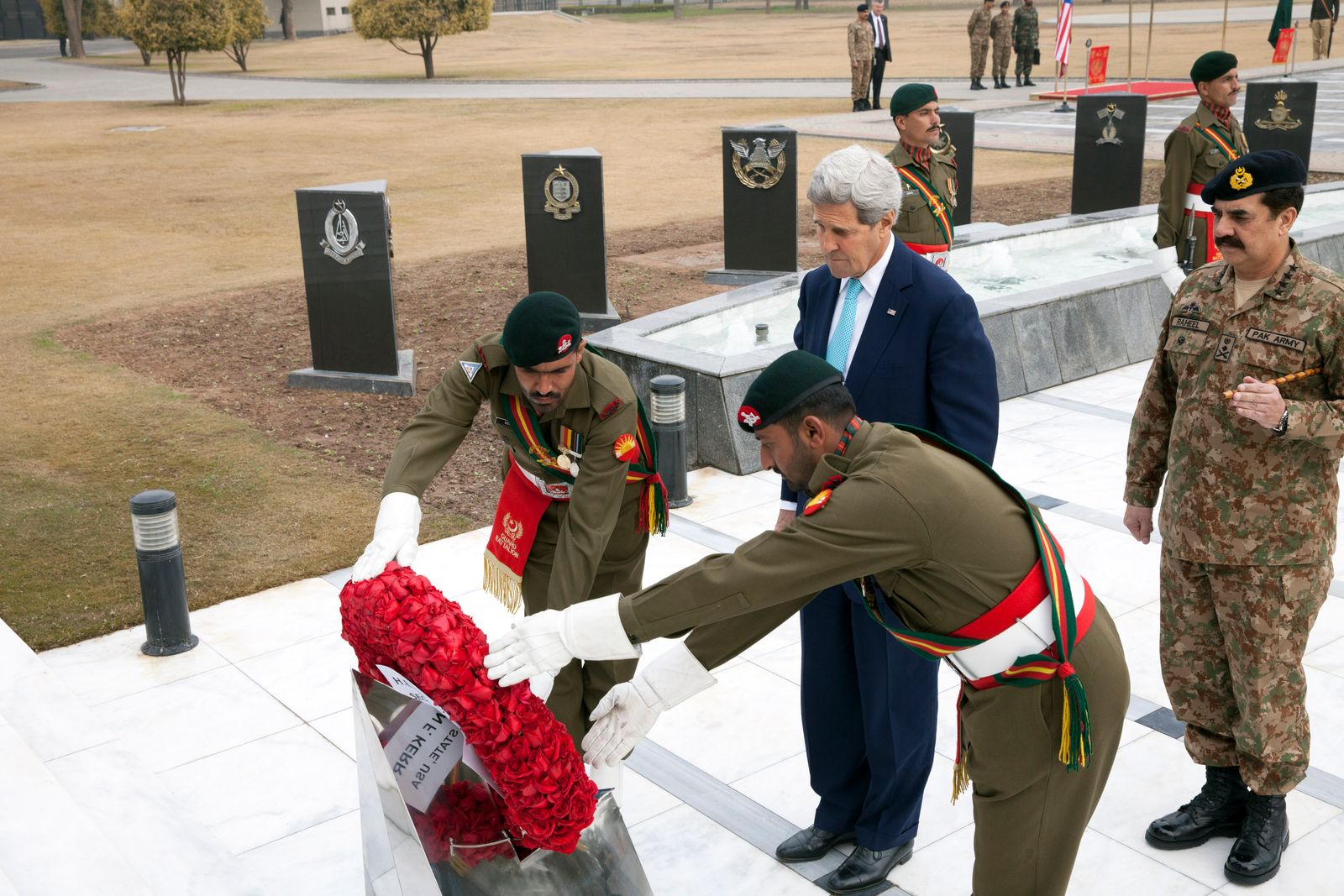
Field Marshal Asim Munir, who serves concurrently as Pakistan’s Chief of Defence Forces (CDF) and Chief of Army Staff (COAS), met a delegation of the US-Afghanistan War Commission at General Headquarters (GHQ) in Rawalpindi on Monday, 28 September, the Inter-Services Public Relations (ISPR) said in a statement carried by The Express Tribune and Geo News.
The delegation was led by the commission’s co-chairs, Shamila N Chaudhary and Dr Colin F Jackson, the ISPR said.
“Field Marshal Munir underscored the importance of incorporating the regional perspective and Pakistan’s experience in assessing the strategic, diplomatic and operational dimensions of the conflict,” the ISPR statement said, as quoted by The Express Tribune.
The commission, the ISPR added, is “undertaking a review of the United States’ 20-year engagement in Afghanistan”. “Discussions covered matters of mutual interest including Pakistan’s support, the regional security environment and developments in Afghanistan, with a focus on perspectives relevant to the commission’s work,” the statement said.
“The visiting team also acknowledged Pakistan’s longstanding role and sacrifices during the conflict in Afghanistan and appreciated its continued contribution to regional peace and stability,” the ISPR said, according to Geo News’ account of the same text.
Who the commission is
The Afghanistan War Commission is a bipartisan US legislative body set up by Congress in December 2021 to review US military, intelligence, foreign assistance and diplomatic involvement in Afghanistan from June 2001 to August 2021. The US withdrawal from Kabul in August 2021 ended the longest war in American history.
The two co-chairs are appointed by Congress and the executive branch; the final report is intended to inform US policy on counter-terrorism, reconstruction and great-power competition in South and Central Asia.
The US State Department photo published by Geo News showed Chaudhary and Jackson sitting on a sofa on either side of Munir in a formal reception room at GHQ.
Why Pakistan wants a seat at the table
Pakistan’s push to be heard in the commission’s review sits inside a much wider effort, visible over the past month, to frame the post-2021 environment on its own terms. The Tribune account and Geo News both pointed to the same rationale: that any honest review of the Afghan conflict has to account for the human and financial cost the war imposed on Pakistan, and for the security consequences that followed the US withdrawal.
Pakistan’s information ministry, in a separate fact-check on Sunday, formally rejected Afghan Taliban claims that Pakistani security forces and intelligence agencies had helped Daesh-linked fighters enter Afghanistan’s eastern Nuristan province. That exchange came days after Pakistan carried out calibrated airstrikes against suspected militant hideouts in Kunar and Paktika on 21 September, in response to the 18 September Kohat police-lines assault, and followed an ongoing exchange of drone interceptions and diplomatic demarches at the Foreign Office in Islamabad.
The 28 September meeting, by contrast, was an attempt to put the same set of concerns in front of the body in Washington that is being asked to write the historical record. Geo News said the meeting was intended to brief the delegation “on challenges Pakistan faced during Afghan conflict” and to underline Islamabad’s view that the Afghan Taliban’s return to power in 2021 has “failed to take effective action against groups responsible for attacks on Pakistani security forces and civilians” — a formulation The Express Tribune echoed in its lede.
Pakistan has, in parallel, sought to position its own narrative in multilateral settings. Prime Minister Shehbaz Sharif, addressing the 81st session of the United Nations General Assembly on 25 September, said Pakistan had lost nearly 100,000 civilians and members of its armed forces and had suffered economic losses exceeding $150 billion in the fight against militancy.
Why the meeting matters — and what it depends on
The significance of the 28 September meeting is twofold. First, it is one of the highest-level Pakistani engagements with the formal US review of the Afghan war, putting the army chief in direct conversation with the commission’s two co-chairs. Second, it is being read in Islamabad as a chance to inject Pakistan’s interpretation of the conflict — and its current grievances over cross-border militancy — into a document that will be cited by future US administrations.
The visit does not, by itself, change the security situation on the ground. The Durand Line frontier remains tense: Pakistani officials cited by The Express Tribune in the Nuristan fact-check coverage said about 70 per cent of “Fitna al-Khawarij” — officialdom’s term for the banned TTP and affiliates — militants infiltrating Pakistan in 2026 were of Afghan origin.
Whether the commission’s eventual report treats Pakistan’s account as dispositive, partial or marginal will depend on factors that go well beyond this one meeting: the final hearings in Washington, the witnesses called, the political composition of the final draft, and the US domestic debate over the lessons of Afghanistan.
For now, the meeting gives Pakistan a documented line in the commission’s record. Both ISPR and the commission’s co-chairs have publicly acknowledged Pakistani sacrifices during the conflict. Whether that produces a substantive shift in the commission’s findings will become clearer when the final report is released.
What is still uncertain
Several core facts remain open. The full list of commission officials who travelled to Pakistan, the duration of their stay, and whether they met other Pakistani civilian or military leaders beyond the CDF have not been disclosed by ISPR or either Pakistani outlet.
The commission’s final report date has not been announced. The co-chairs’ assessment of “Pakistan’s longstanding role and sacrifices” is a public statement, not a finding; it does not bind the commission’s eventual conclusions, and the report’s framing of Pakistani responsibility for the Taliban’s rise, the Haqqani network, or post-2021 cross-border militancy is not yet known.
What can be said with confidence is narrower: a US-led review delegation met Pakistan’s army chief at GHQ on 28 September, heard his account of the conflict, and publicly thanked Pakistan for its role.
Sources & reporting notes
This is a synthesis of published material, not eyewitness reporting. Sources were reviewed on 28 September 2026. The ISPR statement on the GHQ meeting is carried verbatim by both The Express Tribune and Geo News; the commission's origins are summarised from The Express Tribune's December 2021 explainer on the body's establishment; the broader Pakistan-Afghan security context is drawn from The Express Tribune, Geo News and KhabarWire's own recent coverage of the September 2026 Pakistan-Afghanistan exchanges.
- The Express Tribune — CDF Munir urges US-Afghan war commission to incorporate regional, Pakistani POVs in conflict's reviewPublished 28 September 2026 · Independent allowlisted report: the full ISPR statement, the wording of Munir's call to fold regional perspectives into the review, the commission's December 2021 origins and the UN-cited toll of Pakistan's post-2001 losses.
- Geo News — Field Marshal Munir briefs US delegation on challenges Pakistan faced during Afghan warPublished 28 September 2026 · Independent allowlisted report: the same ISPR text in full, the meeting's photograph of the co-chairs and Munir at GHQ, and the contextual reading of the meeting as part of Pakistan's response to the post-2021 increase in cross-border militancy.
- The Express Tribune — US sets up commission on Afghanistan failuresPublished 23 December 2021 · Background: the bipartisan commission's establishment, the scope of the review (June 2001 to August 2021), and the appointment of co-chairs Chaudhary and Jackson.
- The Express Tribune — Pakistan rejects Afghan Taliban's Nuristan allegationsPublished 28 September 2026 · Cross-reference: the 27 September information ministry fact-check, the 70 per cent Afghan-origin estimate for Fitna al-Khawarij infiltrators, and the wider pattern of mutual allegations since mid-September.
- Geo News — Minister urges PTI to choose between Pakistan and Afghanistan amid terror attacksPublished 28 September 2026 · Cross-reference: the federal government's framing of the post-2021 deterioration in Pakistan-Afghanistan relations and the renewed public demand for action against TTP-linked groups.