What happened
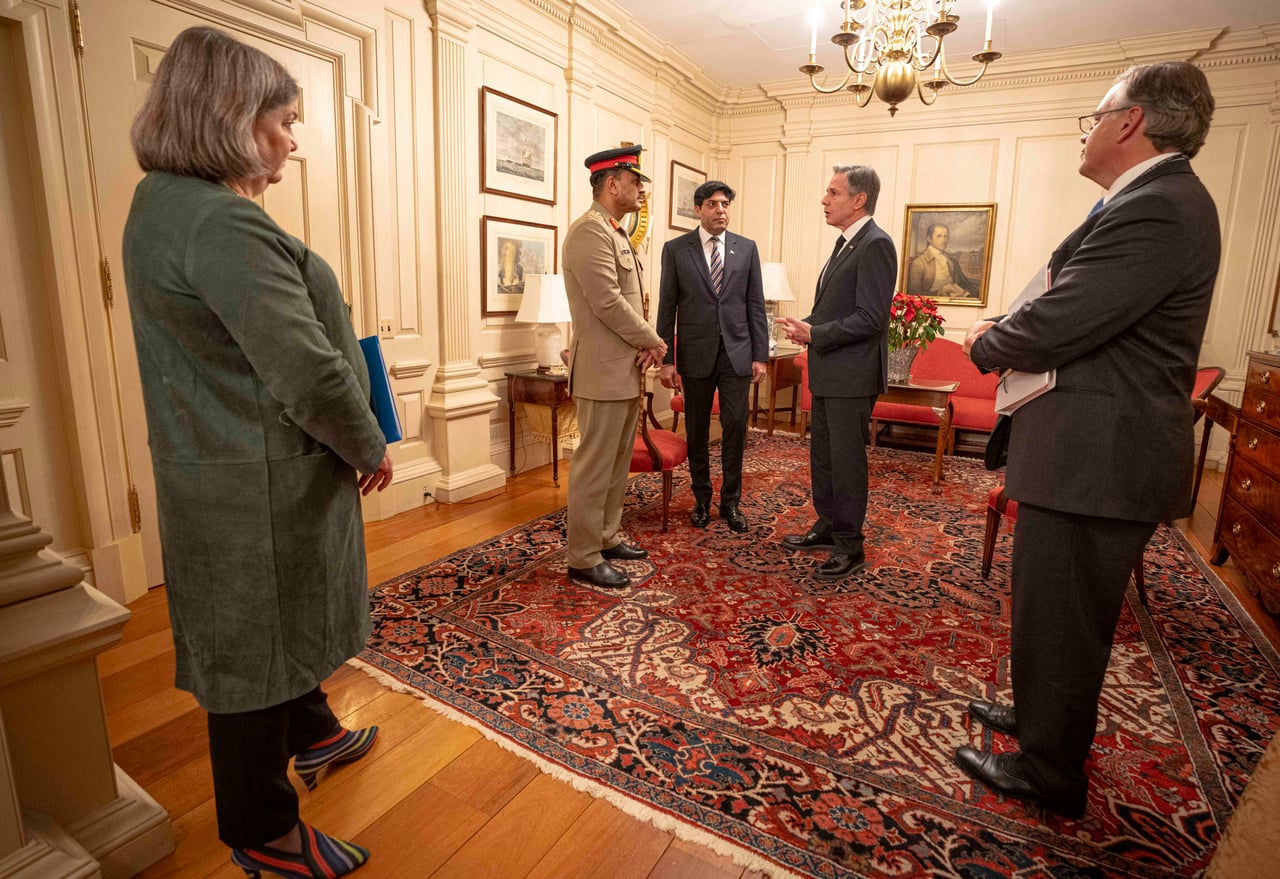
A senior security official said on Tuesday that Pakistan’s civil and military leadership acted with a broader vision in mediating between the United States and Iran, describing the effort as aimed at regional stability and harmony across the Muslim Ummah rather than at narrow gain.
Briefing journalists in Rawalpindi, the official said consultations with all key stakeholders — and in particular the role of Field Marshal Asim Munir — helped avert a major war that he said was being planned against the region, calling it “a war won without being fought”. He credited Muslim countries, especially Saudi Arabia, for restraint and strategic patience, and said Pakistan would not discuss the contents or future course of the talks because it was acting as a responsible mediator.
Counterterrorism figures
The briefing also set out the scale of Pakistan’s security operations. The official said security forces and law-enforcement agencies had conducted 32,092 operations this year against militancy, that 2,170 terrorist incidents occurred with the backing of the Afghan Taliban administration, that 1,861 militants were killed and that 640 security personnel lost their lives in the line of duty. He said precision strikes were used inside Afghanistan to avoid civilian casualties.
He said the groups Fitna al-Khawarij and Fitna al-Hindustan had become serious threats to national security, accused the Afghan Taliban administration of supporting militancy, and alleged that the banned Balochistan Liberation Army was backed by India. He said the security situation in Balochistan had improved and that people there were benefiting from mineral resources.
Water, Kashmir and the defence budget
The official said the National Security Committee’s declaration of 24 April 2026 was read to participants, stating that water was a vital national interest to be protected through the full spectrum of national power. He said Pakistan had mounted a legal and diplomatic response to India’s violation of the Indus Waters Treaty and warned that any attempt to impede Pakistan’s water rights would trigger a response, adding that more storage and better regulation were needed.
On Kashmir, he said the dispute remained unfinished, that five wars had been fought over it, and that India was trying to alter the demographic balance in Indian-administered Kashmir. He said the banned Jammu Kashmir Joint Awami Action Committee had resorted to violence and blocked roads in Pakistan-administered Kashmir and would be dealt with under the law.
He said the defence budget had risen to about Rs3 trillion but that more than 80 per cent went on essential spending such as salaries, rations and maintenance, leaving only a limited amount for equipment and capability. Asked about a reported meeting between former prime minister Imran Khan and a former army chief, he reiterated that the military had no role in politics and that politicians should resolve their issues themselves.
Sources & reporting notes
This is a summary of published reporting, not independent reporting. Details are as carried by the cited sources, which were reviewed on 2026-06-17.
- The News — "'Pakistan's broader vision, sincerity averted a major war'"17 June 2026 · The security briefing, the mediation account, the counterterrorism statistics, the water and Kashmir positions and the defence-budget remarks.
- The Standard — "Pakistan Not Seeking 'Limited Objective' with Iran-U.S. Mediation: Security Sources"17 June 2026 · Additional details on the mediation role, the Afghanistan operations and the Kashmir and water positions.