Reporting snapshot · 19 November 2026 (Asia/Karachi). The three-way meeting was due later on 19 November and had not begun when this article was published. Its agenda, duration and any joint statement remain unknown, and the quotes below come from the opening plenary and the leaders' public remarks.
Xi Jinping opened the APEC leaders’ plenary in Shenzhen on 19 November with a pledge of $20 million for Asia-Pacific cooperation, as Donald Trump and Vladimir Putin joined him for a summit that was due to culminate in the first formal three-way meeting of the three presidents. The plenary began just before 10:00 local time, with the leaders posing for a group photograph before taking their seats under the chandeliers of the Shenzhen International Exchange Center, Nikkei Asia reported.
Xi used his opening address to cast China as the defender of an open Asia-Pacific. He proposed four pillars for regional development — economy and trade, connectivity, innovation, and development — and said China would provide the $20 million for work on digital technology and clean energy, Nikkei Asia reported. “China is rooted in the Asia-Pacific and will continue to support Asia-Pacific cooperation,” he said, according to the BBC’s live coverage.
Trump followed with a speech that mixed a defence of American power in the region with a promise not to restrain the artificial-intelligence industry. “The United States has been a Pacific power for hundreds of years, and we continue to work to promote growth and stability, sovereignty, prosperity and peace throughout this region,” he said, according to Nikkei Asia. He described AI as “almost completely good” and said regulation must not be allowed to “stifle” the sector, the BBC reported.
Putin, speaking after Xi, presented Russia as an unavoidable part of the region’s economy. He said Russia was an “integral part” of the Asia-Pacific and invited partners to use Russian logistics infrastructure, the BBC and Nikkei Asia reported. He also said “economic domination and coercion are now a thing of the past” and that he expected the trilateral to deliver “a big potential benefit”, Nikkei Asia reported.
From a White House confirmation to a room of three
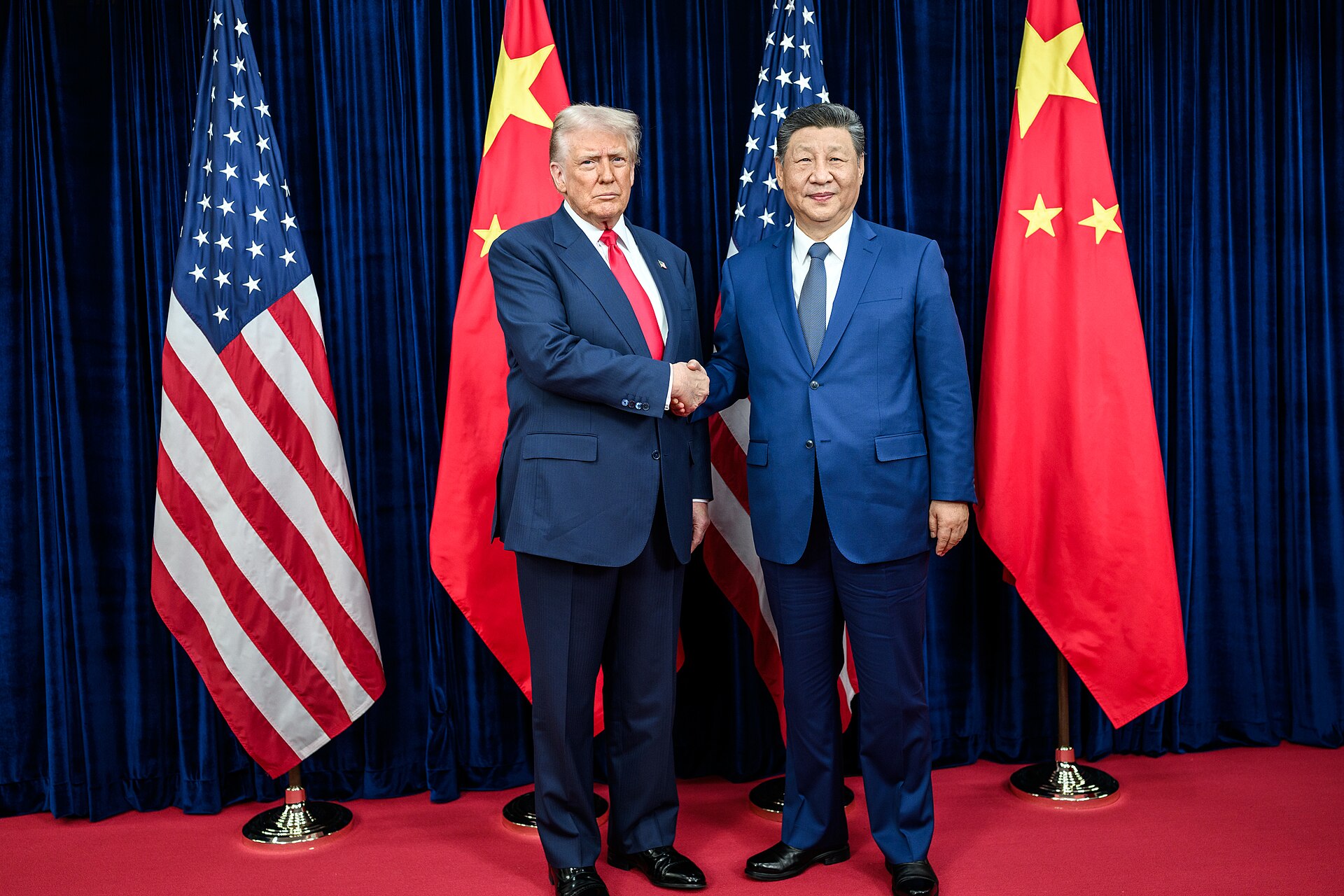
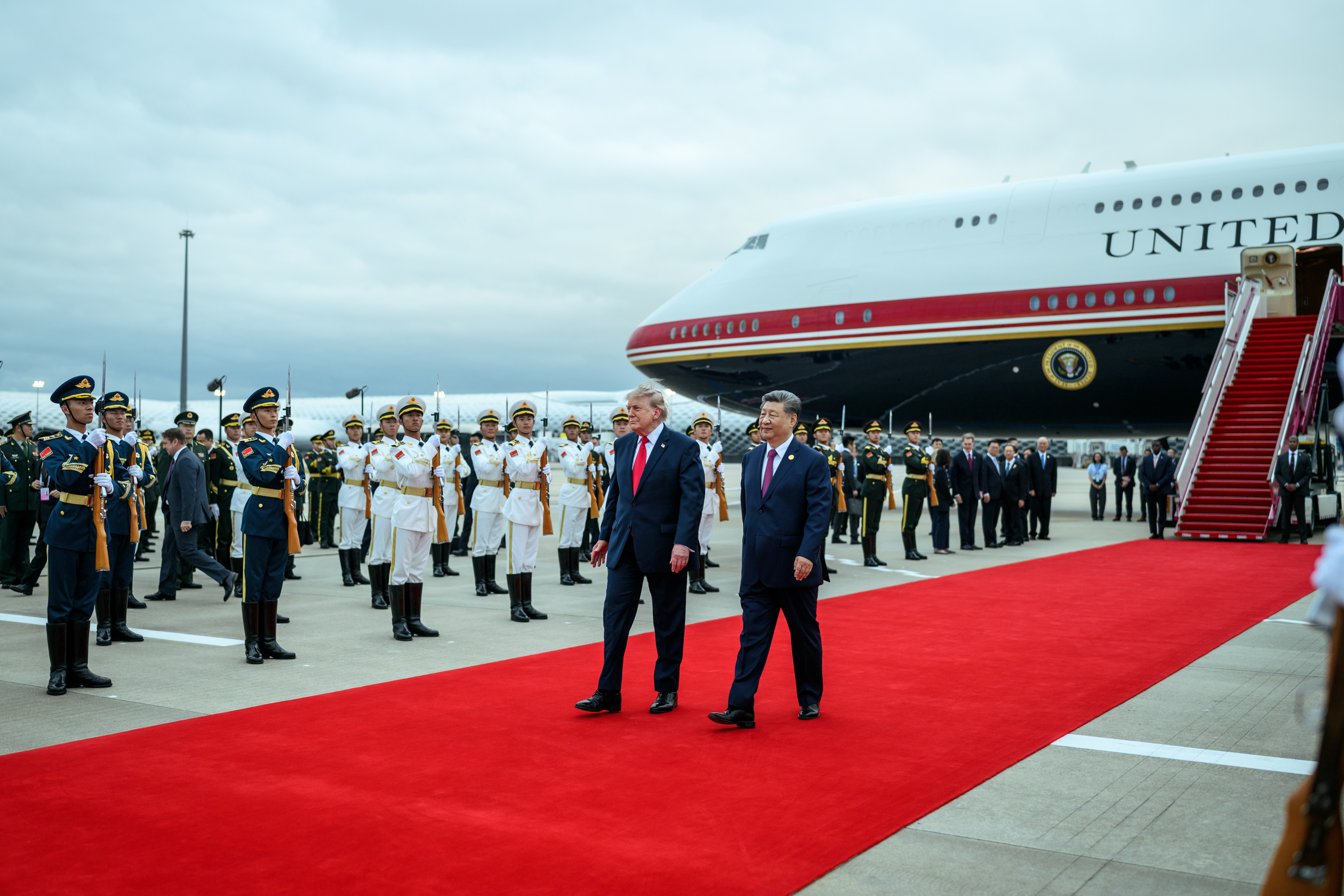
The gathering is the turn that KhabarWire’s earlier reporting on this summit was waiting for. When the meeting was first confirmed on 14 November, only Washington had publicly acknowledged it; Beijing and Moscow had not confirmed the format, and the agenda was described by officials briefing reporters rather than by the participants themselves. Since then, Xi has personally greeted Trump at Shenzhen airport — an honour the BBC said was believed to be the first of its kind for a foreign leader — and the three men appeared together at a banquet on 18 November, the BBC reported.
The sequence on 19 November was equally deliberate. Xi and Trump were expected to hold their third bilateral meeting of the year before the trilateral, and Trump was also due to hold a one-on-one meeting with Putin, a US official confirmed to the BBC. The three-way session was reportedly due to take place at the Kylin Villa, a state-owned compound in Shenzhen that has long hosted Chinese and foreign leaders, the BBC reported. That choice of setting, analysts told the BBC, suggested a private, lower-profile meeting rather than a formal summit with a signed text.
Iran, nuclear arms and a trade truce that expires in January
The agenda is unusually broad for a single afternoon. Al Jazeera reported that Trump intends to raise the US-Israeli war against Iran and a possible three-way agreement on nuclear armament. Ukraine is not expected to be on the formal agenda, because Xi is understood to be reluctant to be drawn into what he views as a European matter, although the war is certain to be discussed in the bilateral meetings around the trilateral.
The economic file is just as consequential. The US-China trade truce is due to expire on 10 January 2027, and China’s rare-earth exports to the United States remain about 75 per cent below normal levels, Al Jazeera reported. The two sides are still managing the fallout from the Nvidia chip-smuggling scandal, which has hardened Washington’s position on advanced semiconductor exports. Trump and Xi extended their earlier truce in September, as KhabarWire reported, but the arrangement remains a pause rather than a settlement.
Expectations around the trilateral are low. “It’s a summit of Trump’s ego, Putin’s tactics, China’s strategy,” Scott Lucas, a professor of international politics at University College Dublin, told Al Jazeera. Vuk Vuksanovic of King’s College London said the meeting was “a far cry from being a new Yalta”, adding that the three leaders did not have a shared plan for redrawing the international order. The White House has also said it does not expect a formal agreement, which makes the meeting itself — and the fact that it is happening at all — the main political fact.
For Putin, that fact is the point. After years of Western isolation, he will sit alongside the leaders of the world’s two largest economies, the BBC’s Russia editor, Steve Rosenberg, wrote. For Xi, the summit is an opportunity to present China as the host of a multipolar order without making concessions on Taiwan, trade or technology. For Trump, it is a chance to claim a diplomatic win after his party’s midterm losses, even if the concrete deliverables are thin.
What Pakistan watches from outside the room
Pakistan does not have a seat at APEC, but it is not a spectator to the forces being discussed in Shenzhen. Its fuel prices are set daily against a crude market that still carries a risk premium from the Iran war and disruption around the Strait of Hormuz. On 19 November, petrol sold for Rs322 a litre and diesel for Rs355 after a Rs3 cut, with Brent crude near $92 a barrel, as KhabarWire reported. A trilateral that produces a new channel on Iran, or one that collapses without a mechanism, changes the diplomatic space in which Islamabad has been trying to operate.
That space matters because Pakistan has positioned itself as an outside mediator in the Iran war. KhabarWire has tracked that file in its Pakistan-Iran-US mediation hub, including the talks in Islamabad in April and the later attempts to keep a ceasefire alive. A meeting that puts Iran on the table with China and Russia in the room could dilute Pakistan’s role, or give it a new opening if Washington and Tehran need a channel that does not run through Beijing or Moscow.
The trade file reaches Pakistan too. The January expiry of the US-China truce, the future of rare-earth controls and the scope of American chip-export restrictions all shape the cost and availability of the technology Pakistan imports, and the room for its exporters in a fragmenting global economy. Those are slower-moving consequences than a petrol price, but they are part of why a summit in Shenzhen is not only a photo opportunity for three leaders.
What the afternoon can, and cannot, settle
The trilateral may produce a short statement, a commitment to keep talking, or nothing at all. The most concrete development so far is Xi’s $20 million pledge and the public positioning of the three leaders: Trump asserting that the United States remains a Pacific power, Xi presenting China as the guardian of open trade, and Putin insisting that Russia cannot be excluded from either. Whether those positions translate into anything on Iran, nuclear arms or the trade truce will depend on meetings that had not yet taken place when this article was published.
The one thing the opening plenary has already settled is that the three leaders are prepared to be seen together. That image is a diplomatic fact in itself, and it is likely to be read differently in Washington, Beijing, Moscow, Kyiv and Tehran. For Pakistan, the practical question is narrower: whether the aftermath of the meeting lowers the risk premium on the fuel it buys, or leaves the war — and the prices — where they are.