Reporting snapshot · 22 November 2026 (Asia/Karachi). The President's Office confirmed the five ordinances on Saturday, but the statement did not publish their full text, name the chairpersons of the two new executive committees or list the 12 districts, and no first meeting date has been announced for those committees. The fifth ordinance, on the Speaker's and Deputy Speaker's allowances, was confirmed by name only.
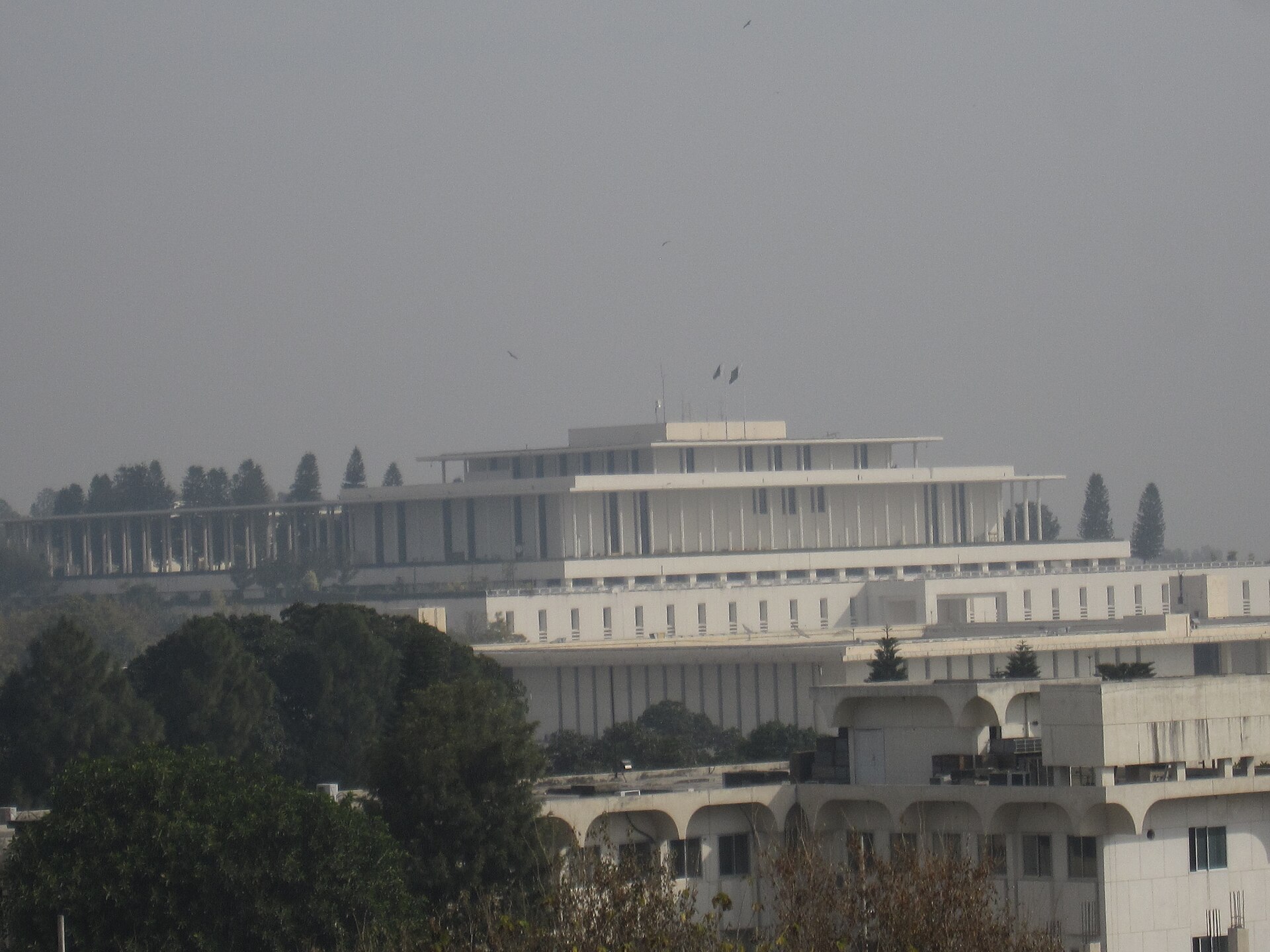
President Asif Ali Zardari promulgated five ordinances for Khyber Pakhtunkhwa on Saturday, 21 November, Pakistan Today reported, citing a statement from the President’s Office. The package rewrites the legal position of the provincial assembly, creates executive committees that will approve and spend development money in the province, and changes how madressahs are registered. Four of the five were published in the Official Gazette on 19 November, the paper said.
The ordinances arrive at a moment when the provincial assembly has no working government. Emergency rule and governor’s rule have been in force in Khyber Pakhtunkhwa since 11 October, when the federal cabinet recommended emergency rule and the President signed the summary, as KhabarWire reported. Governor Faisal Karim Kundi now administers the province. Sohail Afridi, whose role as chief minister was rendered non-functional by the emergency, Speaker Babar Saleem Swati and other lawmakers have been in preventive detention since, police said, and the governor said last month that they had been placed under house arrest.
What the privileges ordinance takes away
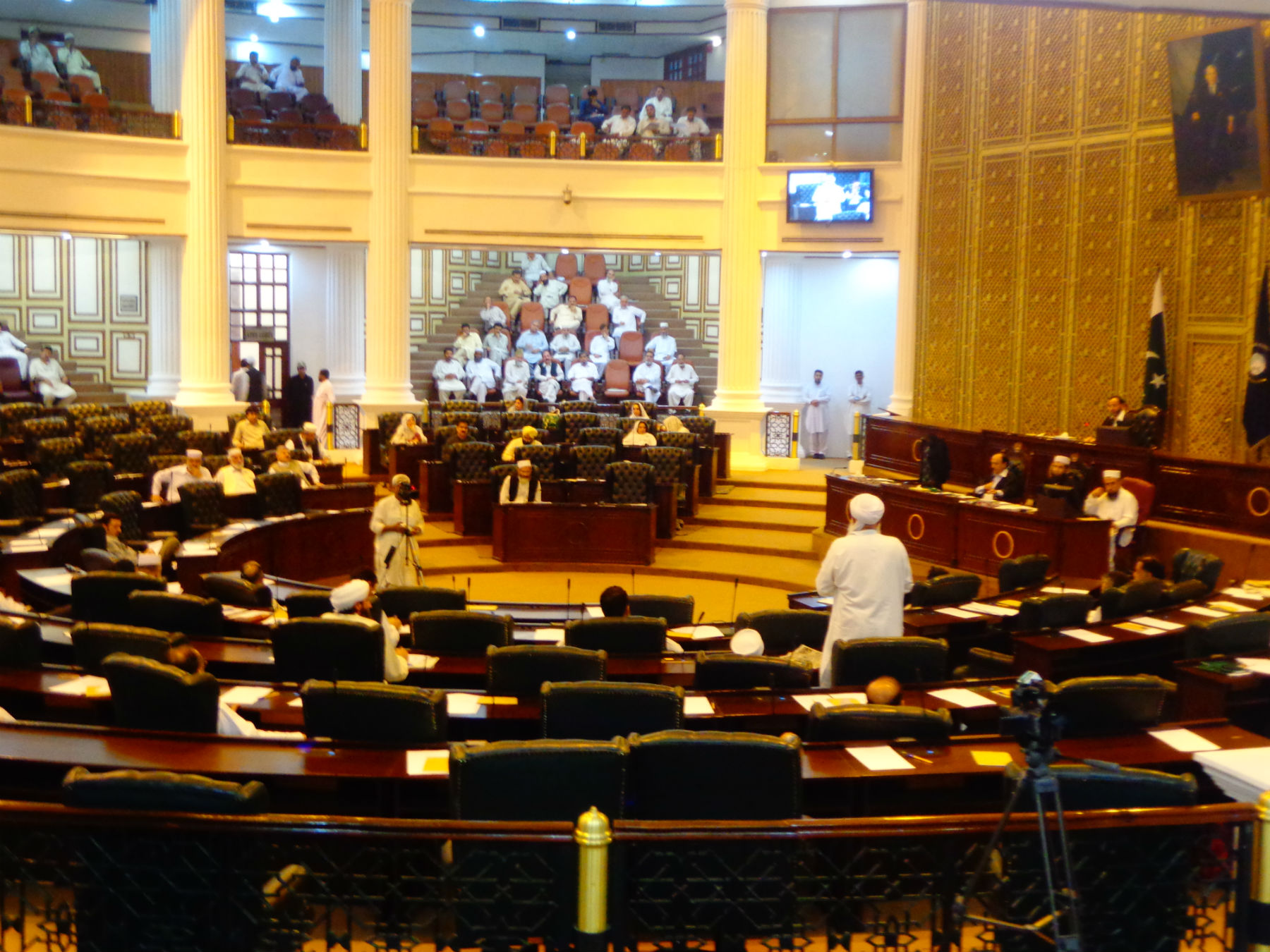
The Khyber Pakhtunkhwa Provincial Assembly (Powers, Immunities and Privileges) Ordinance, 2026 amends the Khyber Pakhtunkhwa Provincial Assembly (Powers, Immunities and Privileges) Act, 2026, and 21 of its 40 sections have been omitted, Pakistan Today reported. The omitted sections include Section 5, which deals with the attendance of a member who has been detained or arrested; Section 6, under which members are not liable to civil or criminal action; Section 10, on preventive detention; Section 11, which required the Speaker’s permission before a member could be arrested or detained; Section 15, the Speaker’s power to summon; Section 22, the power to arrest; and Sections 31, 32 and 34, on breach of privilege, its status as an offence and its cognisance. The schedule listing breach-of-privilege offences has been omitted as well.
The schedule’s removal, Pakistan Today said, substantially curtails “the protections and privileges previously available to lawmakers”: the Speaker’s consent to an arrest, and the immunity from arrest and from civil or criminal action, are no longer part of the law in the form the 2026 Act set out, in a province where members of the assembly are already in custody. The fifth ordinance, the Khyber Pakhtunkhwa Speaker and Deputy Speaker (Salaries, Allowances and Privileges) Ordinance, 2026, was confirmed by name only, and no details of it have been published.
A third change is narrower. The Khyber Pakhtunkhwa Societies (Registration) (Amendment) Ordinance, 2026 inserts a new sub-section into Section 21 of the Societies Registration Act, which the President’s Office said means madressahs registered, or eligible to be registered, with the Directorate General of Religious Education will not need separate registration under that act.
Who signs off on development now
The two special-initiative ordinances create executive committees, one for 12 designated districts and one for the rest of the province. A chairman, a vice chairman and other members are nominated by the prime minister for the 12 districts and by the provincial governor for the remaining districts. The Area Development Secretariat will act as the secretariat for the first committee and the Planning and Development Department for the second.
The committees decide what counts as a “special initiative”: any work, development scheme, rehabilitation or reconstruction project, procurement of goods and human resources, consulting or non-consulting services, or any other activity involving the spending of public funds, as the committee determines. Their powers are wide. They can identify an initiative as urgent or emergent, scrutinise and approve proposals, concept papers and PC-Is, grant anticipatory approval, and identify and recommend executing agencies to carry the work out, including military formations and units. They can arrange third-party monitoring and evaluation, review progress, and constitute further committees or designate individuals to carry out their instructions.
The mechanics are equally specific: each committee must meet at least once a month, decisions go by majority vote with the chairman holding a casting vote in a tie, and the chairman can co-opt members or technical experts to advise the committee.
Two clauses matter more than the rest. The ordinances have overriding effect over other laws, including the Khyber Pakhtunkhwa Public Procurement Regulatory Authority Act, 2012, and the Khyber Pakhtunkhwa Public Private Partnership Act, 2020. And no civil court will have jurisdiction over any act done, order passed or proceedings conducted under them.
The special-initiative committees cover 12 designated districts, the same count as the Area Representative and Development Council notified in October, when the government named 48 members and a chairman for it, as KhabarWire reported. The committees are a separate creation, but they extend the same logic across the province: development money in a province under emergency rule is approved by committees appointed from outside the provincial assembly, and the work can be handed to the military.
The political backdrop
The ordinances were promulgated on the same day the President met the deputy prime minister and the National Assembly Speaker about the country’s political situation. On Saturday, Deputy Prime Minister and Foreign Minister Ishaq Dar and National Assembly Speaker Sardar Ayaz Sadiq called on the President at Aiwan-e-Sadr in Islamabad and discussed the “overall political situation”, Radio Pakistan reported. Raja Pervaiz Ashraf and Senator Sherry Rehman were also present.
The Express Tribune reported that the meeting came against the debate over new provinces and a referendum. Interior Minister Mohsin Naqvi had said on 31 July that the political system needed a reset through the creation of new provinces, a claim the Sindh Assembly answered with a resolution against any division of the province in August. PPP chairman Bilawal Bhutto-Zardari opposed a referendum on the question on 17 November and warned that a forced division of Sindh could trigger a “bloodbath”, while the Pakistan Tehreek-e-Insaf has backed holding one and the Pakistan Muslim League-N has decided to consult parliamentary parties on the proposal.
The same Saturday the President assented to twelve federal bills, Radio Pakistan reported, among them the Higher Education Commission (Amendment) Bill, 2026, the National College of Arts Institute (Amendment) Bill, 2026 and the Federal Board of Intermediate and Secondary Education (Amendment) Bill, 2026.
Where the package leaves the province
Three things are not settled. The President’s Office statement did not publish the text of the ordinances, name the chairpersons of the two executive committees or list the 12 districts, so what the first committee approves is not yet knowable. The bar on civil-court jurisdiction, and the power to name military formations as executing agencies for public works, are the parts most likely to be tested in court — in a province where governor’s rule is itself already under challenge in the Federal Constitutional Court and the Peshawar High Court, as KhabarWire reported on the petition filed there. And nothing in the statement addresses the position of the lawmakers already held in preventive detention, the ground the omitted Section 10 used to cover.