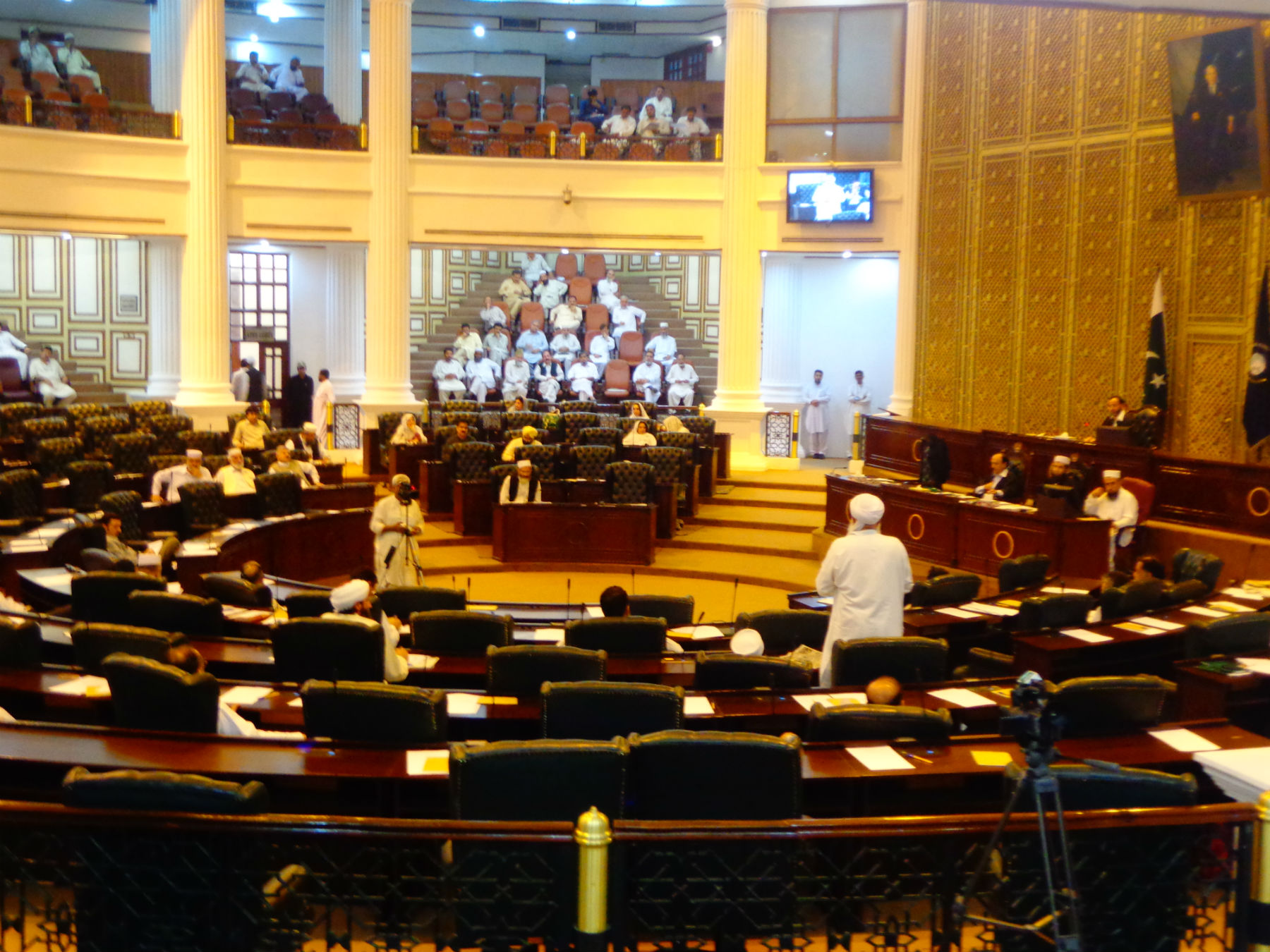
Reporting snapshot · 21 October 2026 (Asia/Karachi). A Lahore-based lawyer filed a petition in the Federal Constitutional Court on Tuesday, 20 October, challenging the emergency and governor's rule imposed in Khyber Pakhtunkhwa on 11 October. The same day, the Peshawar High Court issued notices in separate petitions and adjourned them to 10 November. The FCC petition is at an early stage: the reports reviewed for this article did not say whether the court has listed it for hearing or issued notices. The detention figures below are claims made in the petition and by PTI lawyers, not independently verified counts.
What happened
A Lahore-based lawyer, Muhammad Yousaf Javed, has asked the Federal Constitutional Court (FCC) to declare the 11 October proclamation of emergency and governor’s rule in Khyber Pakhtunkhwa unconstitutional and without lawful authority. The petition was filed on Tuesday, 20 October, according to Dawn and The News.
The petition asks the court to suspend the operation of the 11 October notification, restrain the authorities from making appointments or legislation for the province, and restore Chief Minister Sohail Afridi, his cabinet and the provincial assembly. It also seeks a declaration that steps taken under the proclamation have no legal effect, except for ordinary administrative acts needed to keep the province running. The respondents include the federation, the president, both provincial governors and senior federal and K-P officials.
The filing came on the same day the Peshawar High Court (PHC) heard a separate group of petitions against the emergency and governor’s rule. A two-member bench of Justice Ijaz Anwar and Justice Muhammad Faheem Wali issued notices to the federal government, the attorney general, the K-P advocate general and other respondents, and adjourned the case to 10 November, The Express Tribune reported. The court said it would examine the petitioners’ request for interim relief and pass an order; no interim relief had been granted when the reports were published.
What the FCC petition argues
The petition is built on the claim that there was no constitutional breakdown in Khyber Pakhtunkhwa when the federal government moved against the provincial administration. According to The News, it argues that no objective material was disclosed to show that the province could not be governed under the Constitution, and that the action rested on political disagreements between the federal and provincial governments and statements by federal ministers rather than on a permissible constitutional ground.
It also alleges discrimination. The petitioner points to Balochistan, where governor’s rule was not imposed despite what the petition describes as comparable security conditions, and argues that the selective use of Articles 232 and 234 is evidence that the K-P measures were politically motivated. The petition invokes Article 175E, the provision that sets out the FCC’s constitutional jurisdiction, and asks the court to protect fundamental rights as well as decide the constitutional questions.
The relief is broad. Beyond restoring the chief minister and cabinet, the petition asks the FCC to declare that appointments and legislation made under the proclamation are void, and that any “protective custody” arising from the action is void from the outset.
The petition claims that about 238 people, including the chief minister, cabinet members and party workers, have been detained. That figure has not been independently verified. In the PHC, PTI Chairman Barrister Gohar Ali Khan told the bench that 12 MNAs and 14 MPAs had been picked up, according to Dawn. The federal government has not published a detainee count.
What the PHC decided
The PHC hearing was the first scheduled hearing on the 11 October measures, following the court’s decision last week to list the petitions for 20 October. KhabarWire reported the listing and the petitioners’ constitutional arguments before the hearing.
At Tuesday’s hearing, the petitioners’ counsel, Barrister Sameer Khosa, argued that the provincial government had not lost control of the province and that the chief minister and assembly speaker were missing. He cited the Supreme Court’s judgment in the Pir Sabir Shah case for the proposition that a chief minister and cabinet continue to function during an emergency. PTI Secretary General Salman Akram Raja argued that the constitutional requirements for both measures had not been met and asked the court to restore the provincial assembly. Advocate Muazzam Butt questioned the absence of a governor’s report and said the provincial apex committee was the proper forum for security decisions.
The bench did not decide those arguments. It issued notices and set 10 November for the next hearing, saying it would release a detailed order later. The case therefore remains at the stage of pleadings and replies, not a ruling on the merits.
The PHC petitions were filed by a wider group, including PTI Chairman Barrister Gohar Ali Khan, Mahmood Khan Achakzai’s Tehreek-e-Tahafuz-e-Aaiyeen Pakistan, Akhtar Jan Mengal, the K-P Bar Council and Shandana Gulzar, The News reported. The FCC petition is the work of a single lawyer acting in his own name.
Why the two tracks matter
The two cases test different things. The PHC is being asked whether the provincial government was functioning and whether the constitutional procedure for emergency and governor’s rule was followed. The FCC petition goes further: it asks the constitutional court to treat the entire proclamation as politically motivated and discriminatory, and to restore the elected government.
The two measures rest on different provisions. Article 232 allows an emergency when the security of Pakistan, or part of it, is threatened by war, external aggression or internal disturbance. Article 234 allows governor’s rule when a province cannot be governed in accordance with the Constitution. The federal government says the measures were necessary because security had deteriorated and the PTI-led administration was not cooperating with counterterrorism operations; KhabarWire set out the cabinet’s case and the presidential notification on 11 October.
Parliament endorsed the measures in the National Assembly and Senate on 14 October and at a joint sitting on 15 October; KhabarWire reported that ratification. The petitioners argue that Article 232 and Article 234 cannot be used together to remove an elected government on the strength of political disagreement. The courts will have to decide which account the constitutional text and the record support.
The FCC was created under the 27th Constitutional Amendment in 2025 and has been building its constitutional caseload. A challenge to a provincial emergency is among the most sensitive questions it could hear, because it pits the federal executive’s security powers against provincial autonomy and the elected mandate.
What is still uncertain
The FCC has not yet ruled on whether the petition is maintainable, and the reports did not say whether it has been listed for a hearing or whether notices have been issued. The petitioner’s standing and the court’s willingness to intervene while the PHC case proceeds are open questions.
In the PHC, the federal government and the other respondents have not yet filed their replies. The court has set 10 November, but that is a hearing date, not a deadline for a final decision. The bench has also not ruled on the interim relief request, which could determine whether the chief minister and assembly are restored before the merits are decided.
The detention figures remain contested. The petition’s claim of about 238 detentions and Barrister Gohar’s claim that 12 MNAs and 14 MPAs were picked up have not been independently confirmed. The government has not published a list, and the courts have not made a finding on the numbers; they should be treated as allegations, not established facts.