Reporting snapshot · 26 October 2026 (Asia/Karachi). The Foreign Office statement was issued on Monday afternoon, and the Taliban's government has not published a reply to it. Neither side has released the data behind its casualty count, and the two figures measure different things over different periods, so they cannot be checked against one another.
What happened
Pakistan’s Foreign Office on Monday rejected the Afghan Taliban’s allegations that Pakistani counter-terrorism operations inside Afghanistan killed and injured civilians, calling them “baseless and unsubstantiated” and reaffirming Islamabad’s right to act in self-defence. The statement came from Foreign Office Spokesperson Sajjad Haider Khan and was carried by the state broadcaster Radio Pakistan, Geo News, the Express Tribune and Pakistan Today.
The statement answered an Afghan claim made in an interview with CNN, in which a spokesperson for Afghanistan’s Ministry of Foreign Affairs said Pakistani military strikes had killed or injured 1,119 Afghan civilians since late 2021, Pakistan Today reported.
Against that, the Foreign Office said attacks planned and launched from Afghan soil had caused more than 3,500 casualties in Pakistan in 2026 alone. Khan said disinformation and misleading narratives “will neither obscure the threat posed by the terrorist networks operating from Afghan territory nor absolve the Afghan Taliban regime of its responsibility to prevent Afghan soil from being used to plan and launch attacks against Pakistan”. Thousands of Pakistani civilians had been martyred in attacks “planned, financed, supported and carried out” from Afghan soil, he said, and no responsible state “can remain passive when its civilians and security forces are repeatedly targeted”.
He named the organisations he said continue to operate from Afghan territory with impunity: the Tehreek-e-Taliban Pakistan, also called Fitna al-Khawarij, the Balochistan Liberation Army, also called Fitna al-Hindustan, and their affiliates. Khan said United Nations mechanisms, including the Monitoring Team, had reported the same and that it was “a cause of serious concern for the international community”.
On the legal footing, the Foreign Office said Pakistan’s actions were taken in exercise of its right to self-defence, under principles of necessity and as a measure of last resort, and were directed “only and exclusively against terrorists and their logistical support bases in Afghanistan”. The response had been proportionate to the threat and had adhered to the principles of distinction and precaution, and the scale and scope of the action “reflected restraint”. Khan said the Taliban government should be held accountable for failing to uphold its obligations under relevant United Nations Security Council resolutions, and that Pakistan “reserves the right to take all necessary measures” to safeguard its sovereignty, territorial integrity and the safety of its nationals.
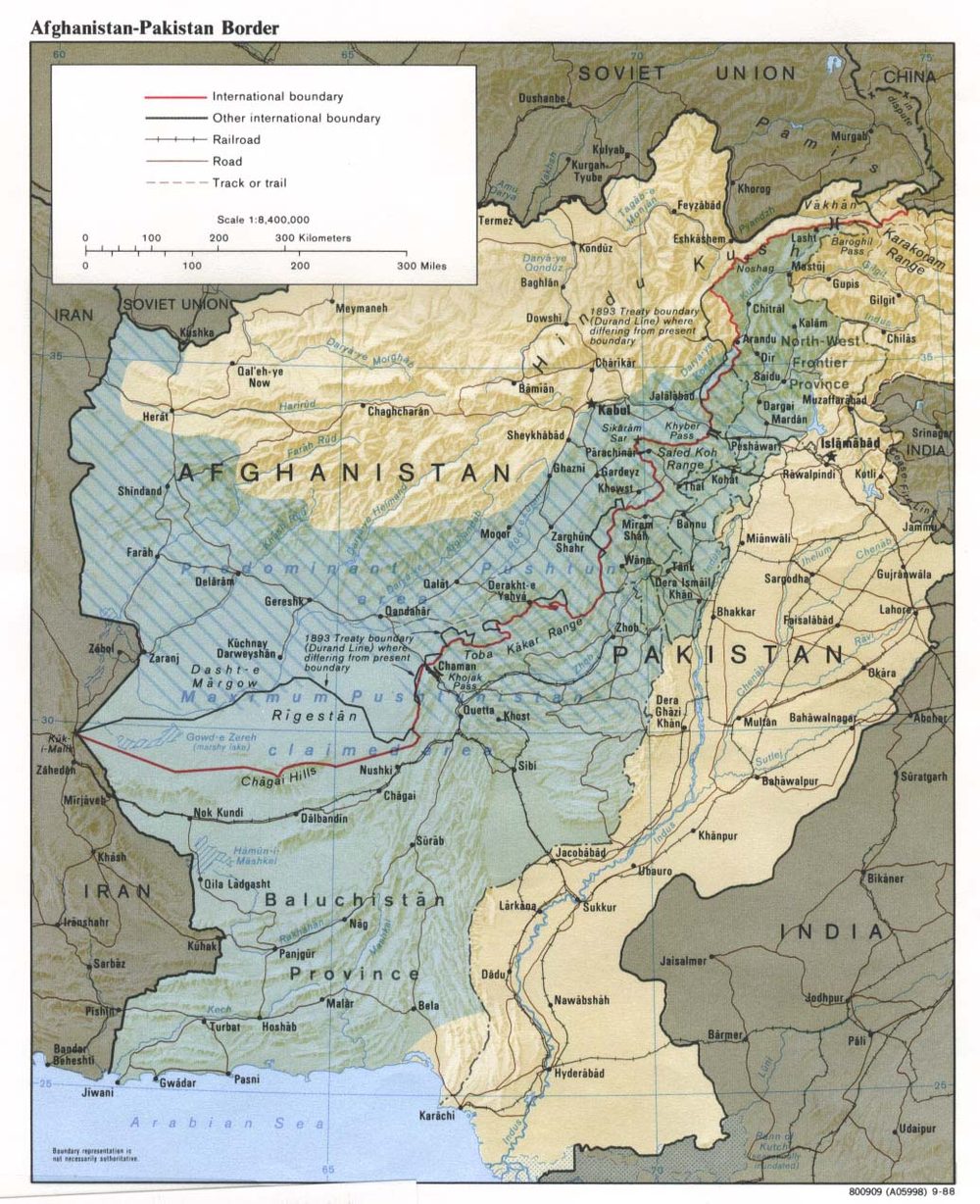
The statement sits inside an active campaign. Operation Ghazab lil-Haq, launched in late February 2026 after renewed Afghan fire across the border, has run as an air-and-ground campaign against militant infrastructure inside Afghanistan. On 1 October, Pakistan struck sites in Kunar and Helmand, where the Ministry of Information said 22 militants were killed while Kabul said nine civilians died, as reported at the time. Those Kunar and Helmand strikes are the operation in which Kabul said civilians were killed. Drone incursions from Afghan territory followed, which Pakistani forces said they shot down, and further retaliatory airstrikes followed those. The most recent ground exchange before Monday came in the Upper Kurram sector of Khyber Pakhtunkhwa, where the Pakistan Army struck the Shipola base camp and the Topser post on 17 October after Taliban forces opened fire at Taida and Ghozgarhi — a clash KhabarWire reported at the time. The wider strikes and the September drone exchanges are tracked in KhabarWire’s Pakistan-Afghanistan border file.
Separately over the weekend, Pakistan’s information ministry rejected claims by former United States envoy Zalmay Khalilzad that Islamabad was arming Afghans to fight the Taliban government.
Why it matters
Two incompatible counts now sit at the centre of the dispute, and they are not measuring the same thing. Pakistan’s figure — more than 3,500 casualties in Pakistan during 2026 from attacks launched across the border — counts what Pakistan says it has suffered this year. Kabul’s figure — 1,119 Afghan civilians killed or injured since late 2021 — counts what Afghanistan says Pakistan has done over four years, and it merges the dead with the wounded. Set side by side, the numbers can neither be reconciled nor directly compared, so the Foreign Office’s statement is best read as a formal rejection of the opposing accounting rather than as a dispute settled by evidence.
The statement also moves the argument from the battlefield towards the multilateral channel. Khan tied the Taliban’s sheltering of the TTP to what United Nations mechanisms, including the Monitoring Team, have reported, and urged the international community to hold Kabul to its obligations under Security Council resolutions. A United Nations monitoring report covering 16 December 2025 to 9 June 2026 said the Taliban’s continued support for the TTP had increased the frequency and lethality of terrorist attacks in Pakistan, even as Kabul took some initial steps to rein in the group, Pakistan Today reported. That is the strongest documented basis Pakistan has for pressing the point, and it explains why the statement leans on self-defence, necessity and last resort rather than on any single exchange.
For Pakistani readers, the practical significance is that the government has now put a number and a legal characterisation on the record in a formal, quotable statement instead of through briefing officials, and it has asked the world to act on Kabul’s role. It also sets the line for the next round. Pakistan has been running two tracks on Afghanistan: the air-and-ground campaign, and a diplomatic push that collapsed with the failure of the Moscow format talks in October. A statement asking third states to hold the Taliban accountable raises the political cost of the campaign at the same time as it seeks international backing for it.
What is still uncertain
The 3,500 figure carries no published methodology. The Foreign Office statement gives no breakdown between security personnel and civilians, no list of incidents and no independent source, so it cannot be audited from outside the government. It is a government assessment of attacks Pakistan says were planned from Afghan soil, presented as a settled total.
The 1,119 figure is equally unverified in what has been published. It comes from a Foreign Ministry spokesperson’s interview with CNN in Kabul, relayed by Pakistani media, and the underlying Afghan data — how it was counted, by whom and over which operations — has not been published. Neither figure has been tested against the incident-level record of strikes in Kunar and Helmand, or of the ground fighting in the Kurram sector.
The Taliban’s government had not published a reply by late Monday evening in Karachi, and the specific operations that prompted the civilian-casualty allegations were not identified in the Foreign Office’s response. Whether Kabul answers with a figure of its own, and whether United Nations monitoring picks up the question of reconciling the two counts, will determine whether this exchange produces any movement. Until then the numbers stand as each side’s account.