Reporting snapshot · 6 October 2026. The Express Tribune's account, by Kamran Yousaf, draws on the published transcript of Pakistan's Special Representative for Afghanistan, Mohammad Sadiq, the Afghan Taliban's Acting Foreign Minister Amir Khan Muttaqi, and Russia's Special Presidential Envoy Zamir Kabulov. The closed-door nature of the meeting means only the statements the participants have made public are verifiable; specific claims about positions held during the closed drafting sessions rest on the read-out provided by these officials and the Russian foreign ministry's summary.
What happened
The eighth meeting of the Moscow Format — a Russia-led regional consultation on Afghanistan launched in 2017 — broke down on Monday when Pakistan and the Afghan Taliban delegation failed to agree on the language of a joint statement, according to The Express Tribune’s account by senior diplomatic correspondent Kamran Yousaf. It was the first time since the inaugural meeting that participants had failed to issue a joint statement at the end of the talks.
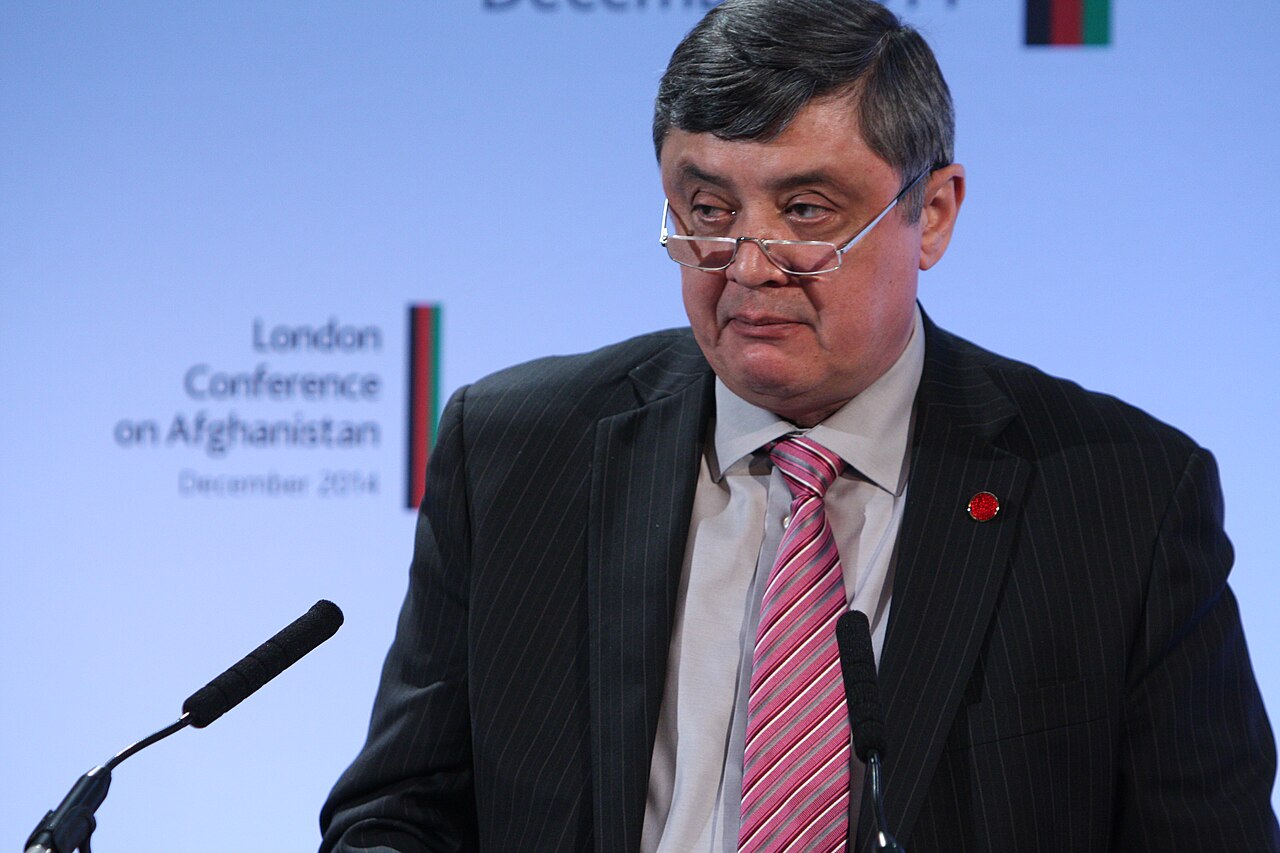
Russia’s Special Presidential Envoy for Afghanistan, Zamir Kabulov, later confirmed that the dispute between the Pakistani and Afghan delegations had prevented adoption of the final document. “When drafting the final joint statement, we encountered one problem — that problem was that our Afghan and Pakistani colleagues didn’t see eye to eye. We regret this,” Kabulov told reporters, according to The Express Tribune. He added that the Afghan side had objected to the draft on the grounds that it referred to Afghanistan too frequently in the context of terrorism, even though similar wording had been used in the statement issued after last year’s meeting.
Pakistan was represented at the meeting by its Special Representative for Afghanistan, Ambassador Mohammad Sadiq. The Afghan Taliban delegation was led by Acting Foreign Minister Amir Khan Muttaqi. The eighth Moscow Format brought together senior representatives from Russia, Pakistan, Afghanistan, China, Iran and India, with Belarus and Egypt attending as guests, to discuss Afghanistan’s political, security and economic situation, including counter-terrorism and regional connectivity.
Why the Pakistani and Afghan sides clashed
Sadiq used his address to put terrorism at the centre of Pakistan’s complaints, and the published transcript of his remarks, as reported by The Express Tribune, left little room for diplomatic softening. “Terrorism remains at the core of Afghanistan’s problems, with roots in the nexus between the Taliban Regime and terrorist groups,” Sadiq said, referring specifically to the banned Tehreek-e-Taliban Pakistan (TTP) and other militant outfits operating from Afghan territory. He added that “over the last three years alone, more than 4,700 innocent Pakistanis have lost their lives to terrorism emanating from Afghanistan” and accused the Taliban regime of being “complicit in this”, describing Pakistan’s military strikes inside Afghanistan as “precise, intelligence-based and defensive in nature”.
The Pakistani position directly challenged the narrative that the Taliban’s Acting Foreign Minister, Muttaqi, has been pressing in regional capitals — that the recent escalation is primarily the result of Pakistani military action against Afghanistan rather than Afghan inaction on militant groups based on its soil. Muttaqi, in his address, accused Pakistan of relying on military pressure rather than diplomacy and said Kabul wanted its disputes with Islamabad resolved through dialogue. He maintained that Afghanistan had the right to defend itself against aggression and insisted that Kabul would formulate its domestic and foreign policies independently rather than under external pressure.
The sharply contrasting positions made agreement on language concerning terrorism, in particular references to Afghan territory being used as a launching pad for attacks against Pakistan, virtually impossible. The breakdown occurred as Pakistan and the Afghan Taliban are in the middle of one of the worst bilateral crises since the Taliban returned to power in August 2021, with Islamabad repeatedly carrying out airstrikes on Afghan border provinces — including the most recent 1 October strikes on Kunar and Helmand — and Kabul accusing Pakistan of killing non-combatants.
Russia’s position — and what the breakdown exposes
The Moscow Format meeting itself became a stage on which the divergent regional views about the Taliban were visible. Russian Foreign Minister Sergey Lavrov, who opened the meeting, praised the Taliban’s performance since its return to power in 2021 and described the movement’s administration as a “national government”. Lavrov also praised the Taliban for its efforts against Da’ish and other extremist groups and for combating drug trafficking, while reiterating Moscow’s opposition to any return of Western military infrastructure to Afghanistan or neighbouring states.
Moscow’s posture is notable because Russia formally recognised the Taliban administration in 2025, making it the first country to do so, and the unusually strong endorsement at the Moscow meeting stood in marked contrast to Pakistan’s emphasis on the Taliban’s links to militant groups operating against Pakistan. The collapse of the joint statement therefore exposed not merely a Pakistan–Afghanistan disagreement but a widening gap among regional powers over how to assess the security threat emanating from Afghan territory and how to deal with the Taliban regime.
Kabulov nevertheless sought to play down the breakdown, arguing that the failure to issue a statement would not spell the end of the Moscow Format and that the platform could continue to function despite the disagreement. Russia’s foreign ministry has not, as of this report’s publication, made any of the draft text public.
What it means for Pakistan
The breakdown does not directly change Pakistan’s formal demands of the Taliban, which have been the subject of repeated public statements over recent months — most recently in the Foreign Office’s 20 September demand that the Afghan Taliban dismantle militant networks after the Kohat attack and Deputy Prime Minister Ishaq Dar’s 22 September address to the OIC Contact Group on Afghanistan at the United Nations General Assembly in New York. What it does is remove one of the few remaining multilateral venues in which Pakistani and Taliban officials sit at the same table and produce a text both are willing to be associated with.
For the broader regional approach to Afghanistan, the breakdown is the clearest signal to date that the consensus framework the Moscow Format was meant to embody no longer holds in its 2017 form. Russia’s openness to the Taliban and its distance from Pakistan’s framing of TTP activity is a structural feature of the forum rather than a passing disagreement, and the failure to issue a statement on 6 October narrows the practical diplomatic space in which Pakistan can argue for a more security-focused approach within a Russia-led forum.
What is still uncertain
- The exact wording on which the Pakistani and Afghan delegations diverged has not been made public; only the broad area of disagreement — the framing of Afghan territory in terrorism-related clauses — has been confirmed.
- Whether the Moscow Format will continue to convene annually after this breakdown is not yet clear. Kabulov said the platform could continue to function, but no date for a follow-up meeting has been announced.
- The Afghan Taliban’s public response to the meeting’s failure is limited so far to the remarks Muttaqi made during the session; the movement has not, as of this article’s publication, issued a separate statement on the collapse.
- Pakistan’s next diplomatic move — whether it will intensify the public pressure it has applied at the OIC and UN General Assembly, or pivot back to bilateral channels — is not publicly signalled in the read-out of Sadiq’s address.
Sources & reporting notes
This is a synthesis of published material, not eyewitness reporting. Sources were reviewed on 6 October 2026.
- The Express Tribune — Pakistan, Taliban clash at Moscow talks6 October 2026 · Carries the quoted statements by Mohammad Sadiq, Amir Khan Muttaqi and Zamir Kabulov and Lavrov's opening remarks; primary record of the meeting.
- The Express Tribune — From friendly to 'delusional'5 October 2026 · Kamran Yousaf's column on the state of Pakistan–Taliban relations; supplies the broader context for the breakdown, including the 4,700 death toll cited by Sadiq.
- The Express Tribune — CDF Munir, FM Dar head to Riyadh for Makkah agreement meeting5 October 2026 · Same-source reporting on the trilateral Makkah defence committee meeting that ran in parallel to the deteriorating Pakistan–Taliban relationship.
- Geo News — Makkah pact: Pakistan, Saudi Arabia and Turkiye vow rapid force deployment in kingdom6 October 2026 · Independent Pakistani outlet reporting on the parallel Makkah defence track; corroborates the wider regional security environment in which the Moscow Format convened.
- Geo News — Five India-backed terrorists killed, two injured in North Waziristan6 October 2026 · Independent reporting on the security incidents Pakistan cites as justification for its Afghan strikes; corroborates the broader security context for the Moscow talks.
.jpg)