Reporting snapshot · 14 October 2026 (Asia/Karachi). Pakistan and Oman exchanged six agreements and MoUs at the eighth session of their Joint Ministerial Commission in Islamabad on 14 October, with Prime Minister Shehbaz Sharif witnessing the signing. DPM Dar and Omani FM Sayyid Badr then announced, in a public stakeout, new joint working groups and an upcoming Pakistan-Oman business forum. The six documents cover visas, archives, information and broadcasting, telecommunications and news exchange. The stakeout also set out the GCC-Pakistan FTA push, the Makkah Joint Defence Agreement and the Houthi attacks on Saudi Arabia. This article sets out what was signed, what the stakeout revealed, and what remains unconfirmed.
What was signed on 14 October
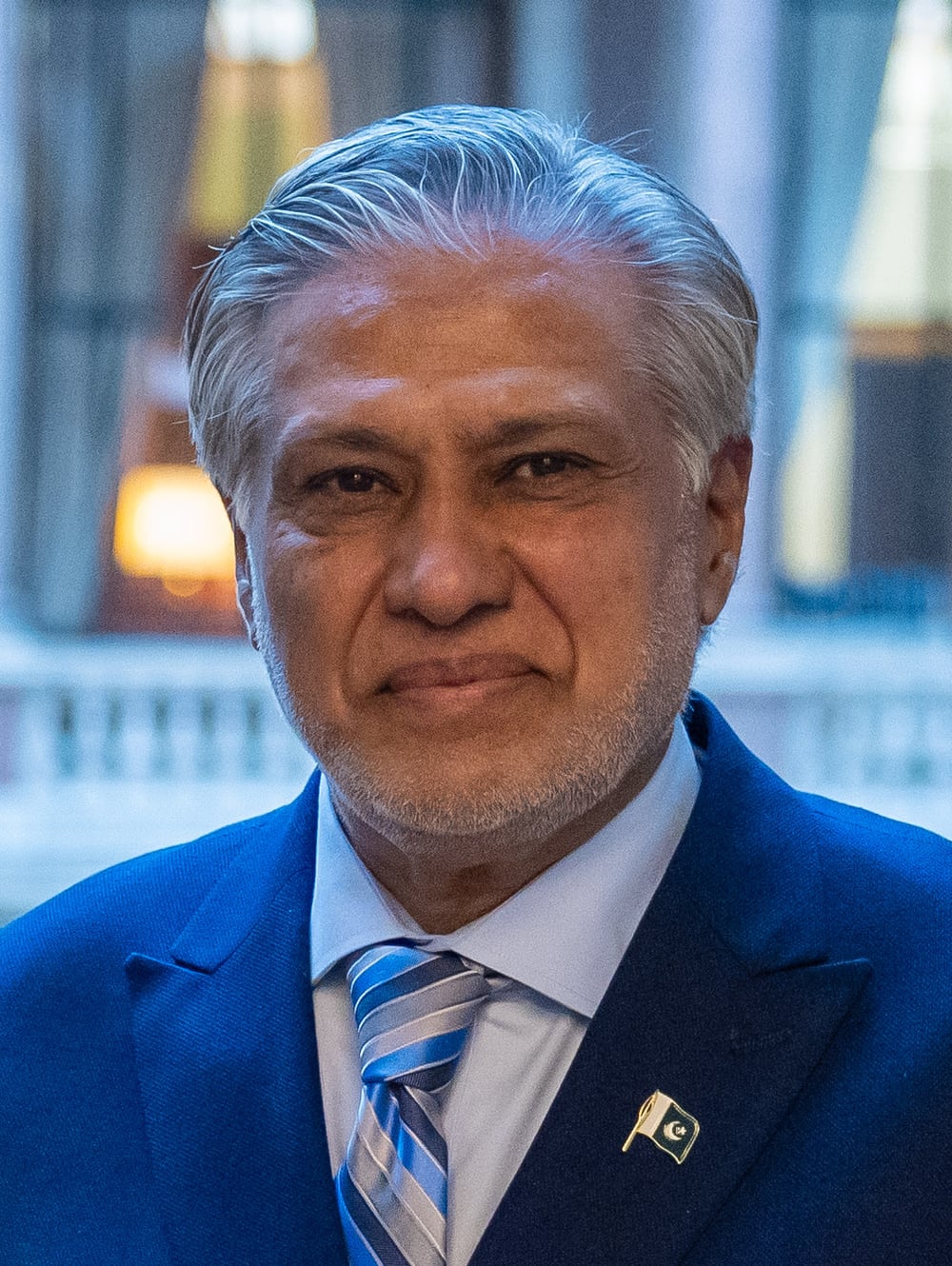
Pakistan and Oman exchanged six agreements and MoUs in Islamabad on Wednesday, 14 October 2026, the Associated Press of Pakistan (APP) reported, citing the Ministry of Foreign Affairs. Prime Minister Shehbaz Sharif witnessed the signing during the eighth session of the Pakistan-Oman Joint Ministerial Commission (JMC), held as Omani Foreign Minister Sayyid Badr visited Pakistan from 13 to 14 October at DPM Dar’s invitation, the Foreign Office had said on 12 October.
DPM Dar and Sayyid Badr signed three documents: the protocol recording the minutes of the eighth JMC session, the agreement on mutual visa exemption for holders of diplomatic, special, official and service passports, and the MoU on records and archives. The remaining three MoUs — on information and broadcasting, on information technology and telecommunications, and on news exchange and media cooperation — were signed by the federal ministers for information and broadcasting and for IT and telecommunication, APP and Radio Pakistan said. The agreements are intended to broaden collaboration.
What the Shehbaz-Albusaidi meeting covered
Shehbaz highlighted the shared faith, geographical proximity, history, culture and centuries-old people-to-people exchanges that underpin the bilateral relationship, an APP readout said. He described Oman as a brotherly country, an important maritime neighbour and a valuable partner in a strategically significant region, and expressed satisfaction over the successful convening of the eighth JMC. He also noted the convergence of views between Pakistan and Oman on regional and global issues, and appreciated Muscat’s principled emphasis on dialogue and diplomacy.
Sayyid Badr thanked Pakistan for the hospitality, welcomed the JMC session and agreed the meeting would pave the way for enhanced cooperation. He appreciated Pakistan’s diplomatic efforts to de-escalate tensions and promote peaceful solutions to regional challenges, APP and Radio Pakistan reported.
What the stakeout added
The same day, DPM Dar and Sayyid Badr held a joint press stakeout in Islamabad, Radio Pakistan said. The readout set out the institutional outcome: the establishment and operationalisation of joint working groups in trade and investment, agriculture, oil and gas, and labour and human resource development. The ministers agreed to hold a Pakistan-Oman business and investment forum in Pakistan soon, and acknowledged the “valuable contribution of the Pakistan community in Oman,” which Dar called “a strong bridge between two brotherly countries.”
On labour, both sides reaffirmed their commitment to cooperation in labour mobility, vocational training and human resource development. The stakeout also touched on freedom of navigation: both sides underscored the importance of restraint, de-escalation, dialogue and diplomacy in the Gulf, and the need to ensure safety and freedom of navigation through the Strait of Hormuz and the Bab al-Mandab, given their importance to regional and global food and energy security, Radio Pakistan reported.
Where the GCC-Pakistan FTA fits in
The Pakistan-GCC Free Trade Agreement was a background theme. Dar’s stakeout said the Pakistan-GCC FTA “will certainly help expand the business activities between Pakistan and GCC-member countries,” Radio Pakistan reported, but the JMC is not the venue at which the GCC-Pakistan FTA itself is signed; the broader framework is negotiated at the GCC level. The trade and investment working group is the bilateral mechanism that is meant to feed into that framework, alongside the parallel Pakistan-Bahrain working group agreed at the third Pakistan-Bahrain JMC on 8 October, as KhabarWire reported.
The Makkah pact and the Houthi file
The stakeout also touched on the regional security backdrop. Pakistan is one of three signatories of the Makkah Joint Defence Agreement signed with Saudi Arabia and Türkiye on 7 August 2026, as KhabarWire has reported. Dar condemned Houthi attacks on Saudi Arabia and “underscored that attacks against civilians and civilian infrastructure are totally unacceptable, violation of international law and pose a serious threat to regional peace and security,” Radio Pakistan reported, and reaffirmed Pakistan’s “full solidarity with the leadership and people of Saudi Arabia” and “unwavering commitment to sovereignty, territorial integrity and security of Saudi Arabia in accordance with Makkah Joint Defence Agreement.”
Palestine, Kashmir and the regional agenda
Dar reiterated Pakistan’s “principled and unwavering support for the Palestinian people and their inalienable rights,” and both sides expressed concern over continued expansion of illegal settlements and efforts to alter the status of Quds al-Sharif. He also raised Jammu and Kashmir with the Omani foreign minister and “reiterated Pakistan’s call for a just and peaceful solution in accordance with relevant UN Security Council resolutions.” Sayyid Badr said the eighth JMC provided an opportunity to review the bilateral relationship, the same report said. He also appreciated Pakistan’s “constructive role in facilitating dialogue and supporting diplomatic efforts in the region, including its role in the negotiations between Iran and the United States.”
Where the bilateral agenda sits
The eighth session is the first after the May 2026 reorganisation of Pakistan’s federal cabinet that confirmed Ishaq Dar as both deputy prime minister and foreign minister. The agenda list issued ahead of the visit covered trade, investment, industry, agriculture, finance, oil and gas, labour, consular affairs, security, defence, climate change, civil aviation, education, media and culture, KhabarWire’s 13 October coverage noted. The session follows the Gwadar-Sohar sister-port arrangement announced in September, as KhabarWire’s 8 September account set out. It is the most recent instalment of Pakistan’s Gulf diplomatic calendar this month, which has included the third Pakistan-Bahrain JMC, covered on 7 and 8 October.
What is still uncertain
The text of the six documents. The APP readout and Geo News’ account identify the six signed documents by subject area, but the full texts of the visa-exemption agreement, the records-and-archives MoU, the IT and telecom MoU, the information and broadcasting MoU and the news exchange and media cooperation MoU have not been published by either government as of this writing.
The working-group timelines. The joint working groups in trade and investment, agriculture, oil and gas, and labour and human resource development are new institutional structures; the Pakistan-Oman business forum announced for an unspecified “soon” has no published date, and the working-group co-chairs have not been named publicly.
The next session. The eighth session is the most recent Pakistan-Oman JMC; the FO readout and the Radio Pakistan account do not name the venue or timing of the ninth session, and it is not clear whether it will be held in Muscat or back in Islamabad.
The Omani side’s official English readout. The Omani foreign ministry’s English-language readout has not been retrieved; Sayyid Badr’s remarks as carried by Radio Pakistan and APP are summaries rather than verbatim transcripts.
Sources & reporting notes
This is a synthesis of the official Pakistani readouts and same-day independent reporting, not eyewitness reporting. Sources were reviewed on 15 October 2026 (Asia/Karachi).
- Primary source — APP: "Pakistan, Oman exchange six agreements, MoUs to boost bilateral cooperation," 14 October 2026Primary record · APP carries the FO and PMO readouts of the eighth Pakistan-Oman JMC, identifying the six signed documents and Shehbaz Sharif's role as a witness.
- Independent source — APP: "Pakistan, Oman agree to boost multi-sector bilateral cooperation," 14 October 2026Independent reporting · APP's second same-day wire carries the PMO readout of Shehbaz Sharif's meeting with Sayyid Badr: the fraternal-ties language, the brotherly-country framing, the convergence of views on regional issues.
- Independent source — Radio Pakistan: "Pakistan, Oman vow to expand bilateral cooperation," 14 October 2026Independent reporting · State-broadcaster account of the joint stakeout by DPM Dar and FM Albusaidi: the joint working groups, the agreed business forum, the Hormuz and Bab al-Mandab remarks, the Houthi attacks, Palestine and Kashmir.
- Independent source — Radio Pakistan: "Omani FM praises Pakistan's efforts for regional peace," 14 October 2026Independent reporting · Same-day state-broadcaster account of Sayyid Badr's courtesy call on the Prime Minister, the bilateral framing, and the Omani FM's appreciation of Pakistan's mediation efforts.
- Independent source — Geo News: "Shehbaz hosts Omani foreign minister as six cooperation agreements are signed," 14 October 2026Independent reporting · Carries the APP wire with additional detail on the six MoUs and Shehbaz Sharif's role in the meeting.