Reporting snapshot · 19 March 2026. Pakistan's response is a statement, not a change in policy; the underlying US assessment is a projection about future capability.
What happened
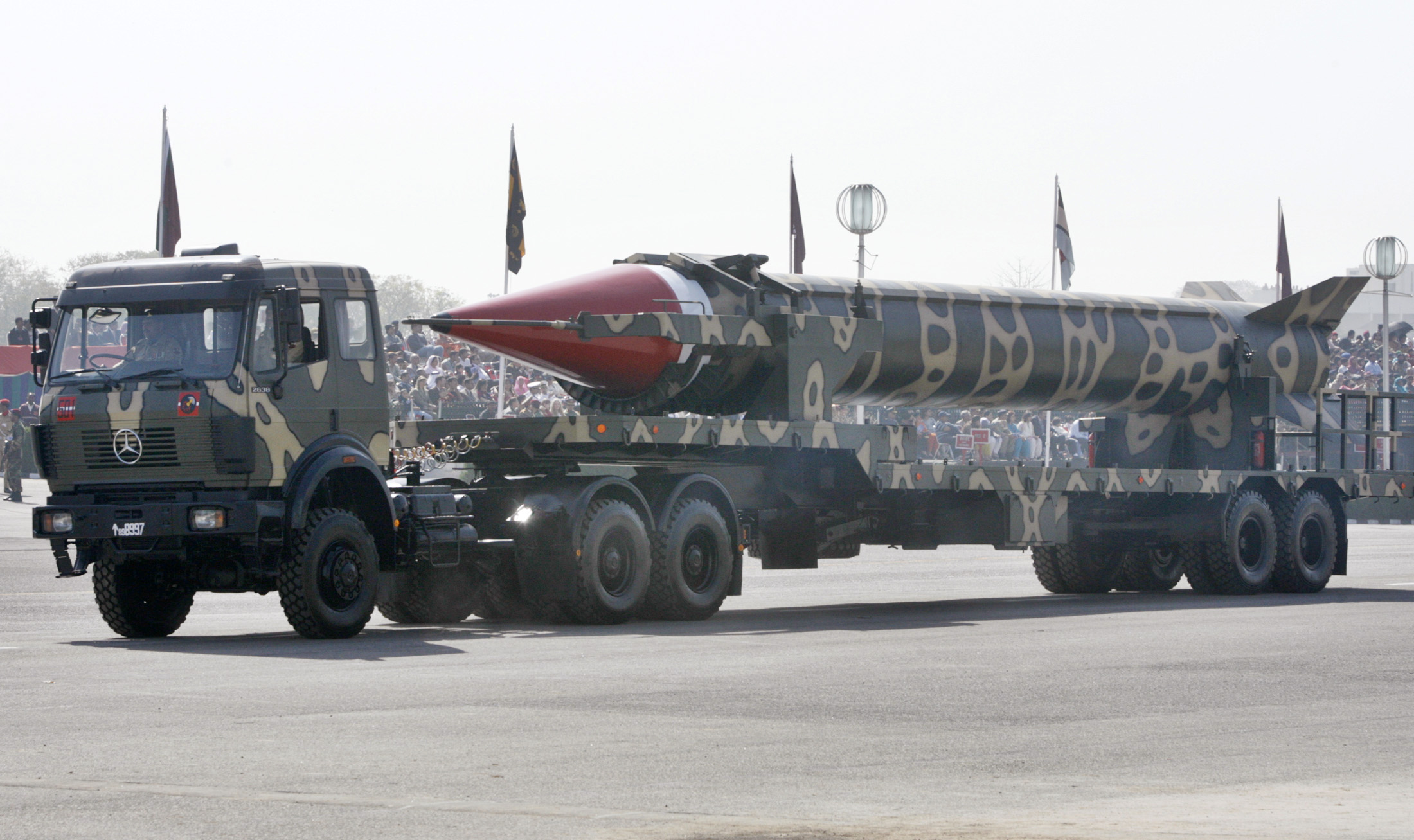
Pakistan’s Foreign Office on Thursday rejected as baseless a claim by US Director of National Intelligence Tulsi Gabbard that Pakistan’s advancing missile programme could eventually put the American homeland within range.
Gabbard made the assessment while presenting the 2026 Annual Threat Assessment to the US Senate Intelligence Committee a day earlier, on Wednesday. She grouped Pakistan with Russia, China, North Korea and Iran as states “researching and developing an array of novel, advanced or traditional missile delivery systems with nuclear and conventional payloads, that put our homeland within range”.
On Pakistan specifically, she told lawmakers that its “long-range ballistic missile development potentially could include ICBMs with the range capable of striking the homeland”. The written report said Pakistan “continues to develop increasingly sophisticated missile technology” and warned that if those trends continue it could field intercontinental ballistic missiles “that would threaten the US”.
Foreign Office spokesperson Tahir Hussain Andrabi said Pakistan “categorically rejects” the assertion, adding that the country’s strategic capabilities are “exclusively defensive in nature, aimed at safeguarding national sovereignty and maintaining peace and stability in South Asia”.
“Pakistan’s missile programme, which remains well below intercontinental range, is firmly rooted in the doctrine of credible minimum deterrence vis-à-vis India,” he said. By contrast, he said, India’s development of missile capabilities exceeding 12,000 kilometres “reflects a trajectory that extends beyond regional security considerations and is certainly a cause of concern for the neighbourhood and beyond”.
Why it matters
The exchange lands in a sensitive stretch of US-Pakistan relations. Washington sanctioned Pakistan’s National Development Complex and three private firms in December 2024 over alleged procurement for long-range missiles, and US officials have for years questioned whether Islamabad’s programme remains India-specific. Pakistan announced an Army Rocket Force Command after its May 2025 conflict with India.
Military analysts in Pakistan pushed back on the assessment. Former brigadier Tughral Yamin noted that similar US concerns had been raised before and said Pakistan’s deterrence is aimed at India. Nuclear-security scholar Rabia Akhtar called the claim part of what she described as a persistent US habit of substituting worst-case speculation for grounded analysis. Former ambassadors Jalil Abbas Jilani and Abdul Basit also rejected the framing.
The core factual dispute is about trajectory rather than current inventory. Pakistan’s longest-range operational missile, the Shaheen-III, is estimated to reach about 2,750 kilometres — enough to cover India but far short of the roughly 5,500 kilometres generally taken as the ICBM threshold, and the distance to the United States exceeds 11,200 kilometres. Gabbard framed the risk as future potential; the written assessment projects that threats to the US homeland could grow from more than 3,000 missiles today to at least 16,000 by 2035.
Andrabi said Pakistan remained committed to “constructive engagement” with the United States, and urged “a more measured and considered approach” aligned with regional stability.
What is still uncertain
The assessment did not present evidence of a specific new capability, and no timeline was given for any ICBM. It is unclear whether the Trump administration will accompany the intelligence language with new sanctions or diplomatic pressure, or whether the issue will remain rhetorical. Pakistan has not signalled any change to its stated doctrine, and the Foreign Office response left the door open to continued engagement in Washington.
Sources & reporting notes
This is a synthesis of published material, not eyewitness reporting. Sources were reviewed on 19 March 2026.
- Geo News — "FO dismisses US official's assertion on Pakistan missile capabilities"Published 19 March 2026 · What this source supports: the Foreign Office statement, spokesperson Tahir Hussain Andrabi's remarks and Gabbard's Senate testimony.
- The Express Tribune — "FO 'categorically rejects' US intel chief's allegations about threat from Pakistan missile programme"Published 19 March 2026 · What this source supports: the Foreign Office's comparison with India's missile ranges and reaction from former diplomat Jalil Abbas Jilani.
- Al Jazeera — "Gabbard says Pakistan missiles a future threat to US, but experts push back"Published 19 March 2026 · What this source supports: the Shaheen-III range estimate, ICBM threshold context, the 2035 projection and analyst comment.