Reporting snapshot · 18 November 2026 (Asia/Karachi). This account rests on the Inter-Services Public Relations statement carried by Radio Pakistan and on same-day reporting by Geo News and The Express Tribune. The military published no range, speed, launch site or warhead details, and no independent assessment of the weapon's performance is available.
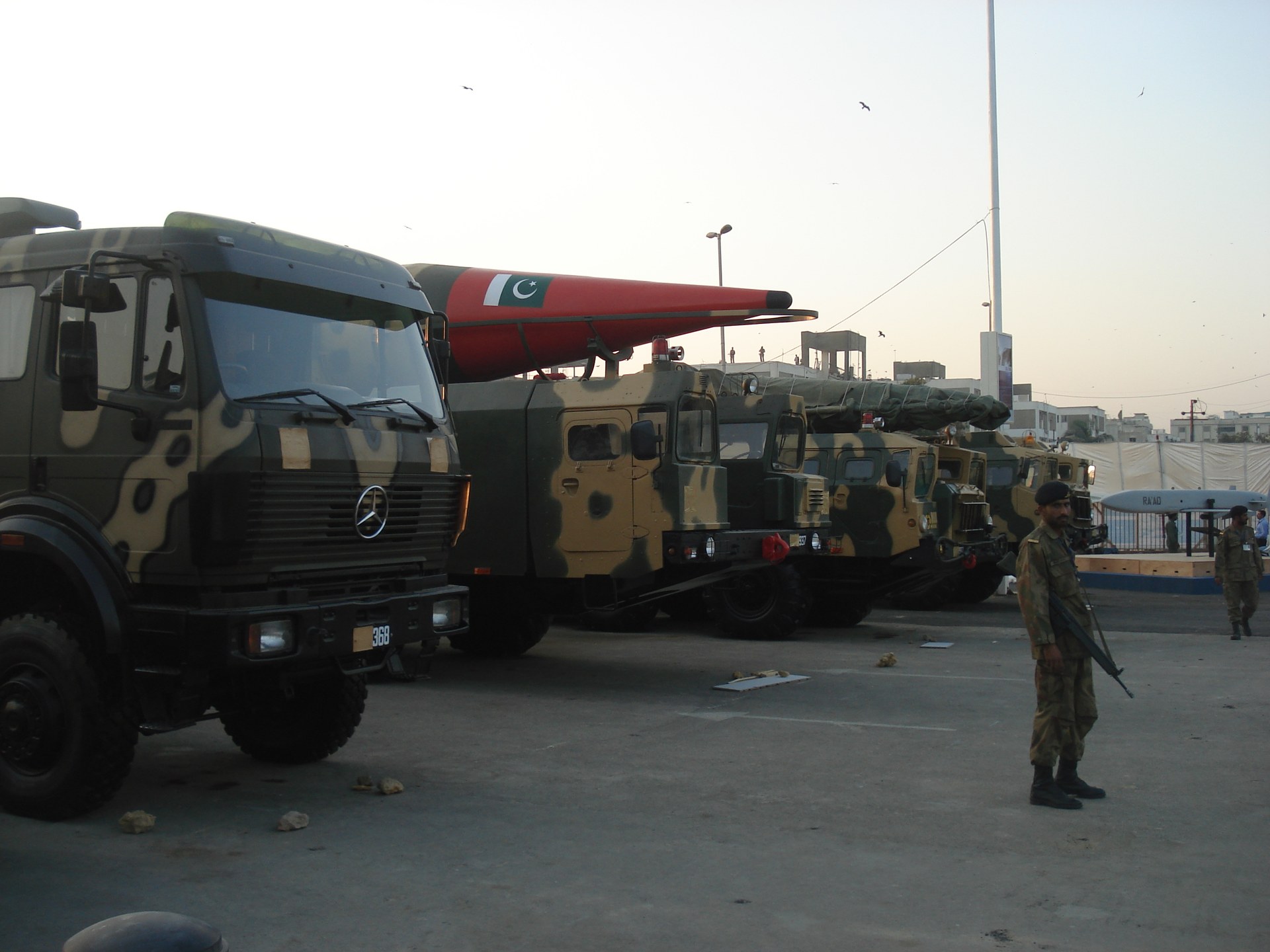
Pakistan’s army test-fired the Fatah-3 supersonic cruise missile on Wednesday, 18 November, adding a supersonic cruise weapon to the Army Rocket Force Command’s inventory and extending a run of tests that has now produced four successful launches in six weeks.
The Inter-Services Public Relations (ISPR), the military’s media wing, said in a statement carried by Radio Pakistan that the weapon system is “equipped with advanced navigation and propulsion systems” and “capable of engaging targets at long range with high precision and lethality at supersonic speed.” The army said the launch marked “another significant milestone in the advancement of national defence capabilities.”
Geo News reported the same announcement, quoting ISPR’s assessment that the missile “will significantly enhance the operational flexibility and strike reach of the Pakistan Army’s Rocket Force Command,” and said the launch was watched by the ARFC commander, senior officers of the armed forces and the scientists and engineers involved in the weapon’s development. The Express Tribune carried the statement too, describing the missile as part of the country’s effort to strengthen its defence capabilities.
What the Rocket Force Command says it gains
ISPR’s language is about reach and flexibility rather than a single headline figure. The Fatah-3 is a supersonic cruise missile, and the command that operates it already fields a ground-launched cruise missile and a hypersonic ballistic missile, so the announcement presents a third option for how the army reaches targets rather than a replacement for what it has.
The mechanism differs in a way that matters for anyone comparing the systems. A ballistic missile is launched on a trajectory and is generally assessed by range and payload; a cruise missile is launched from a platform and flies a powered route to the target, which allows it to be guided and, in principle, to follow terrain. ISPR’s emphasis on “operational flexibility” suggests the army is presenting the Fatah-3 as a complement to the rest of the command’s inventory, with the two words doing more work than the sentence around them.
What the military did not do on Wednesday was describe the hardware. No range figure accompanied the announcement, in contrast to the 750-kilometre figure attached to the Fatah-4. No speed, launch site, guidance type, warhead description or production plan was given either, and ISPR did not say whether the missile carries a live warhead, an inert payload or a manoeuvring test body.
Four launches in six weeks
The Fatah-3 is the latest in a dense sequence of Pakistani missile tests, and the pace is itself notable. In early November, the air force flight-tested the Fa’az, its first home-built air-to-air missile. Before that, the ARFC tested the extended-range Fatah-2 hypersonic ballistic missile on 13 October, and an extended version of the Fatah-4 ground-launched cruise missile earlier in the month.
The Express Tribune noted that the Fatah-4 is a ground-launched cruise missile bearing a range of 750 kilometres, designed to evade enemy missile defences by hugging terrain, and that the Fatah-2 was a hypersonic ballistic missile. The Fatah-3 sits apart from both: it is a cruise missile that flies at supersonic speed, a combination the Army Rocket Force Command has not previously announced.
KhabarWire follows each of these tests and the strategic argument around them in the Pakistan’s missile programme hub.
What the announcement left out
Every performance claim in the statement is therefore the military’s own, and the more specific claims — precision and lethality at long range, at supersonic speed — are the ones no outside assessment has yet examined. Pakistan has not published flight-test telemetry for the Fatah series, and no independent body has verified the Fatah-3’s characteristics.
Nor is there a production figure. ISPR said the weapon will enhance the command’s strike reach, but published nothing about how many Fatah-3 systems will be built, whether the system is entering serial production or when it might reach the command’s units. That is the pattern across the series: each announcement has disclosed the launch and its claimed purpose, and left the procurement and performance detail unpublished.
Commendation from the top
The political response was immediate and formulaic. President Asif Ali Zardari, Prime Minister Shehbaz Sharif, the Chief of the Army Staff and Chief of Defence Forces Field Marshal Asim Munir, and the services chiefs all congratulated the armed forces and the teams involved, Geo News reported. ISPR said they “appreciated the dedication and commitment of all those who contributed” towards another milestone in national defence capabilities.
What those statements do not settle is the question a reader is most likely to have: how far the Fatah-3 can actually reach, how many of them Pakistan intends to build, and whether the command now has a system it can rely on operationally rather than demonstrate. On the evidence published on 18 November, those answers are not yet public.