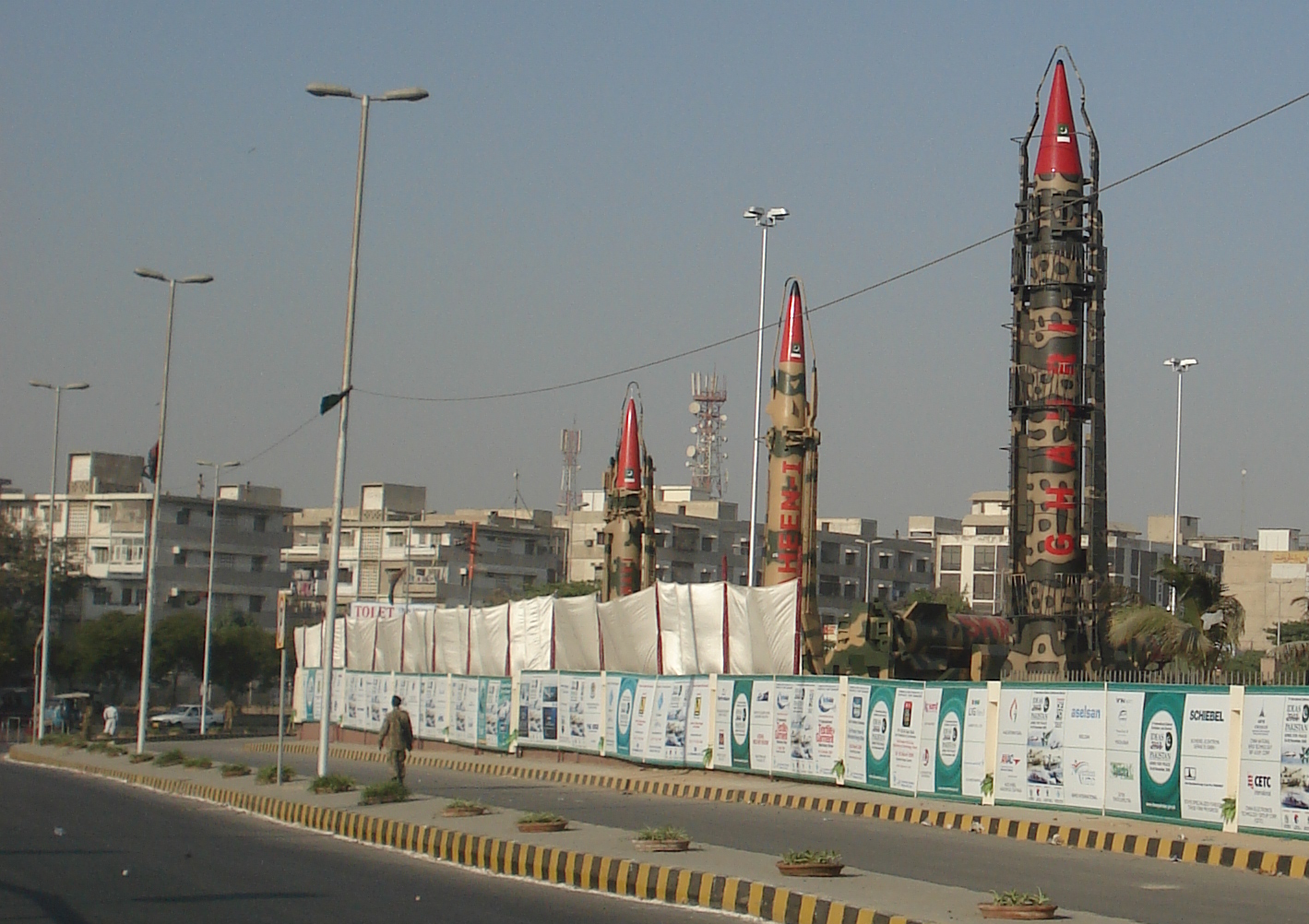
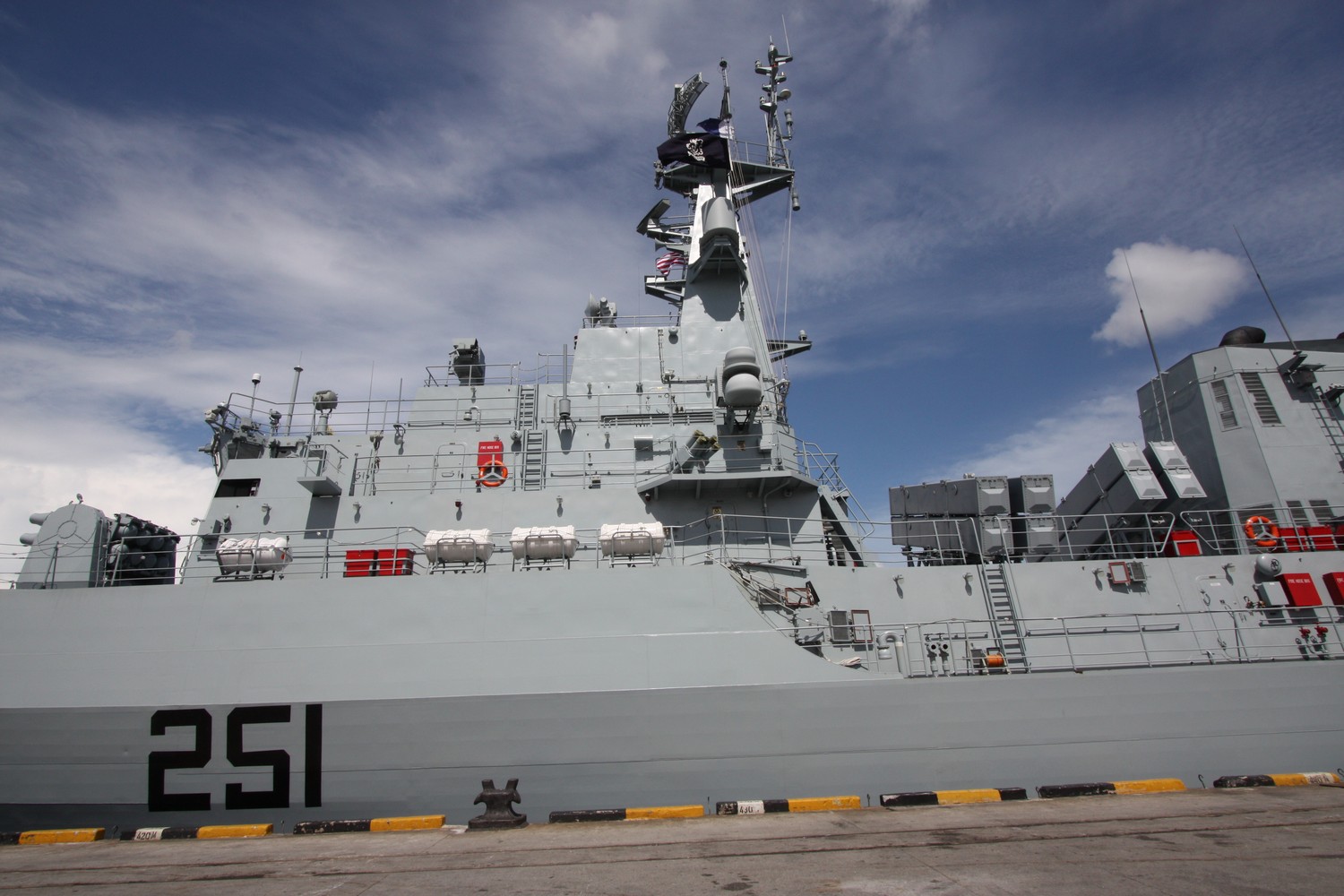
Reporting snapshot · 7 October 2026 (Asia/Karachi). Pakistan's military announced the test of an extended version of the Fatah-4 ground-launched cruise missile on the evening of 6 October. The announcement was carried by the state news agency and reported by Dawn, Geo News and The Express Tribune. The military did not disclose the launch site, the distance flown or the specific changes in the extended variant; those details remained unpublished when this snapshot was written.
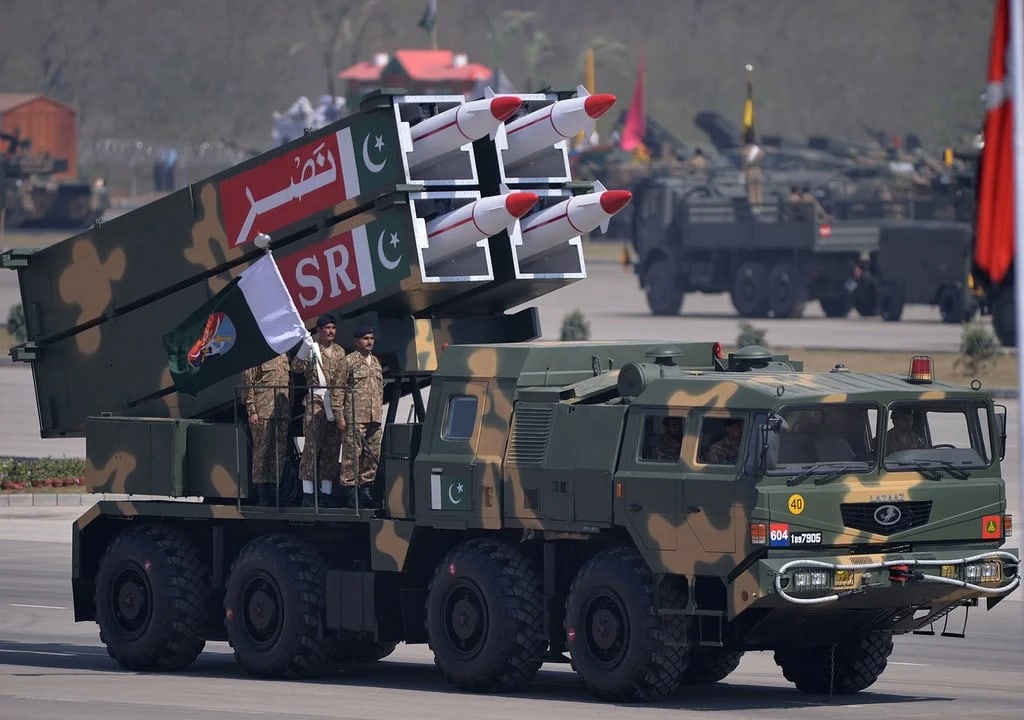
What happened
Pakistan conducted a successful test launch of an extended version of its indigenously developed Fatah-4 ground-launched cruise missile (GLCM) on Tuesday, 6 October 2026, the military’s media wing said. In a statement, Inter-Services Public Relations (ISPR) said the weapon system was equipped with advanced avionics and state-of-the-art navigational aids, and was capable of engaging targets “at extended ranges with high precision and lethality”. The statement, carried by the state-run Associated Press of Pakistan and reported by Dawn, said the test had also validated additional technical parameters of sub-systems incorporated to improve accuracy and survivability.
ISPR said the launch was witnessed by senior Pakistan Army officers together with scientists and engineers from the agency that developed the missile. It did not identify the launch site, the distance the missile flew, or the specific upgrades in the extended variant, and no independent verification of the weapon’s performance was published.
The test drew commendations from the country’s senior leadership. According to ISPR, President Asif Ali Zardari, Prime Minister Shehbaz Sharif, Chief of Army Staff and Chief of Defence Forces Field Marshal Syed Asim Munir, and the service chiefs commended the launch and praised the technical work behind it. Interior Minister Mohsin Naqvi congratulated the nation, describing the test as an important advance for the defence sector, Geo News reported. The Express Tribune carried the same account.
An existing missile, in a longer-range form
The Fatah-4 is the cruise-missile member of the Fatah (also spelt Fateh) family of conventionally armed, ground-launched weapons developed for the Pakistan Army. Unlike the earlier Fatah-1 and Fatah-2 guided rocket systems, the Fatah-4 is described as a terrain-hugging cruise missile designed to fly low and evade air-defence and missile-defence systems, which the military says improves its precision and survivability.
The 6 October test was not the first outing for the system. In September 2025 the Pakistan Army announced a training launch of the Fatah-4 at a range of 750 kilometres, Dawn reported. The Army Rocket Force Command carried out a further test fire of the Fatah-4 in May 2026, according to Dawn. The extended variant tested this week appears to be a development of that weapon, although the military has not published a range figure for it.
The Fatah-4 sits within a broader run of tests by Pakistan’s armed forces during 2026. In April the Army Rocket Force Command announced a training launch of the Fateh-II system, which KhabarWire reported at the time, while the air force flight-tested the Taimoor air-launched cruise missile in January and the navy fired a ship-launched anti-ship missile that month. The Fateh-II training launch used similar language about validating sub-systems to improve accuracy and survivability.
Why the test matters
Pakistan treats conventionally armed precision-strike systems as a core part of its deterrence posture, alongside its nuclear-capable ballistic and cruise missiles. A longer-range Fatah-4 would extend the reach of the Army Rocket Force Command against targets that might previously have required air-delivered munitions, giving planners a ground-launched option that does not depend on aircraft being able to penetrate defences.
The armed forces have emphasised indigenous development, and the Fatah programme is presented as locally designed and produced rather than imported. That framing matters domestically: it is used to signal self-reliance in defence manufacturing and to support continued investment in the military-industrial base. The test also reinforces the army’s conventional “full-spectrum” deterrence messaging while Pakistan-India tensions remain elevated over the Kashmir dispute, water sharing and cross-border militancy, although the military did not link this week’s launch to any specific adversary or event.
For regional observers, the signal is less about any single launch than about the pace and breadth of Pakistan’s missile testing. A steady run of announcements covering cruise missiles, anti-ship weapons and battlefield rocket systems within a single year is itself a form of messaging, and it shapes how India’s planners assess Pakistan’s conventional capabilities.
What is still uncertain
The central unknowns are technical. ISPR described an “extended” range but disclosed no figure, so the increase over the 750km cited for the 2025 training launch cannot be established from the public record. The military also did not say whether the 6 October launch tested an operational round, a development prototype or a training configuration, nor precisely where or when it took place.
Independent verification is not available. The account rests on ISPR’s statement; foreign governments and open-source monitoring groups had not published their own assessments at the time of writing. The statements of congratulation from the president, prime minister and service chiefs are official endorsements rather than evidence of the weapon’s performance, and the extended Fatah-4’s service status, production plans and unit cost are unpublished.
Given those gaps, the test should be read as a dated snapshot. It establishes that Pakistan announced a successful extended-range flight of a weapon it has been developing and testing since at least 2025, and that the launch was endorsed at the highest levels of the state. It does not, on the available record, establish how far the missile can fly, how accurate it is, or when it might be fielded.
Sources & reporting notes
This is a synthesis of published material, not eyewitness reporting. Sources were reviewed on 7 October 2026 (Asia/Karachi). The core account is an Inter-Services Public Relations statement issued on 6 October 2026 and reproduced by the state news agency; the technical claims about range, accuracy and survivability are the military's own and have not been independently verified.
- Primary source — Associated Press of Pakistan (carrying the ISPR statement): "Pakistan successfully test-fires extended-range version of Fatah-4 missile"6 October 2026 · The ISPR release announcing the test of the extended Fatah-4 ground-launched cruise missile, its avionics and navigation aids, the sub-system validation, the witnessing officers, and the reactions of the president, prime minister, chief of defence forces and service chiefs.
- Independent source — Dawn: "Pakistan successfully tests launch of extended-range Fatah-IV cruise missile: ISPR"6 October 2026 · Confirmation of the test and ISPR's quoted description; Interior Minister Mohsin Naqvi's remarks; and the previous Fatah-IV and Fateh-II tests in May 2026, April 2026 and September 2025.
- Independent source — Geo News: "Pakistan conducts successful test launch of indigenous Fatah-4 cruise missile"6 October 2026 · Independent Pakistani coverage of the launch, the senior officers who witnessed it, the official commendations, and the earlier Fatah-II and Taimoor missile tests cited as context.
- Independent source — The Express Tribune: "Military conducts successful test of indigenous Fatah-4 cruise missile"6 October 2026 · Confirmation of the ISPR statement; the terrain-hugging design attributed to the Fatah-4; and the September 2025 training launch at a reported range of 750 kilometres.