Reporting snapshot · 28 October 2026 (Asia/Karachi). The restriction was first reported by Bloomberg on the morning of 28 October, and no notice to airmen for it has been published. The main limitation is that no version of the order is public, so its exact scope, start date and exemptions are known only from a defence minister's description and from commercial flight-tracking data.
What happened
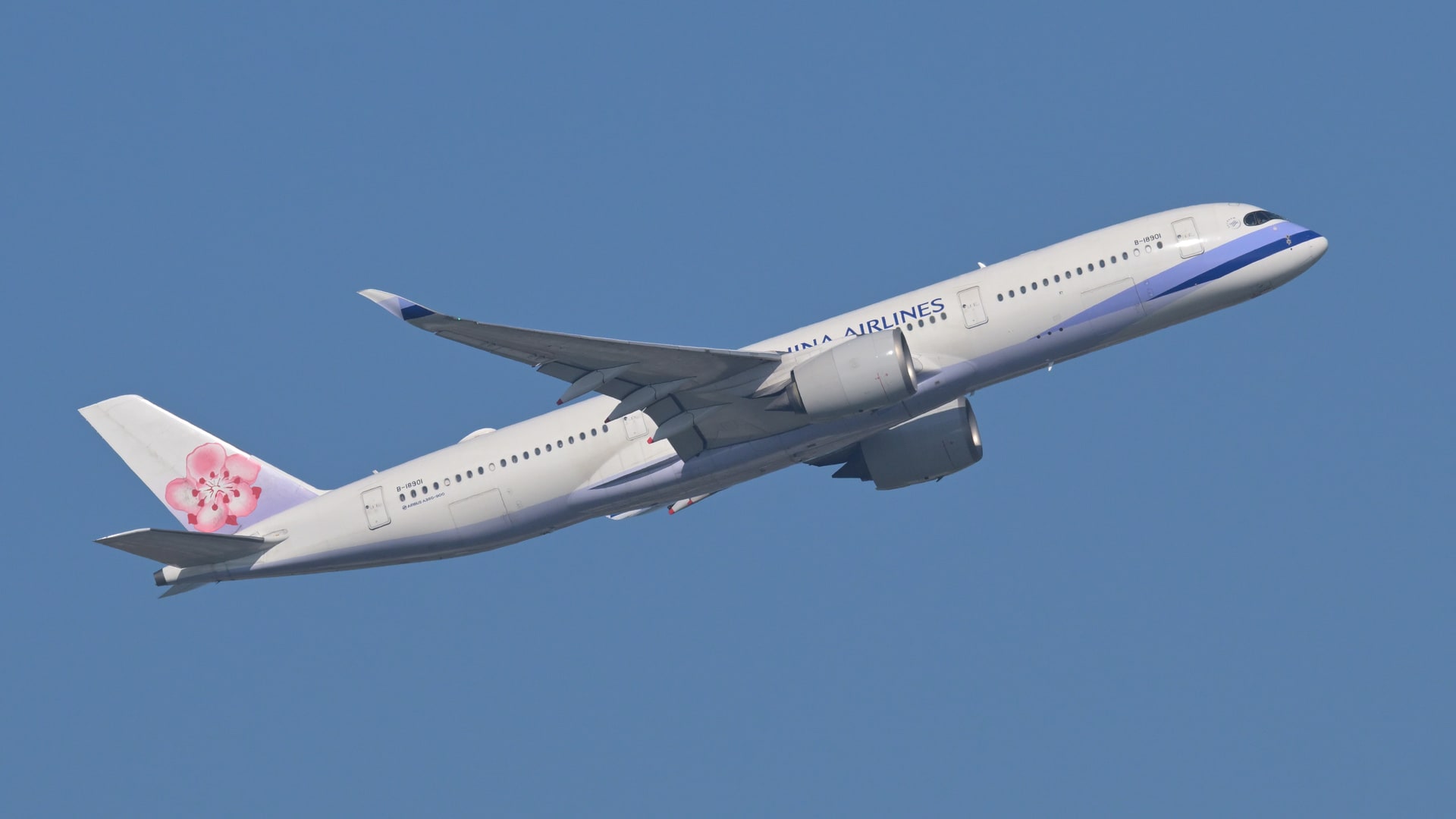
Pakistan has closed its airspace to airlines registered in Taiwan, the first country to do so, and has given the reason as Beijing’s One-China policy. Bloomberg reported on Wednesday, 28 October, that the closure is the first of its kind by any state and “risks creating a new divide in Asia”, and Dawn reported the same day that no other country has taken the step.
Defence Minister Khawaja Asif set out the policy. “The aviation division follows the One China policy — only mainland China is allowed,” he told Bloomberg News. “We have permitted only Chinese airlines to fly over Pakistan.”
The measure applies to Taiwan’s two flag carriers, China Airlines Ltd and EVA Airways Corp. According to flight-tracking data cited in the Bloomberg report and repeated by Dawn and Business Recorder, neither carrier has flown over Pakistan since the morning of 25 October, and at least a dozen of their Asia–Europe services have flown over Russia since Sunday, 25 October.
What the change does to routes
The consequence is a longer path north. The Taiwanese carriers had avoided Russian airspace since February 2022, alongside many Asian, European and North American airlines, although they were never formally barred from using it; the Pakistan closure has pushed them back across it, and some of their aircraft are also routing over other parts of South Asia and the Middle East. The rerouting has added hours to Asia–Europe flights and increased fuel costs, Dawn reported.
Two things about the measure stand out. The first is that it is stricter than Beijing’s own. Mainland China still allows Taiwanese airlines to fly over its territory, so Pakistan has gone further than the policy it is enforcing. The second is that neither carrier has explained its position: China Airlines and EVA Air declined to comment, and Taiwan’s Civil Aviation Administration did not comment on the rerouting, saying only that it had never banned carriers from flying over Russia.
No figure has been published for the volume of traffic affected. The nearest measure of what an overflight ban costs comes from a different closure. Air India told Indian officials in October 2025 that the closure of Pakistani airspace to Indian aircraft, in force since April 2025, had raised its fuel costs by as much as 29 per cent and journey times by up to three hours on some long-haul routes, and it estimated the hit to pre-tax profit at $455 million a year, Dawn reported. The two Taiwanese carriers’ exposure is a different question, because only part of their Asia–Europe flying previously crossed Pakistan, and the numbers Pakistan and India have published do not transfer to them.
Why Pakistan did this
The rationale sits inside Pakistan’s longest-standing foreign policy line. Pakistan severed official relations with Taiwan in 1951 in favour of closer ties with China, and has since refused to recognise Taiwan as a state, rejecting what it calls “two Chinas” or “one China, one Taiwan”, a position that President Asif Ali Zardari and Prime Minister Shehbaz Sharif have both restated, Business Recorder noted on Wednesday. Pakistan has also backed Beijing’s position in international bodies, opposing a proposal to invite Taiwan to the World Health Organization’s annual assembly.
That position is stated in the government’s own words. On 3 January, Foreign Office spokesperson Tahir Andrabi said Islamabad would continue to adhere to the One-China principle and regard Taiwan as an “inalienable part of China”, describing Pakistan and China as “iron-clad friends and all-weather strategic cooperative partners”, Dawn reported. His remarks came after China completed military drills around Taiwan, including live-fire exercises simulating a blockade of key ports.
Whether Beijing asked for the airspace closure is not known. Bloomberg said it remained unclear what prompted the decision, noting only that airspace restrictions can tighten during periods of heightened geopolitical tension. The strategic weight of the relationship is hard to overstate: China is Pakistan’s largest supplier of weapons, and Pakistani forces used Chinese-made J-10C fighter jets during the fighting with India in May 2025, an episode that drew international attention to the military side of the partnership.
What is clearer is that Islamabad has the machinery to do this. The Pakistan Airports Authority has closed Pakistani airspace to Indian-registered and Indian-operated aircraft, including military flights, through successive notices to airmen, and the current notice runs from 7:45pm on 17 October to 04:59am on 24 November 2026 across both the Karachi and Lahore flight information regions, Dawn reported. The extension of that closure to 23 March earlier this year used the same instrument, though the scale of the two closures is not the same.
What is still uncertain
No notice to airmen covering Taiwanese aircraft has been published, and the version of the order behind Khawaja Asif’s remarks is not public. It is therefore not possible to say when the closure formally began, how long it lasts, whether it exempts cargo, charter or state aircraft, or whether it is a standing policy or a response to a particular episode. Airspace notices like the one against Indian aircraft are issued with a defined end date; nothing equivalent has been issued here.
It also remains unknown whether Taipei or Beijing has responded at all, since neither government has commented and the two carriers have declined to. And it is not established whether the measure was requested by China, whether Pakistani carriers flying on behalf of Taiwanese-registered aircraft are treated the same way, or how many flights have actually changed course. No estimate of the cost to either carrier has been published, and no aviation authority has published figures for the traffic affected.
One further point of context belongs alongside the closure. Overflight rights sit inside the wider contest between Beijing and Washington. Taiwan was on the agenda when Donald Trump and Xi Jinping met in Washington in September, and KhabarWire reported then that Beijing was expected to press for a permanent halt to US arms sales to the island, a subject Washington wanted to avoid. What is observable is narrower than that contest: the rerouting puts Taiwanese carriers back over Russian airspace, which they had avoided since 2022.