Reporting snapshot · 28 October 2026 (Asia/Karachi). The decisions were taken at a committee meeting on 27 October and are described in a finance ministry statement; the amendments have not yet been notified in the gazette, so no effective date has been published. The main limitation is that no full text of the decisions, and no standard operating procedures for the provincial authorities, has been released, and the penalty reported for piracy differs between the headline and the body of one report.
What the AML-CFT Authority decided
On Tuesday, 27 October, the National Executive Committee of Pakistan’s Anti-Money Laundering and Combating of Financing of Terrorism (AML-CFT) Authority approved four changes to the country’s money-laundering framework, with Finance Minister and Revenue Senator Muhammad Aurangzeb in the chair. The Express Tribune reported that the committee designated piracy as a “predicate offence” for money laundering, gave the Pakistan Virtual Assets Regulatory Authority (PVARA) the powers of a reporting agency, cleared in principle the extension of AML powers to provincial anti-corruption authorities, and raised the threshold for currency transaction reports from Rs2 million to Rs3 million a day.
The Nation reported that the meeting was held at the Finance Division and attended by the federal minister for law and justice, the State Bank of Pakistan governor, the finance secretary, the Securities and Exchange Commission of Pakistan chairman, the director general of the AML-CFT Authority and senior officials of the Financial Monitoring Unit (FMU). The same report described the committee as the high-level body that oversees policy and implementation matters relating to Pakistan’s AML-CFT regime.
The committee’s own summary, quoted by The Express Tribune, says it “considered and approved the proposed revision to the thresholds for Currency Transaction Reports under the framework for analysing Suspicious Transaction Reports (STRs) and CTRs”. The meeting also reviewed compliance with decisions taken at the committee’s 18th session, the FMU’s performance, its institutional capacity and its initiatives involving artificial intelligence and machine learning. It came a day after the General Committee referred the same matters back for a further round of tightening, The Express Tribune reported.
The cash threshold and what it changes
The change with the most immediate effect on ordinary banking is the reporting threshold. Banks must now report cash transactions above Rs3 million to the FMU, up from Rs2 million, The Express Tribune reported. What the committee did not do is set a quarterly ceiling on the number of currency transaction reports, and The Express Tribune noted that the decision still leaves room to deal in cash by keeping daily cash transactions marginally below Rs3 million.
A higher floor means fewer transactions cross the reporting line on size alone. It does not touch the separate category of suspicious transaction reports, which the committee’s own summary says are analysed under their own framework. The State Bank of Pakistan governor’s presence at the meeting, as The Nation reported, also signals that the central bank’s supervision sits inside the same framework rather than alongside it. The decision lands on a system that has already been swept repeatedly: the government ordered a nationwide crackdown on money laundering and hawala-hundi in March, as KhabarWire reported.
What PVARA gains
Putting PVARA into Schedule IV of the AML Act turns a young regulator into a reporting agency with the Act’s own enforcement machinery. It can now impose monetary and administrative penalties, as prescribed, on reporting entities and on their directors and senior officers for breaching data-reporting, record-keeping and customer due-diligence requirements, The Express Tribune reported. The framework being extended is the Anti-Money Laundering Act 2010 and its amendments, published on the Financial Monitoring Unit’s own site.
For virtual-asset firms the change is concrete rather than ceremonial. Two of the conditions now sit with PVARA and the FMU jointly: PVARA, in coordination with the FMU, is to devise a framework obligating virtual asset service providers to file suspicious transaction reports, and the FMU, in coordination with PVARA, is to devise a mechanism for registering providers that hold a PVARA no-objection certificate on the goAML platform as reporting entities, The Express Tribune reported. The FMU has already published its own assessment of virtual assets as an “emerging risk of money laundering and terrorism financing”, and the decision now asks PVARA to build a registration and reporting machinery that does not yet exist in that form. The legal groundwork was laid when the State Bank of Pakistan legalised virtual assets and set rules for crypto-linked bank accounts, as KhabarWire reported in April.
Why piracy joins the list
Piracy enters the regime through Section 28 of the Pakistan Maritime Zones Act, 2023, which the committee added to Schedule I of the AML Act as a predicate offence. The section defines piracy as any illegal act of violence, detention or robbery committed for private gain by the crew or passengers of a private ship or aircraft against another vessel, its passengers or property, or against people or property in international waters, The Express Tribune reported.
That part of the package carries a plainly Pakistani interest. Three Pakistani sailors were killed when pirates opened fire during the Somali rescue of the tanker MT Honour 25 in September, as KhabarWire reported. Because piracy is now listed as a predicate offence, money laundering charges can be brought over money obtained through a hijacking — a ransom payment, or the sale of hijacked cargo — so that those funds can be traced through banks and exchanges.
Why the timing matters
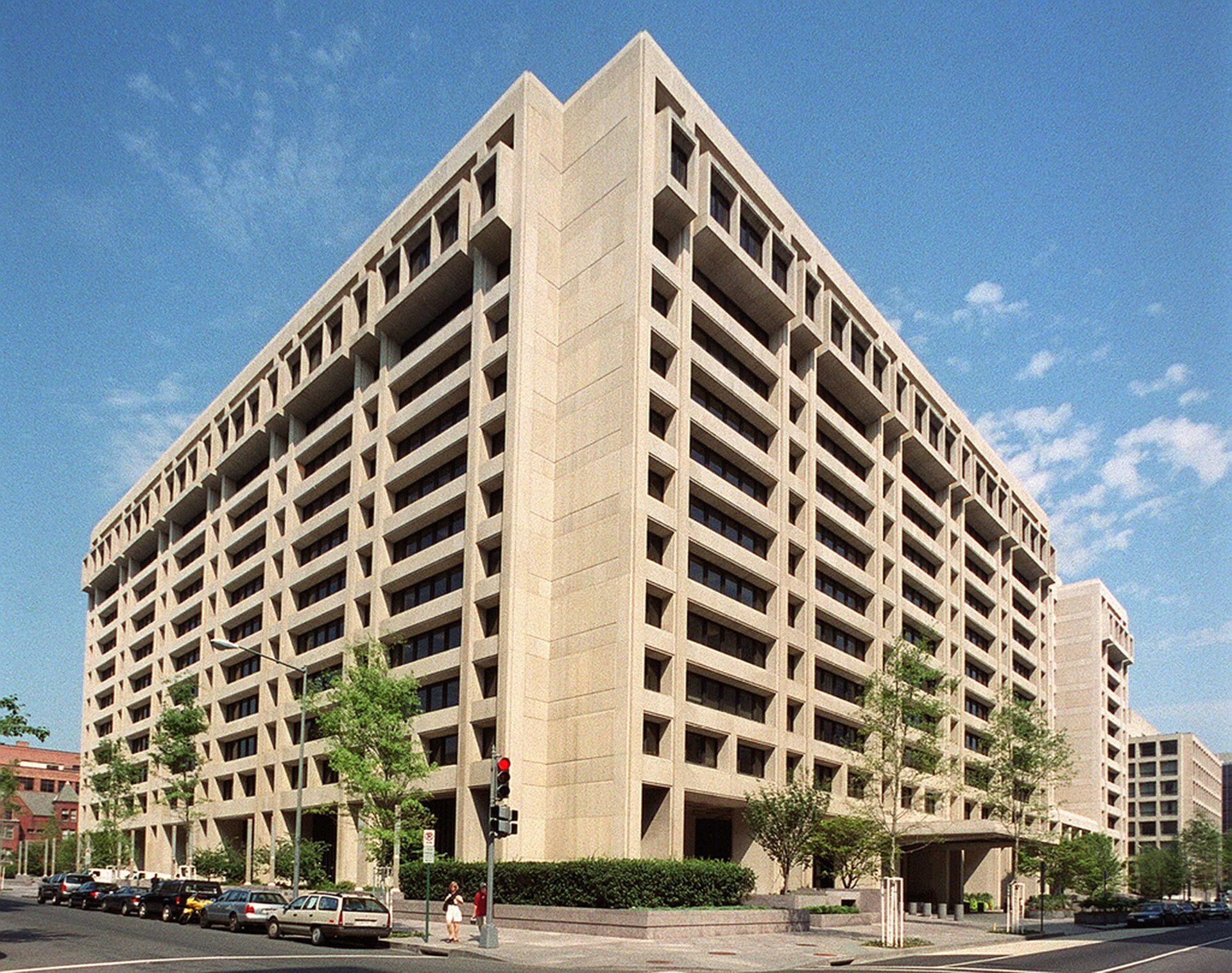
None of this is optional housekeeping. Extending AML powers to the provinces, giving PVARA reporting status and lifting the cash-reporting threshold are conditions in the action plan attached to the IMF’s Governance and Corruption Diagnostic Assessment for Pakistan, which sets out how the country should strengthen the investigation and prosecution of money-laundering offences. The plan calls for removing legal ambiguity about requiring a predicate conviction, raising the quality and quantity of suspicious transaction reports, strengthening law-enforcement capacity for financial investigation and improving cooperation on asset recovery, The Express Tribune reported. The programme reviews behind that action plan are tracked in the KhabarWire IMF file.
What is still uncertain
Three gaps remain. The first is timing: both reports describe approvals, and the finance ministry statement as quoted sets out no notification date for the schedule amendments or the new threshold, so the date the rules bind anyone is not yet public. The second is the piracy penalty, where the reporting does not agree with itself. The Express Tribune’s headline said piracy would draw up to 10 years in prison and a Rs25 million fine, while the body of the same report said the underlying piracy offence is punishable with up to seven years, up to Rs25 million in fines and forfeiture of property. The committee statement carries no figure at all, and which number applies depends on which charge is laid.
The third is capacity. The provincial authorities were cleared only in principle, subject to standard operating procedures that the AML-CFT Authority has yet to finalise, and The Express Tribune reported that the authority is still working below the capacity that can undermine its work, with its procedures required to cover beneficial-ownership identification, financial profiling, parallel financial investigation and asset tracing. Until those procedures and the gazette notifications exist, the practical questions for banks, brokers and virtual-asset firms are when the rules take effect and what the reporting templates will look like.