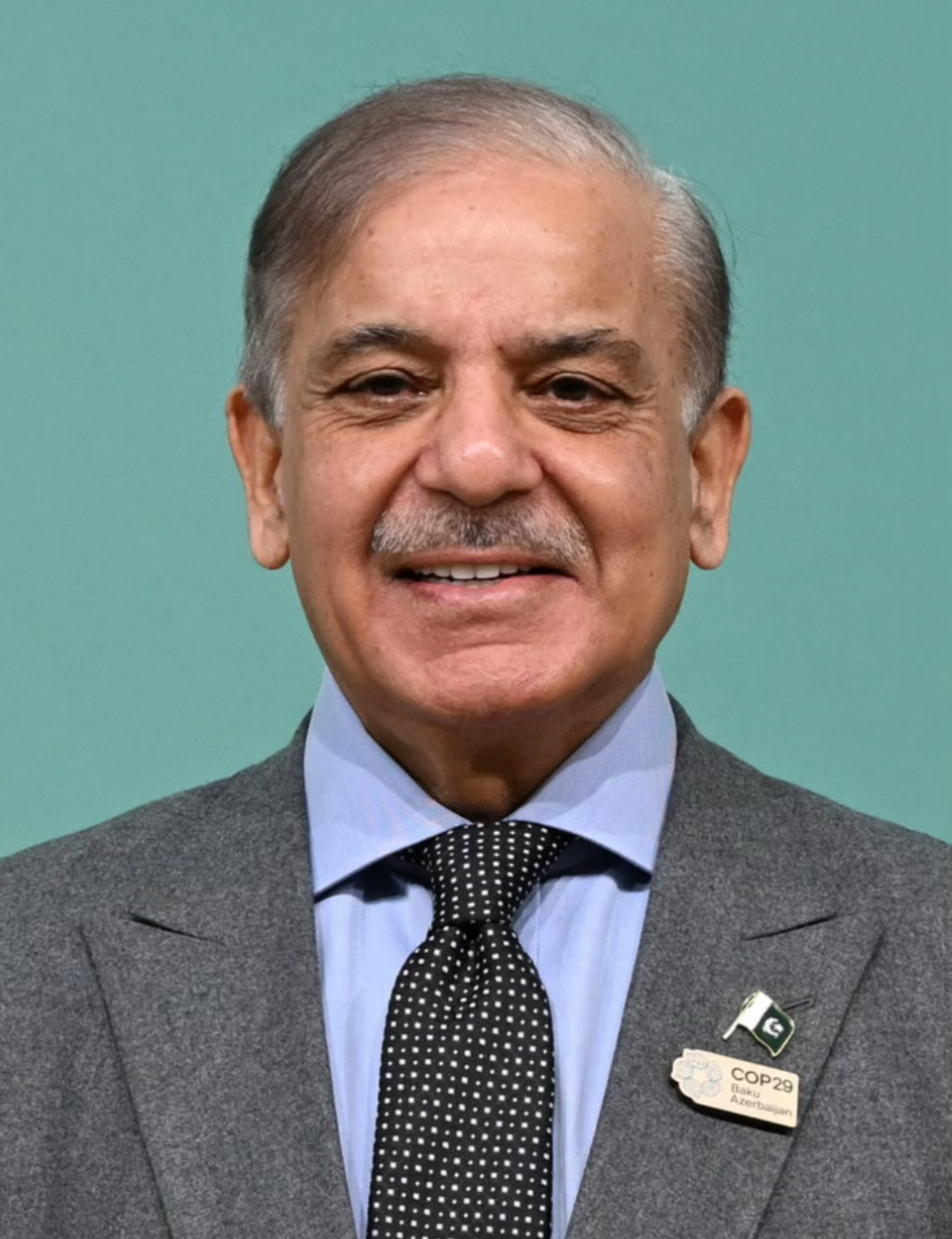
Reporting snapshot · 24 September 2026. Pakistan's Deputy Prime Minister and Foreign Minister Ishaq Dar addressed the UN Security Council on Wednesday, 23 September, at a briefing on artificial intelligence and international security convened by France during UN General Assembly high-level week in New York. His remarks were carried by Pakistan's state news agency and appear in the Council's official record; reporting of Pakistan's position circulated on 24 September Pakistan time. The briefing produced no decision, and the US-China divide over AI governance remained unresolved. This is a dated snapshot of Pakistan's statement, not a live tracker.
What happened
Pakistan warned the United Nations Security Council that an unregulated boom in artificial intelligence risks widening global inequalities and threatening international peace, with Deputy Prime Minister and Foreign Minister Ishaq Dar telling the 15-member Council that “concerted efforts are required to erect the necessary guardrails, regulations and governance frameworks”, the Associated Press of Pakistan reported.
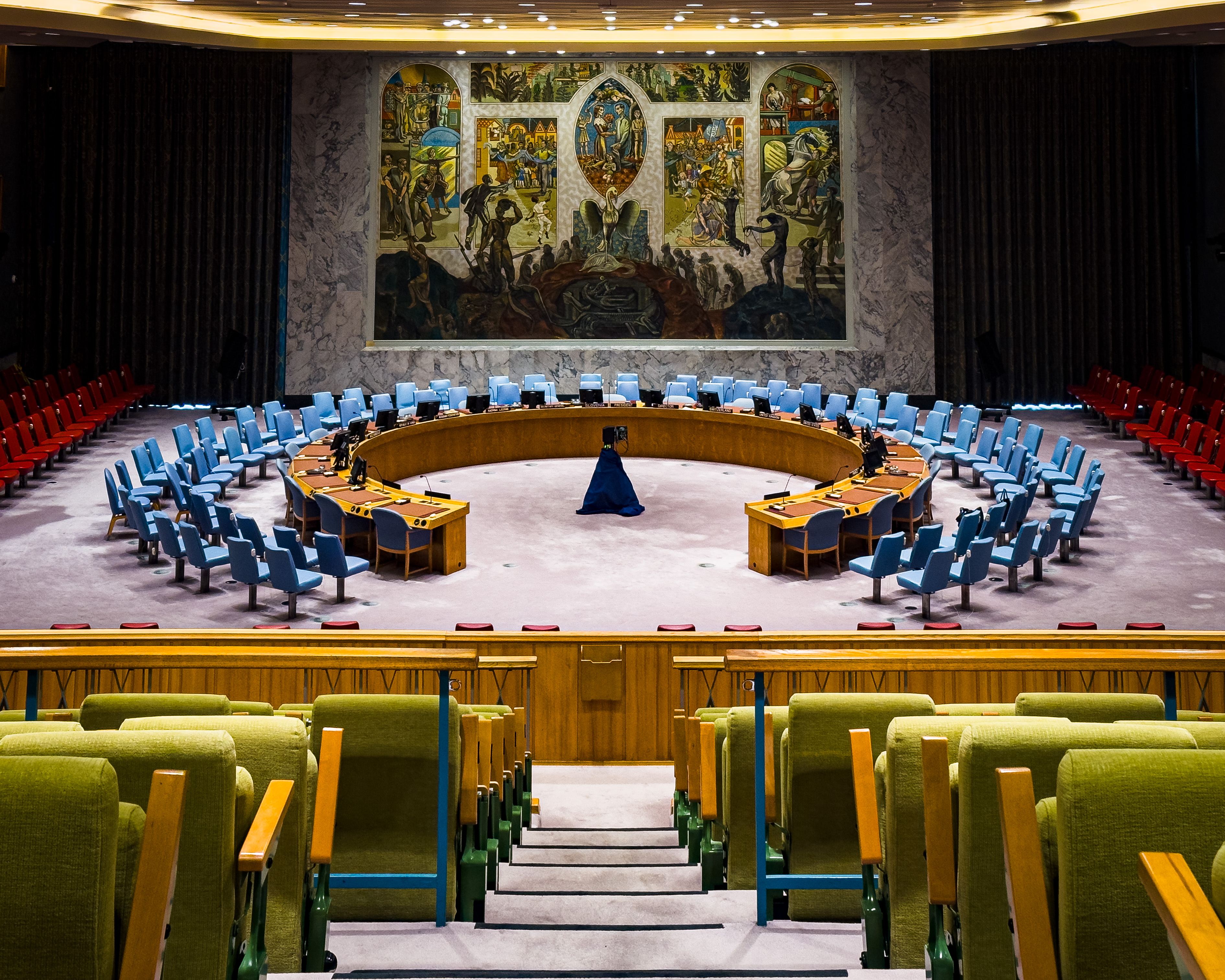
Dar spoke at a Security Council briefing on “artificial intelligence and international security” held on Wednesday, 23 September, on the sidelines of UN General Assembly high-level week in New York. The meeting was convened by France, which holds the Council’s rotating presidency, and came after the heads of OpenAI, Anthropic and Hugging Face — accompanied by computer scientist Yoshua Bengio — had told the same body that increasingly capable AI systems could slip beyond human control, a session KhabarWire covered on 23 September.
Pakistan’s foreign minister described AI as “a force multiplier and cross-cutting dual-use technology” whose impact “is sharply evident in the context of international and regional peace and stability”, adding that those at the vanguard of AI development had acknowledged that new systems “could outturn our ability to understand and control them”, according to the official transcript of the meeting.
What Pakistan said
Dar set out a five-point position before the Council. First, he argued that the foremost priority is “to retain human judgment and control in all stages of AI design, development, and integration”, so that humans define the structures, speed and future capabilities of AI systems. Second, he said AI must not become “another facet of the ongoing arms race”, calling for guardrails, regulations and governance frameworks and, in the military domain, “measures of restraint and confidence building to address the risks of miscalculation and compressed decision making”.
Third, he said AI “should not be a monopoly of few actors” and should serve common challenges facing humanity, with collaboration essential to making the technology “representative, comprehensive, transparent and inclusive”. Fourth, he noted that AI is “supercharging existing challenges such as misinformation, fake news, cyber attacks, including on critical infrastructure by state and non-state actors”. Fifth, he cautioned that “some are resorting to putting barriers to technology transfer”, warning that measures pursued in the name of safety “must not become instruments of denial of technology”.
Pakistan “takes the call to pace the AI frontier seriously”, Dar said, but insisted that “pacing must not become a new form of gatekeeping. If the speed of the frontier is set by a few among a few, while others are held back through restrictions, today’s asymmetries and divide would aggravate.” He called for avoiding fragmentation in AI governance, for issues of development, deployment and broader implications to be taken up “in representative and inclusive forums with universal participation under the UN auspices”, and welcomed the first UN Global Dialogue on AI Governance in January.
Why Pakistan’s WAICO role matters
In his remarks, Dar cited Pakistan’s decision to become a founding member of China’s proposed World Artificial Intelligence Cooperation Organization (WAICO), calling it “a concrete step towards promoting the development of artificial intelligence for good and for all”. Pakistan formally joined WAICO in July, when Dar signed the founding agreement in Shanghai alongside 28 other countries, Dawn reported. China had proposed the body at its annual World AI Conference, and Pakistan endorsed the initiative during Prime Minister Shehbaz Sharif’s visit to Beijing in May, The Express Tribune reported.
The Shanghai launch pitched WAICO as an intergovernmental body meant to promote international cooperation on AI governance and to help developing countries benefit from the technology — a framing China has used to position itself as an alternative to what it calls US-led efforts to control AI. For Pakistan, the forum sits alongside its domestic agenda: a first AI Council was formed under the National AI Policy 2025, and the government has begun restricting the use of public AI tools with sensitive official data under its National Cyber Security Handbook.
Where Pakistan sits in the US-China divide
The Council briefing exposed, rather than resolved, a fundamental disagreement over how to govern AI. The United States rejected the push for new international guardrails, with its representative Michael Kratsios telling members “we totally reject all efforts by international bodies to assert centralised control and global governance of AI”, Al Jazeera reported. China’s UN ambassador Fu Cong, by contrast, called for continuous improvement of regulatory frameworks, emergency response and cross-border cooperation, Reuters reported.
Pakistan’s statement was in some ways closer to Beijing’s emphasis on equitable access, but it was careful not to side wholly with either camp. Dar framed his argument around the UN as the forum for AI governance, welcomed mechanisms such as the Global Digital Compact and the Independent International Scientific Panel on AI, and called for confidence-building measures “to reduce mistrust, prevent accidental escalation, and manage risks related to military and foundational AI systems”. His warning that safety measures must not become instruments of technological denial appeared aimed at both US export controls and the risk that global standard-setting leaves developing countries out.
What it means for Pakistan
Pakistan does not build frontier AI models, but its students, workers, businesses and institutions use them — and, as The News International noted in a commentary on 24 September, the rules governing the technology are “being written in Washington, Beijing, Brussels and inside the companies themselves”. The statement is therefore as much about diplomatic positioning as about technology: by linking AI governance to the Global South’s demand for equitable access and to the UN framework, Islamabad is seeking a voice in rule-making that will shape the AI tools Pakistan adopts. The position — human oversight, restraint in military applications, cooperation with China through WAICO, and a UN-centred multilateral framework — also aligns with the National AI Policy’s goals and with the delegation led by the prime minister at the UN General Assembly.
What is still uncertain
The Council briefing was a debate, not a negotiation. It produced no resolution, no binding commitments and no agreed definition of what would count as losing control of an AI system. Whether Pakistan’s proposals — UN-centred governance, confidence-building measures in the military domain, and an end to barriers to technology transfer — are taken up by any mechanism is not yet known, and the extent to which WAICO becomes a functioning body that Pakistan draws practical capacity-building from also remains to be seen. The reporting of the statement on 24 September is a dated snapshot: the positions of the United States and China, and the outcome of the Trump-Xi meeting in Washington scheduled for later in the week, may change the picture.
Sources & reporting notes
This is a synthesis of published material, not eyewitness reporting. Sources were reviewed on 24 September 2026. The account of Dar's statement rests on the UN Security Council transcript and the Associated Press of Pakistan report; the WAICO context on Dawn and The Express Tribune; the US and Chinese positions on Al Jazeera and Reuters.
- United Nations — Security Council 10228th meeting (official transcript)23 September 2026 · Primary record of the meeting and the full text of Dar's statement.
- Associated Press of Pakistan via UrduPoint — Pakistan warns UN Security Council of AI risks to global peace and equality24 September 2026 · National agency report of Dar's remarks, the guardrails quotation and the WAICO reference.
- Dawn — Pakistan becomes founding member of World Artificial Intelligence Cooperation Organisation16 July 2026 · Record of Pakistan's founding membership of WAICO, the Shanghai signing and China's proposal of the body.
- The Express Tribune — Dar arrives in Shanghai to formalise Pakistan's founding role in AI organisation16 July 2026 · Independent confirmation of the WAICO signing and Pakistan's Global South framing.
- Al Jazeera — AI corporate leaders tell UN the industry needs global regulation24 September 2026 · Independent account of the briefing, the US rejection of global governance and China's call for cooperation.
- The Express Tribune (Reuters) — AI leaders warn UN of security risks as systems grow more powerful24 September 2026 · Wire report of the briefing, Fu Cong's remarks and the wider US-China divide.