Reporting snapshot · 9 November 2026 (Asia/Karachi). The investigation is at an early stage. Nvidia has not published its scope, timetable or findings, and the allegation that Alice Huang worked for Chinese intelligence rests on reporting that cites unnamed US officials. No charges have been announced, China denies the claims, and the board says it has no reason to believe secrets were compromised.
What happened
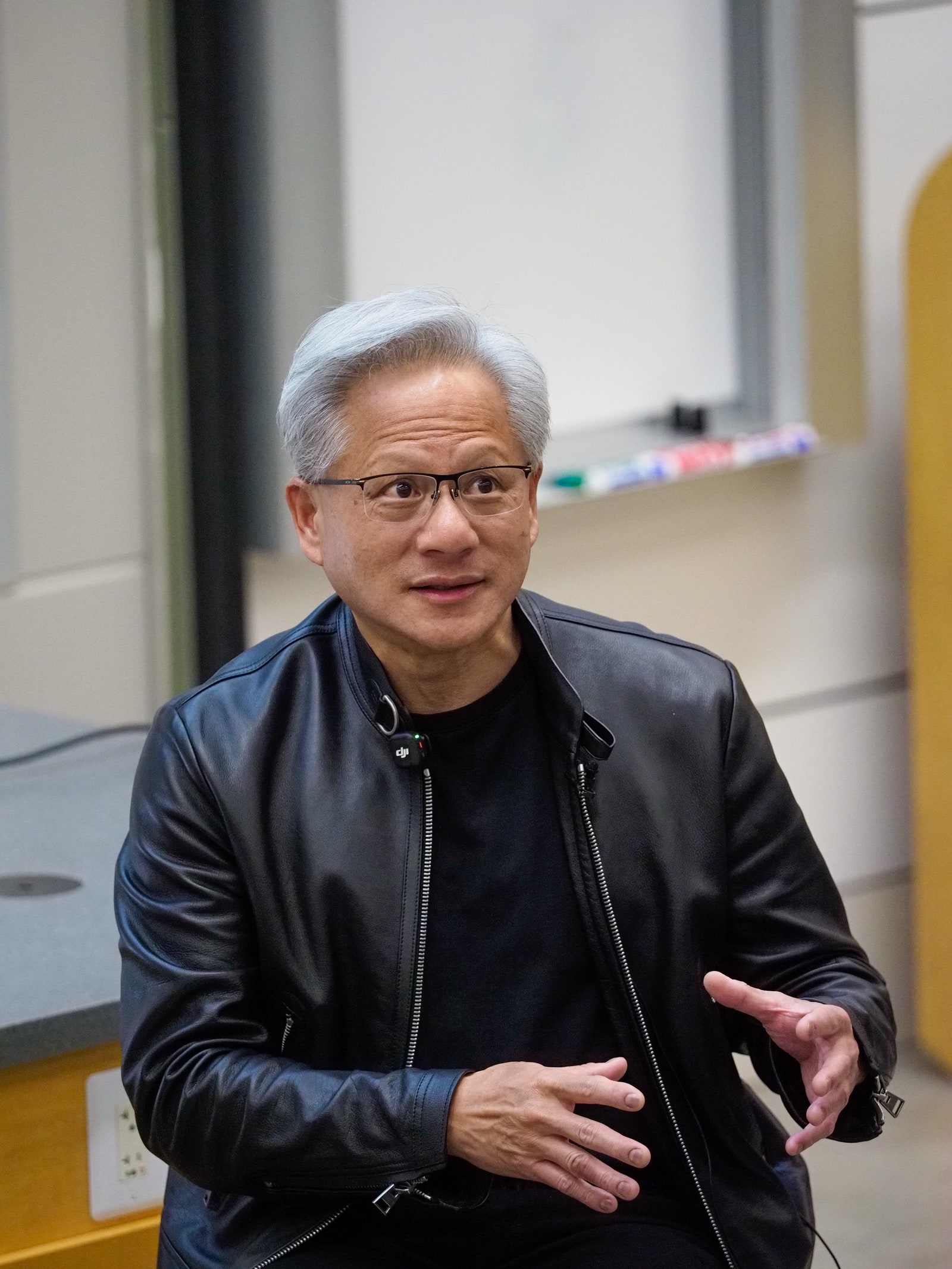
Nvidia’s board said on 8 November that it had opened an independent investigation after reports that founder and chief executive Jensen Huang was the target of a foreign intelligence effort. In a statement, the board said a committee of independent directors, assisted by outside counsel, would oversee the inquiry and “examine all available information”. It said it had no reason to believe that US national security or Nvidia secrets had been compromised, and retained confidence in Huang, who remains chief executive.
The investigation follows reporting by The New York Times, including an October article summarised by The Guardian, that US intelligence officials believed Huang had developed a close relationship with Alice Huang, a Chinese citizen and executive at Singapore-based data-centre company Megaspeed, and concluded she was passing commercial information to Beijing. Alice Huang, of no relation to Jensen Huang, had previously been suspected of smuggling Nvidia chips to China, prompting American officials to monitor her, the report said. Megaspeed became one of Nvidia’s largest buyers, purchasing about $4.8bn of equipment, according to Al Jazeera’s account of the Times reporting.
The Chinese embassy in Washington denied the espionage allegations, Al Jazeera reported. Alice Huang did not respond to a request for comment from the Times, the BBC reported, and no charges have been announced.
In an email to staff published by Nvidia, Huang said: “I was unfaithful to my wife. My actions hurt her and our children. There is no excuse for what I did.” He took full responsibility, supported the investigation and said he would cooperate fully.
President Donald Trump defended Huang on 8 November. “I think he’s an honorable guy,” Trump said, according to The Guardian. “I haven’t heard he’s done anything wrong. He dealt with somebody. But, you know, so does everybody else.”
Republican lawmakers were less forgiving. The chairs of three House committees asked Huang to brief the foreign affairs and intelligence committees behind closed doors next week on Nvidia’s security protocols and his relationship with Alice Huang, The Guardian reported. Senator Elizabeth Warren said Huang and the board “owe Congress answers”, according to Al Jazeera.
What is alleged
The central allegation is that Huang was the target of a foreign intelligence effort, and that his relationship with a woman US officials suspected of working for Chinese intelligence created access that alarmed Washington.
The Times reported that surveillance of Alice Huang revealed the relationship and that officials concluded she was acting as a Chinese intelligence asset. The reporting does not establish what information, if any, she obtained. Megaspeed’s purchases matter because Washington restricts advanced chip exports to China, and Alice Huang had previously been suspected of helping to evade those controls. Nvidia said in October that customer meetings were part of a chief executive’s job and that such customers received “ordinary business information – not sensitive Nvidia trade secrets – and zero information relevant to national security”, The Guardian reported.
The board has described the inquiry as an independent investigation; no criminal charges have been announced. It has said the committee will examine all available information, including whether national security or Nvidia secrets were compromised. It has not said whether the review will cover the company’s export-compliance controls or Huang’s conduct beyond the relationship.
Why the investigation matters
Nvidia is not an ordinary company. Its chips are used by leading AI developers including OpenAI, Anthropic, Meta and Google, and it is one of the most valuable companies in the world. An investigation at the centre of the AI buildout affects how investors, customers, regulators and governments judge its reliability when AI capacity is strategic infrastructure.
The China dimension turns a personal story into a national-security one. Washington has spent years restricting advanced chip exports to China, and Nvidia’s products sit at the centre of that policy. The allegation that a suspected Chinese intelligence asset had a close relationship with the chief executive of the company making those chips is the scenario the controls are meant to prevent. Huang is also an influential adviser to Trump on AI; he was invited to join the president’s delegation to China in May, and he and his wife sat at the top table at a White House state dinner for Xi Jinping in September, The Guardian reported. That access makes the question of what foreign intelligence may have learned more sensitive.
The investigation is also a governance test. The board has handed the matter to independent directors and outside counsel while expressing confidence in Huang. That can work, but only if the inquiry is seen to have a scope broad enough to test the board’s earlier assurances.
The timing is difficult. Nvidia lost about $450bn in market value in a single trading day last week before recovering some of the loss, Al Jazeera reported. The board investigation is not the cause of that selloff, which was driven by concerns about AI spending and politics, as KhabarWire reported. But it adds company-specific uncertainty to a sector already being repriced.
What it means for Pakistan
Pakistan has no direct exposure to Nvidia’s boardroom dispute. Its banks, currency and stock market are not plugged into the AI trade in the way South Korea’s or Taiwan’s are, and no Pakistani institution is involved.
The indirect channels still matter. Pakistan’s technology ambitions, including its target of $1bn in AI investment by 2030, depend on imported computing capacity, global investment and access to the chip supply chains that US export controls police. A prolonged investigation that hardens Washington’s approach to AI-chip exports, or slows Nvidia’s ability to serve customers, would make that environment more expensive and less predictable. A global risk-off move in technology stocks can also affect the cost of capital for emerging markets, including Pakistan, though the link is indirect.
The broader lesson is how quickly a personal relationship can become a national-security question when it involves the head of a strategic technology company. The US-China technology rivalry has made access to chip executives, their customers and their data a matter of state interest.
What is still uncertain
The most important unknown is what Alice Huang is alleged to have obtained. The reporting says US officials concluded she was working for Chinese intelligence, but it does not establish what information passed, how valuable it was, or what it related to. China denies the allegations, and Alice Huang has not responded publicly.
It is also unclear whether the board will examine Nvidia’s export-control compliance or only Huang’s relationship and internal security. The statement refers broadly to “all available information” and national security but does not define the terms. The committee has not said whether it will publish a report, interview Huang under oath, or refer anything to prosecutors.
The congressional track is unsettled. The House request is for a closed-door briefing next week, according to The Guardian, while Al Jazeera reported that lawmakers wanted Huang to testify on 18 November. It is not clear whether the briefing will happen, whether a public hearing will follow, or whether lawmakers will subpoena documents. Nor is it clear whether the White House will face questions about the Rubio memo cited in the Times reporting, which The Guardian said circulated among top policymakers last spring.
The board’s statement that it has no reason to believe secrets were compromised is preliminary. It is an assurance, not a finding.
What happens next
The board has said it will provide further updates “as appropriate”, without giving a timetable. The first public test will be whether it publishes enough detail to show the review was independent and thorough, while respecting his family’s privacy and sensitive security information.
The second test is Congress. A closed-door briefing next week would let lawmakers question Huang and the board without a public hearing. If the answers are incomplete, pressure for public testimony and legislation is likely to grow.
For Nvidia, the immediate task is to keep the company running while its chief executive is under investigation. Huang remains in charge, and the board says it supports him. Whether that arrangement survives will depend on what the inquiry finds.