Reporting snapshot · 21 September 2026. Interior Minister Mohsin Naqvi said on Monday that the federal government is consulting the Law Ministry on legal options for Khyber Pakhtunkhwa, including Governor's Rule, with Prime Minister Shehbaz Sharif to make the final decision. The statement was made at a press conference in Lahore and is a declaration of an option under consideration, not a decision: neither the prime minister nor the Law Ministry had announced any move, and the provincial government dismissed the suggestion. This article is a dated snapshot of the announcement, the constitutional background, and the political reactions as reported on 21 September 2026.
What happened
Interior Minister Mohsin Naqvi said on Monday, 21 September, that the federal government was consulting the Law Ministry on possible legal options for Khyber Pakhtunkhwa, including imposing Governor’s Rule, with Prime Minister Shehbaz Sharif to make the final decision. He was responding to a question about whether Governor’s Rule was being considered in the province during a press conference in Lahore.
“See, we have already told them that whatever legal option we have, we will consult the Law Ministry and the prime minister will decide. But it won’t happen that they (PTI) come (to Islamabad) and shut down the country for 10 days. That will never happen, I can assure you,” Naqvi said, according to The Express Tribune.
Dawn reported a similar exchange: asked whether the government was considering imposing Governor’s Rule in the PTI-led Khyber Pakhtunkhwa, the minister said, “Look, we have already made it clear to them that whatever legal options are available, the prime minister, in consultation with our law ministry, will utilise them.” He added that the party would not be allowed to “come to Islamabad and shut down the city for ten days. That possibility does not exist.”
The statement came days before PTI’s planned 27 September march on Islamabad and after a series of deadly attacks in Khyber Pakhtunkhwa, including the Kohat Police Lines attack on 18 September and the ambush on a security forces convoy in Hangu on 20 September, in which six personnel including two army officers were killed.
What Naqvi said about the security situation
Naqvi framed the legal options discussion against the province’s security crisis, criticising PTI for pressing ahead with the march. “Neither you nor any minister came to the funerals,” he said, addressing the party’s leadership, according to The Express Tribune.
“The situation in K-P over the past 10 days is in front of everyone. There was a suicide attack on a mosque, and two or three other attacks besides. Our captains have been martyred, our soldiers have been martyred, our police personnel have been martyred — and we are preparing to march on one city,” he said.
Naqvi said the protest would not benefit PTI and would instead damage the economy, and that the party’s leadership had repeatedly been told that political demands could not be won through such means. He urged the party to reconsider while it still could.
On enforcement, Naqvi said the government would implement the Islamabad High Court order on the march, which bars political parties from occupying roads, highways, interchanges, toll plazas or public buildings, and directs provincial governments not to allow state resources to be used for the protest. “This time it will not happen that they come and the road is blocked for 10 or 20 days. That possibility does not exist — I’m telling you in advance,” he stated, adding that authorities would leave “no loophole” if the march went ahead.
What Governor’s Rule would involve
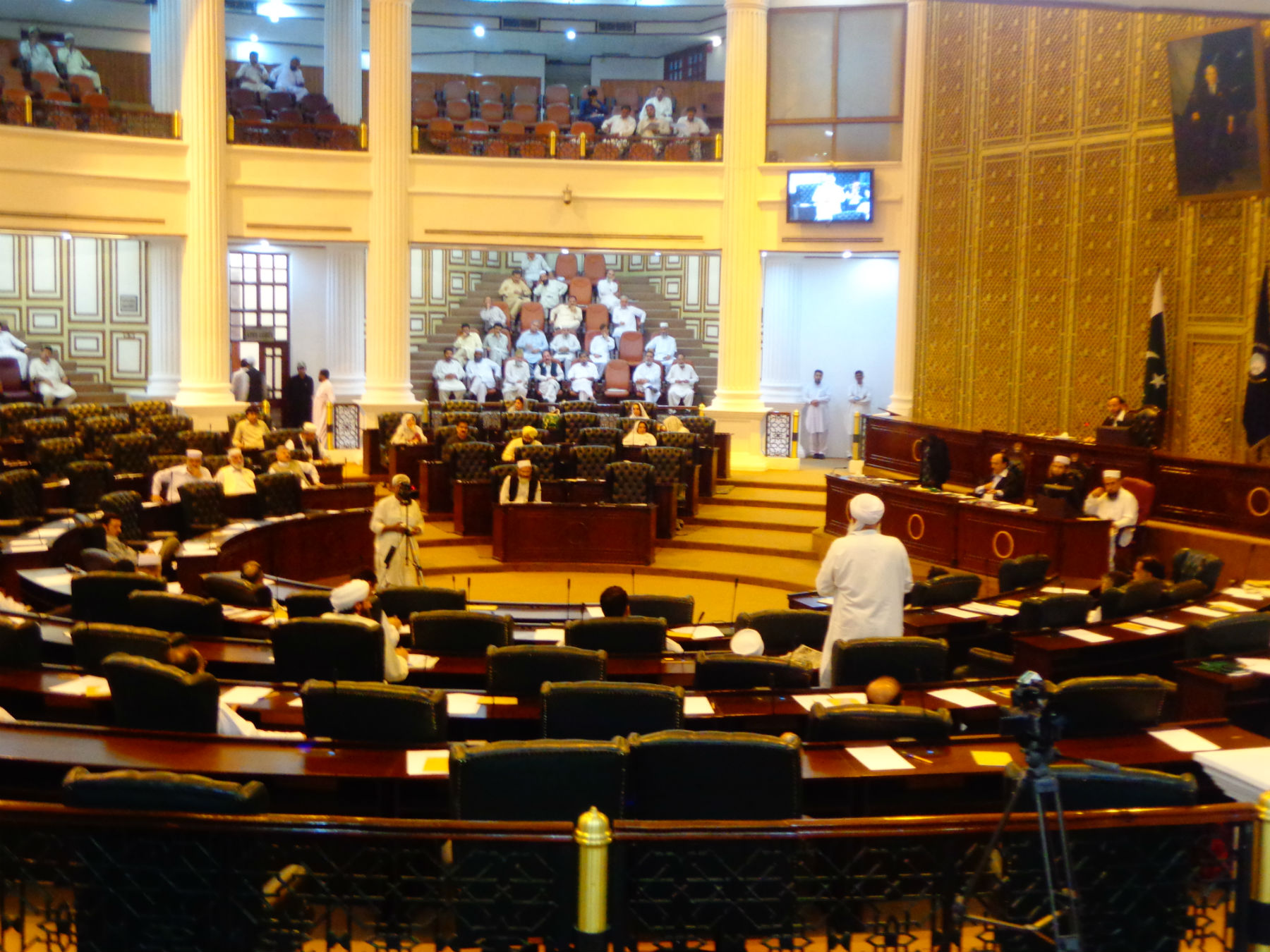
Governor’s Rule is a constitutional provision under which the federal government can assume, or direct a provincial governor to assume, the functions of a provincial government. Under Article 234 of Pakistan’s Constitution, the president may issue a proclamation if, on receipt of a report from a provincial governor, he is satisfied that the government of the province cannot be carried on in accordance with the Constitution. The provincial assembly is expressly excluded from the powers that can be assumed, and the proclamation must be laid before a joint sitting of parliament, ceasing to be in force at the expiration of two months unless approved, with extensions possible for up to six months in total.
The question has recurred in Pakistani politics during periods of federal-provincial tension. In December 2025, reports of Governor’s Rule being “seriously considered” for Khyber Pakhtunkhwa drew denials from the Prime Minister’s Office and from Governor Faisal Karim Kundi, with officials insisting no formal proposal was under review. The current statement renews the possibility in a different context: after a week of fatal attacks in the province and days before a planned opposition march on the capital.
How PTI and provincial leaders responded
Khyber Pakhtunkhwa Information Minister Shafi Jan, responding to Naqvi’s press conference, said PTI “will never give up its constitutional and democratic rights” and that the 27 September protest could not be stopped through threats, according to The Express Tribune. He criticised Naqvi for referring to the funerals of martyrs, saying they should not be made a subject of political rhetoric, and asked why Islamabad had been turned into a “container city” if the federal government was not afraid of the long march.
Separately, PTI Chairman Barrister Gohar Ali Khan said the rule of law and supremacy of the Constitution would prevail during the party’s planned long march, and PTI figures continued to insist the party would reach Islamabad through multiple routes. Khyber Pakhtunkhwa Chief Minister Sohail Afridi, a PTI leader, said the party would “fight for Pakistan” on 27 September, and the party’s leadership has described the detentions of Imran Khan’s sisters under the Maintenance of Public Order law — which KhabarWire reported on 21 September — as politically motivated.
Why it matters
The interior minister’s public confirmation that Governor’s Rule is among the options being weighed marks a significant escalation in federal-provincial tensions. Khyber Pakhtunkhwa is the only province governed by PTI, the main opposition party, and the possibility of the federal government assuming the province’s administration would be a major constitutional and political development ahead of the party’s planned 27 September march.
The statement also sits alongside the government’s wider pushback against the march: Information Minister Attaullah Tarar has said no “violent group” would be allowed to enter Islamabad, and Finance Minister Muhammad Aurangzeb has warned that sustained protests and road closures could cost the economy roughly Rs120 billion a day. The government has said it will enforce the Islamabad High Court order against occupying public roads and using state resources for protests.
What is still uncertain
The most important uncertainty is whether the option becomes a decision. The interior minister’s remarks were a statement of options under consideration, not an announcement of a move: the prime minister and the Law Ministry had not announced any step, and no official had confirmed a formal proposal. A proclamation under Article 234 would require the president’s satisfaction, based on a report from the provincial governor, that the government of the province cannot be carried on in accordance with the Constitution — a high constitutional threshold, and one subject to parliamentary oversight through the joint sitting.
It is also unclear whether the statement is a warning intended to deter PTI, a response to the security situation in the province, or both. The provincial government and PTI have rejected the suggestion, and the sequence of any future legal move, if one is made, will depend on decisions by the prime minister, the Law Ministry and the president.