Reporting snapshot · 24 November 2026 (Asia/Karachi). The plea has not yet been fixed for a hearing and no order authorising any detention of Fazlur Rehman has been produced, while the accounts of the police and the party differ. The Section 144 ban in Lahore runs only to 26 November, so the position of the party's own Sargodha gathering can change within days.
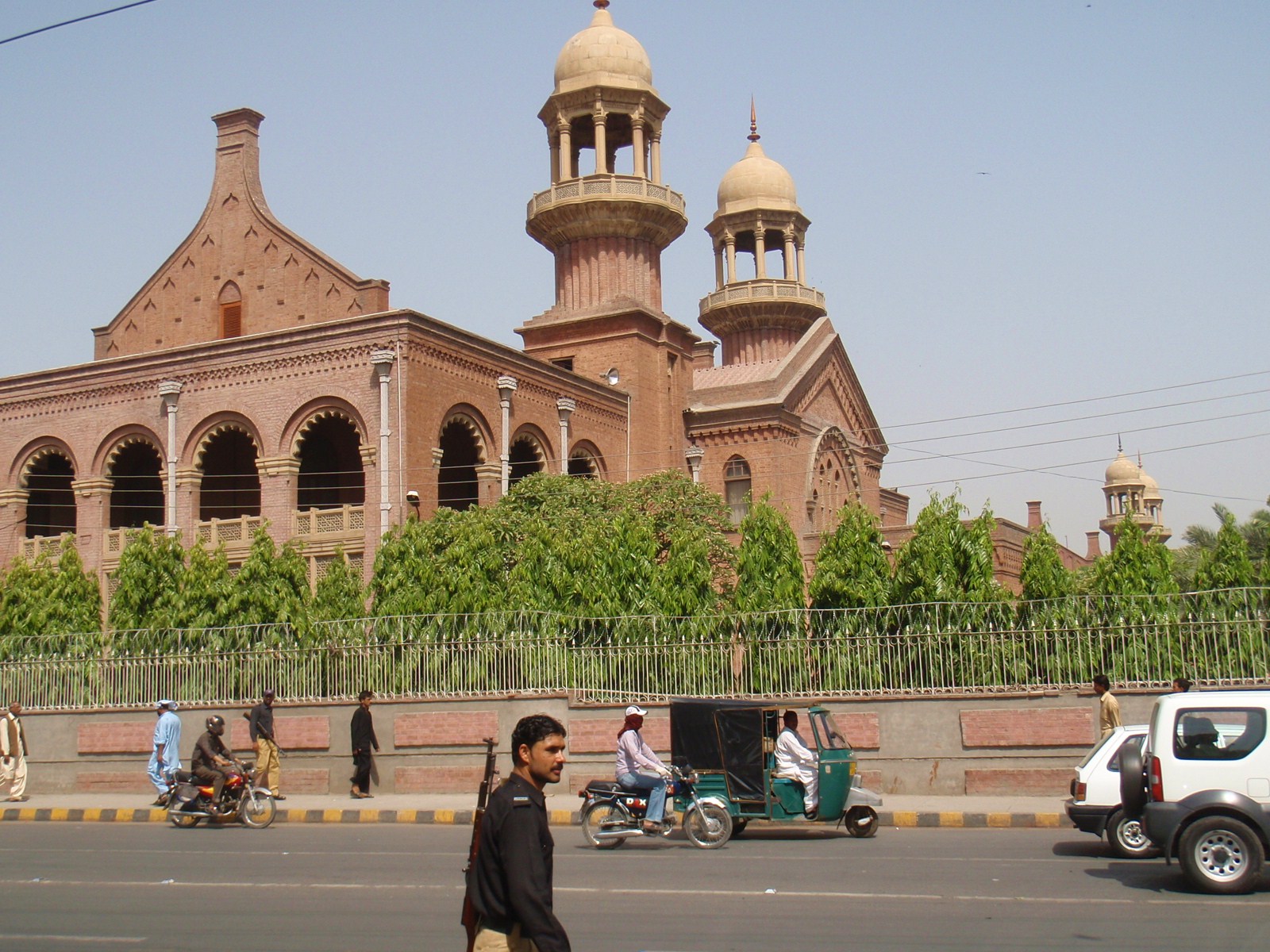
On Tuesday, 24 November, Jamiat Ulema-e-Islam-Fazl asked the Lahore High Court to order the release of its party chief, Maulana Fazlur Rehman, alleging that police had cordoned his house in Lahore and confined him there. The plea was filed by Advocate Abrar Hussain, a JUI-F worker and lawyer, naming the Punjab police chief, the Lahore deputy commissioner and other officials as respondents, and asking the court to direct police to lift what the petition calls a “siege” of the residence, Dawn reported and Geo News reported on the same day. The petitioner sought the chief’s recovery and an immediate hearing, Geo News reported, and The Express Tribune reported that the plea asked the court to secure Fazlur Rehman’s release and allow his freedom of movement.
The JUI-F said Fazlur Rehman had reached Lahore on Monday night, 23 November, to address lawyers at a seminar organised by the Lahore High Court Bar Association. The Express Tribune rendered the party’s Urdu statement as saying he arrived on Tuesday night; Dawn and Geo News both report Monday night. According to the party, Punjab police were stationed outside the residence in Lahore’s Chuhng area, a container was placed across the entrance of the housing society and residents were stopped from entering or leaving, which the party said kept Fazlur Rehman from reaching the seminar.
Fazlur Rehman said in a video message that he was under a “state siege”, with roadblocks and checkpoints across Lahore preventing him from attending what the Lahore High Court Bar Association had organised. “God willing, these sieges will break, these obstacles will be removed. Oppression never achieves permanence, but patience has always enjoyed permanence throughout history,” he said, Dawn reported. He also alleged that JUI-F workers were being targeted ahead of the party’s public gathering in Sargodha on 26 November, with businesses shut down, shops and flour mills sealed, and office-bearers and workers arrested in Bhakkar, Mianwali, Khushab and Sargodha.
Police gave a different account of what they were doing at the residence. Geo News reported that police said personnel had been deployed outside the house and that Fazlur Rehman had been asked to limit his movement. JUI-F Senator Kamran Murtaza said the police maintained their presence was solely to stop Fazlur Rehman from attending the seminar, where Pakistan Tehreek-e-Insaf leaders Barrister Gohar Ali Khan and Asad Qaiser were also due to address lawyers, and that no formal detention order had been given to Fazlur Rehman’s staff despite repeated demands. Police were asked to produce a written order authorising the restriction on his movement and did not furnish one, The Express Tribune reported. The petition alleges that around 3,000 police personnel were deployed outside the residence, Dawn reported; that figure is the petitioner’s allegation and has not been confirmed by the police.
The two districts under Section 144
The Lahore district ban and the Sargodha district ban are separate orders, with different terms and different expiry dates. Lahore Deputy Commissioner Muhammad Ali Ijaz imposed an immediate ban on the assembly, processions or gatherings of five or more persons in any public place, street, road, highway, motorway or open space from 24 to 26 November, under Section 144(1) of the Code of Criminal Procedure (Amendment) Ordinance, 2023, The Express Tribune reported. Dawn, which holds a copy of the Lahore order, reported that it cites a “serious and imminent threat” to public peace and to the safety of life and property across Punjab, including Lahore, from militant and terrorist organisations and from hostile intelligence agencies, and that public meetings could be targets. The order exempts marriage ceremonies, funeral prayers, burial gatherings, prayers in mosques and churches, the official duties of government and semi-government organisations, and the courts.
In Sargodha, Deputy Commissioner Hussain Ahmad Raza Chaudhary’s order of 23 November imposes Section 144 for seven days across the district, prohibiting public gatherings, sit-ins, rallies, processions and demonstrations, and also banning the display of weapons and pillion riding, The Express Tribune reported. That seven-day order covers 26 November, the date of the JUI-F gathering.
What produced the confrontation
The pressure on Fazlur Rehman follows his criticism of the Centre’s handling of the security situation in Khyber Pakhtunkhwa, where he had opposed emergency rule and governor’s rule, and his accusation that the government reneged on commitments made while he was trying to mediate between the PML-N and the PTI-led provincial government, Dawn reported and Geo News reported, developments KhabarWire has followed. Fazlur Rehman said the state had intensified its actions against JUI-F after the party exposed the federal role in mineral resources in the tribal areas, a dispute KhabarWire reported separately.
The measures around his person have accumulated over three weeks. Police and Federal Constabulary personnel guarding Fazlur Rehman and other members of his family were withdrawn from the residences they covered in Islamabad and Dera Ismail Khan last week, Geo News reported. JUI-F spokesman Aslam Ghouri said the Islamabad residence had been cordoned off by capital police and that security personnel had harassed visitors; an Islamabad police official said only one guard had been withdrawn, Dawn reported. The National Accountability Bureau has summoned Fazlur Rehman’s son, the former communications minister Asad Mahmood, over alleged irregularities in 4,252 appointments at Pakistan Post during 2022 and 2023, Dawn reported, and he skipped two consecutive summonses issued for 10 and 14 November, a NAB source said, Geo News reported. Opposition members in the Balochistan Assembly staged a walkout over the withdrawal of Fazlur Rehman’s security on Monday before returning to the house, The Express Tribune reported.
The confrontation is also reshaping the opposition. On the same day, the Pakistan Tehreek-e-Insaf central core committee directed the party to reach out to Fazlur Rehman and other opposition parties to expand an opposition alliance, The Express Tribune reported, days after opposition parties had formed committees for an All Parties Conference at Fazlur Rehman’s residence, as KhabarWire reported.
What remains open is narrow but consequential. The plea has not been fixed, so no court has heard the allegations, and no document authorising Fazlur Rehman’s detention has surfaced. The Lahore ban lapses on 26 November, the day of the party’s own gathering, while the wider Sargodha order runs into the following week — a combination that gives both the party and the government room to manoeuvre before either the court or the gathering.