Reporting snapshot · 22 November 2026 (Asia/Karachi). The allocations come from documents neither the federal nor the provincial government has published in full, and the Rs10 billion is a first tranche of a package with no published release schedule. The 100-day and 180-day programmes are administrative targets, and no reporting yet shows what work has begun.
The federal government has released an initial Rs10 billion to Khyber Pakhtunkhwa under the Rs160 billion development package Prime Minister Shehbaz Sharif announced for the province, and the money has reached the provincial government, according to official sources. The Express Tribune reported on 22 November that the tranche had been paid, and The News International reported on 23 November that the release had been made and set out the first phase’s project list. Samar Haroon Bilour, the governor’s adviser for information, public relations, relief, rehabilitation and settlement, welcomed what he called the first tranche on Sunday, The News reported.
What has changed is the funding question, not the package. When the province’s governor said in early November that the federal government had agreed to back a Rs160 billion request, KhabarWire reported the accompanying security overhaul and noted that it was unclear how much of the request had been committed or when the funds would be released. A first payment settles the first half of that question and leaves the second open: Rs10 billion of Rs160 billion is roughly six per cent of the package, and the reporting published so far sets no date for the rest.
How the package divides
The money is split into two blocks, and both papers give the same figures. Rs96.971 billion has been allocated for 12 designated districts and Rs63.206 billion for the province’s other 25 districts, which together account for the Rs160 billion announced and cover 37 of the province’s districts. The first block carries 430 projects, the second 219 — 649 in all.
Inside the 12-district block the arithmetic is explicit. Seven special projects are estimated to cost Rs19.27 billion and 423 further schemes are priced at Rs77.701 billion, which adds up to the Rs96.971 billion allocated. The 25-district block is less fully priced. It covers 219 projects — 11 special ones at an estimated Rs17.746 billion and 208 others, of which 83 are due within 100 days and 125 are classified as long-term, with Rs12.64 billion earmarked for 61 health and education schemes inside that total. Subtract the published lines and Rs32.82 billion of the Rs63.206 billion allocation has no project-level figure; that is arithmetic on the reported totals, not a number the documents publish.
Where the money is concentrated
On the published allocations, law and order takes the largest share by a wide margin. Rs39.19 billion is earmarked for 62 law and order projects in the 12 districts, covering protected buildings, bulletproof vehicles and weapons, and the strengthening of the Counter Terrorism Department, The News reported. That is more than double the Rs3.2 billion for 41 health projects and the Rs12.9 billion for 72 education schemes put together. Three regional and 16 district-level CTD headquarters are to be established, and Rs5.28 billion will go to upgrading nine police lines and police stations, The Express Tribune reported.
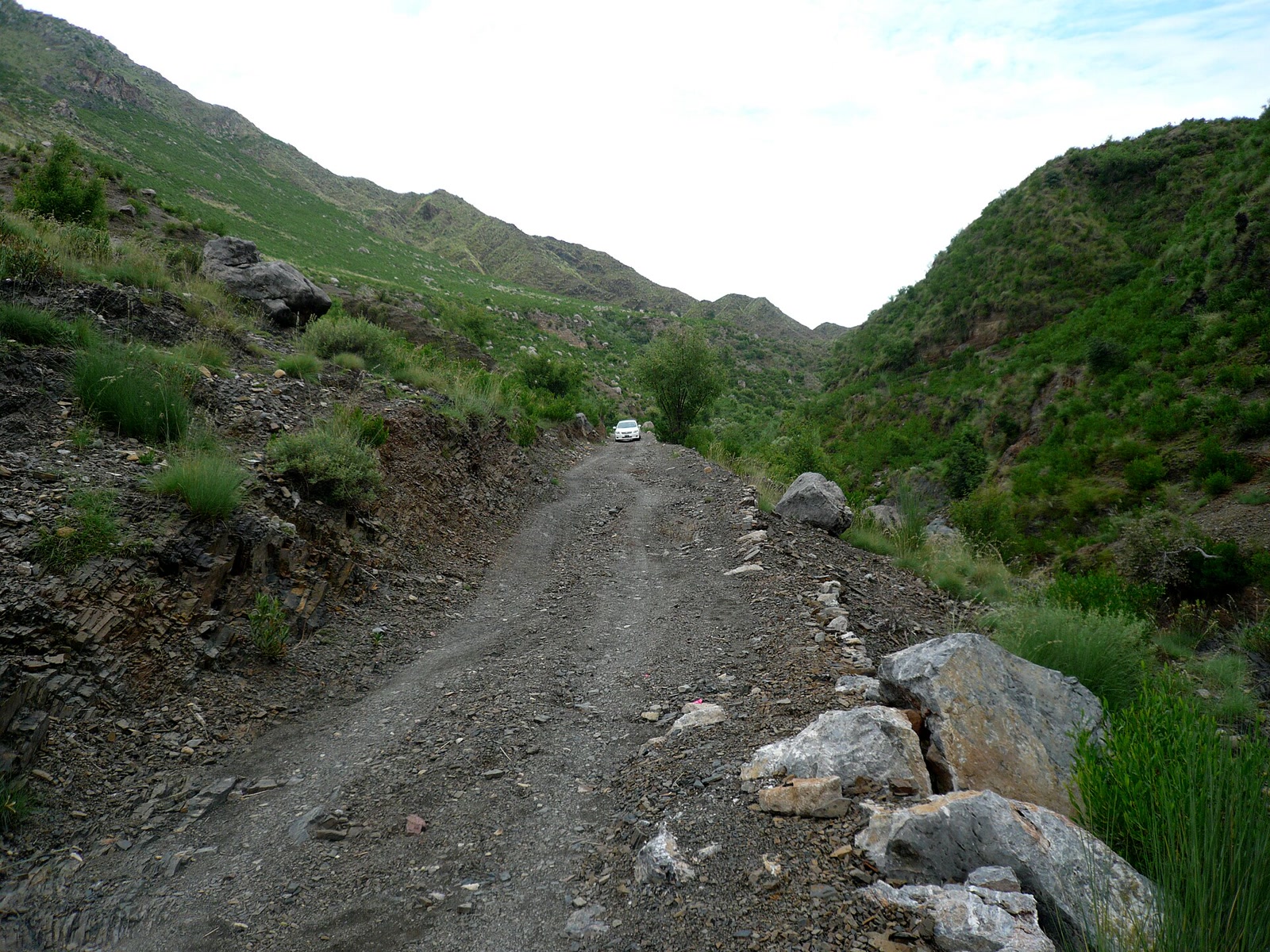
Roads account for a further Rs12.7 billion across 32 projects, including the Thall-Parachinar Road, with projects related to the Gomal Zam Dam also inside the package. Education money goes to repairs and power as much as to new buildings: Rs12.9 billion covers 72 schemes, including repair and upgrade work at 70 schools, solar conversion at 409 educational institutions and three Danesh schools in Bajaur, Kurram and Dera Ismail Khan. Solar-powered water supply schemes are planned at 88 locations, and the package includes scholarships for 100 students to study agriculture in China. In Peshawar it funds the expansion and beautification of Nasir Bagh Road, the missing links on the Ring Road and new underpasses, The Express Tribune reported.
What the 100-day targets test
The package carries two deadlines. The 12 designated districts are to run 100-day and 180-day development programmes, and of the 219 schemes in the other 25 districts, 83 are marked for completion within 100 days while 125 are classified as long-term projects, both papers reported. Those are administrative targets set by officials rather than legal deadlines, and no reporting describes work already completed.
There is a precedent that makes the test sharper. At the briefing KhabarWire reported on 8 November, Khyber Pakhtunkhwa’s home secretary said the previous provincial administration had approved Rs6.4 billion for counterterrorism infrastructure in 22 districts but released only Rs1 billion. The province that must now spend Rs39.19 billion on police, courts and CTD buildings is the one that inherited the Rs6.4 billion file.
How this sits against the province’s other federal money
Two different federal transfers now point at Khyber Pakhtunkhwa, and nothing published so far connects them. The Rs160 billion package is a development programme the prime minister announced. Separately, the centre has signed an interim Article 164 arrangement with the K-P administration it appointed, which KhabarWire reported last week and which carries an estimated Rs157 billion a year in grants from the provinces to Islamabad. The two numbers sit close together and mean opposite things: money flowing into the province against money flowing out of it. No document says whether the Rs160 billion is drawn through the Article 164 machinery or through a separate route, and the package’s own allocations do not mention the arrangement.
Who has to deliver it
Delivery is the open question, because Khyber Pakhtunkhwa has been under governor’s rule since 11 October and is administered by an 11-member advisory council assisting Governor Faisal Karim Kundi, a structure KhabarWire described when it was constituted. The Khyber Pakhtunkhwa emergency tracker follows the constitutional standoff behind the province’s government.
What is already visible is smaller than the package. On 22 November Radio Pakistan reported that a community health centre had been made functional in the Mastak area of district Khyber, expected to serve around 20,000 people in Mastak and Painda Cheena, and that the Tank district administration had launched a cleanliness drive and begun reviewing health centres and schools for medical facilities, medicines and the learning environment. That is the provincial government’s own account of services running under governor’s rule, not evidence on any of the 649 projects.
The things worth watching are narrow and testable: whether a second tranche is released, whether the Rs10 billion is broken down against the 649 projects, whether the 83 schemes marked for the first 100 days have started, and whether the CTD headquarters and protected buildings are put out to tender. Until the documents behind the allocations are published, the package remains a set of proposals with one payment attached.