Reporting snapshot · 21 November 2026 (Asia/Karachi). Pakistan's Foreign Office issued its statement on 20 November, and India had not responded publicly to it when this was published. The $8-10 trillion figure is a ministerial estimate, not an audited reserve valuation, and the government has not published its methodology. The UN exchange took place at an Arria-formula meeting, an informal format that produces no agreed outcome.
Pakistan’s Foreign Office on Friday rejected India’s remarks at the United Nations about the country’s mineral wealth, calling them “undiplomatic and irresponsible” and accusing New Delhi of trying to undermine a sector Islamabad is courting foreign investment for. Geo News and The Express Tribune reported the statement, issued as Press Release 344/2026.
The response followed an exchange at the UN on Thursday in which India’s ambassador, Parvathaneni Harish, accused Pakistan’s military establishment of exploiting the country’s natural resources for “self-aggrandisement”. India’s account of the meeting, reported by The Times of India, placed the allegation inside a procedural dispute over the Indus Waters Treaty.
A minerals debate that turned into a bilateral argument
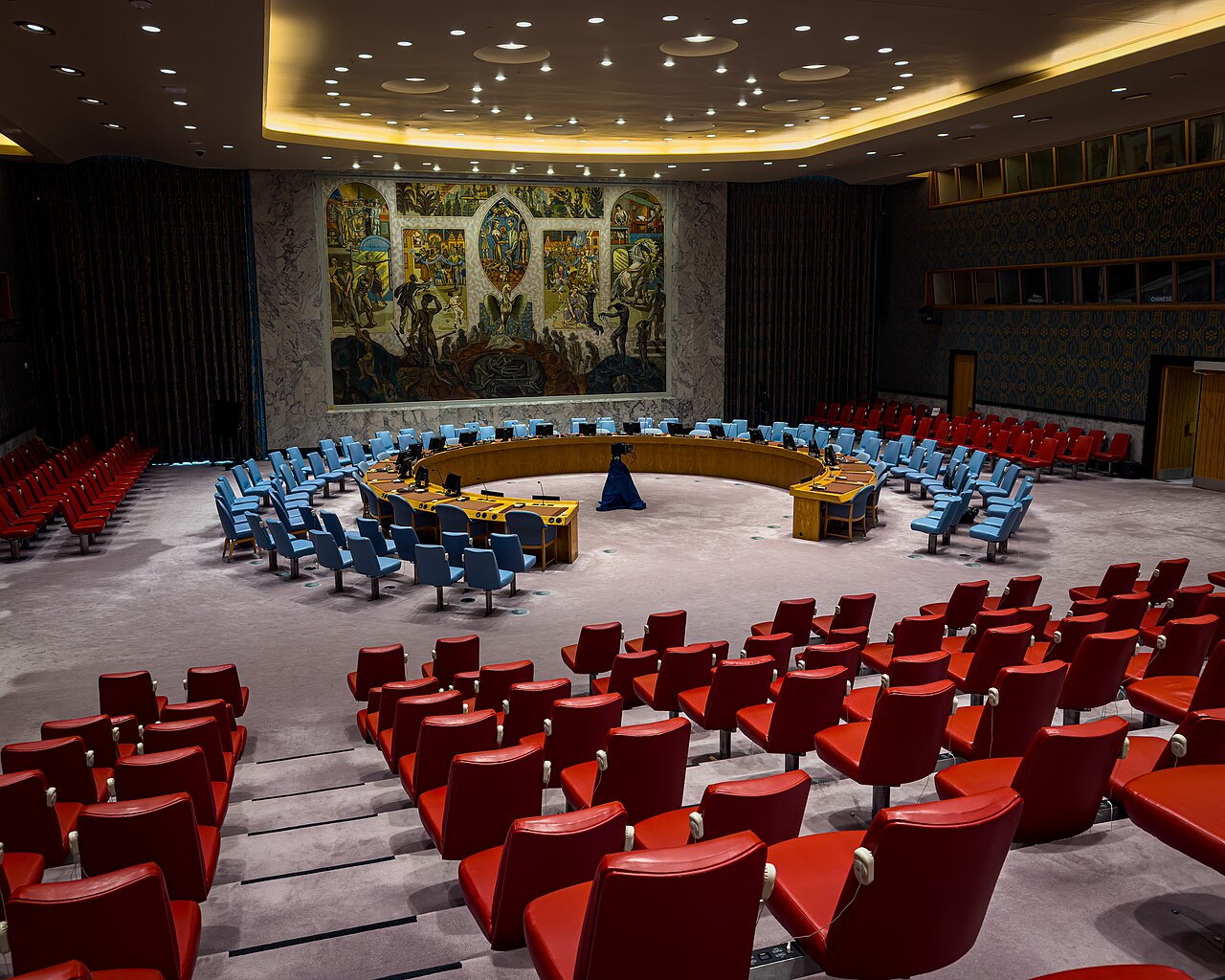
The exchange took place at an Arria-formula meeting convened by Liberia on natural resources and conflict, an informal Security Council format used for open discussion rather than formal decisions. According to the Indian account, Harish said he had not intended to raise bilateral issues but was responding to Pakistan’s delegation, which had used the forum to raise the Indus Waters Treaty.
Harish then turned to the minerals question. “Pakistanis would be served well if its real rulers, its military, used the country’s natural resources for the benefit of their population rather than self-aggrandisement,” he said, according to The Times of India. He cited a 2025 White House photograph in which Field Marshal Asim Munir showed President Donald Trump a wooden case of mineral samples, and linked the military’s role in resource extraction to “the recent dismissal of a provincial government in Pakistan and imposition of a state of emergency there”.
Those are India’s characterisations, not findings by the meeting. Arria-formula gatherings do not adopt statements or create records that bind member states.
What Pakistan’s Foreign Office said
Pakistan’s Foreign Office rejected the Indian remarks as “baseless” and an “unacceptable interference” in its domestic affairs. It said the allegations had been “effectively rebutted” by Pakistan’s representative at the same meeting, and that “such diatribe, so typical of India, can only be rubbished”.
The statement did not address the substance of India’s claim about the military’s role in mineral extraction. Instead, it accused India of raising unsubstantiated insinuations about Pakistani institutions and leadership while avoiding Pakistan’s concerns about what the Foreign Office calls India’s “hydro-terrorism” — its term for India’s decision to hold the Indus Waters Treaty in abeyance. Pakistan says India’s refusal to accept the Court of Arbitration’s 31 August ruling, which found the treaty remained binding, raises questions about New Delhi’s commitment to international law.
The Foreign Office further accused India of supporting terrorist activity in Balochistan and Khyber Pakhtunkhwa to obstruct mineral development, and of discriminating against religious minorities. It urged India to implement UN Security Council resolutions on Jammu and Kashmir and to respect what Pakistan calls the Kashmiris’ right to self-determination. India rejects those allegations and the formulation of the Kashmir dispute.
The $8-10 trillion number behind the argument
The diplomatic row overlapped with a claim that gave it economic weight. On Friday, Deputy Prime Minister and Foreign Minister Ishaq Dar told a ceremony in Karachi welcoming the Turkish seismic vessel Oruç Reis that Pakistan’s mines, minerals, hydrocarbons and gemstones were worth “anything between $8 trillion and $10 trillion” at the “most conservative estimate”, The Express Tribune reported.
Dar contrasted that figure with Pakistan’s debt: about $100 billion for the federal government, or $130 billion once private and state-enterprise foreign-exchange liabilities are included. The comparison is politically potent, but it is not a reserve audit. Dar did not publish a breakdown, a methodology or a date for the estimate, and the ceremony was not a venue at which the government presented new geological data.
The government has used a similar number before. KhabarWire reported in October that an earlier $8 trillion mineral estimate, attributed to the Institute of Cost and Management Accountants of Pakistan, had not been independently audited and came without a published methodology. Dar’s range is wider because it adds hydrocarbons and gemstones, but it inherits the same problem: an order-of-magnitude figure is being asked to carry the weight of a bankable reserve.
That distinction matters to the audience the government is trying to reach. Mining companies and lenders price risk from drill data, licences, fiscal terms and security, not from a headline valuation. Pakistan’s offshore survey is at the seismic stage, and seismic work cannot establish commercial reserves; the government’s own petroleum minister has said drilling off Pakistan is targeted for 2027. KhabarWire set out those limits when the vessel arrived.
Why the exchange is more than a war of words
The minerals drive is one of the government’s main answers to a persistent balance-of-payments problem. The Pakistan Minerals Investment Forum in November closed with a pledge to process minerals at home rather than export them raw, and with a set of commitments that still lack binding project terms, as KhabarWire reported. The military’s public role in that pitch is not hidden: Field Marshal Munir addressed the forum, and the army chief has appeared at events promoting mineral and energy partnerships.
India’s allegation attacks that model directly. By framing the military as the sector’s “real rulers” and suggesting that resource wealth is being used for private or institutional gain, New Delhi is not arguing about geology; it is arguing about who controls the narrative around Pakistan’s biggest investment story. Pakistan’s response, in turn, treats the remarks as an attempt to undermine the country’s mineral development and stability, and links them to the insurgency in Balochistan and Khyber Pakhtunkhwa.
Both claims are politically useful to their authors. Neither is a substitute for evidence. The UN meeting produced no finding on how Pakistan’s mineral sector is governed, and Pakistan’s Foreign Office did not publish a point-by-point rebuttal of the specific allegation about military involvement. In the account published by The Times of India, India did not offer evidence for its characterisation beyond the 2025 photograph and the political events it cited.
What happens next
The immediate diplomatic outcome is limited. The Arria meeting has no follow-up mechanism, and the Foreign Office statement is a public position rather than a legal step. India had not responded to the statement when this was published.
The more consequential question is domestic and commercial. Pakistan wants foreign capital for exploration, processing and downstream industries; investors will ask for the reserve data, fiscal terms and security arrangements that the government has promised but not yet published in full. Dar’s $8-10 trillion figure and the Foreign Office’s rejection of India’s remarks serve the same political purpose — asserting that Pakistan, not its critics, will define the value and direction of its mineral sector. Whether that assertion survives contact with an audit, a drilling result or a signed investment agreement is a separate test.
For now, the row has added a new front to an old rivalry: the UN chamber, the minerals forum and the offshore survey are being used to argue about the same thing. Pakistan says its resources are worth trillions and that outsiders are trying to talk them down. India says the wealth is being captured rather than developed. The numbers will not settle that argument; the next published reserve estimate, and the first commercial drilling result, will carry more weight than either statement.