Reporting snapshot · 29 October 2026 (Asia/Karachi). The decision was taken in Washington on Wednesday evening and the committee meets again on 8-9 December, so the rate path is still open. The main limitation is that the statement publishes no new forecasts, and the market pricing for December recorded here reflects Wednesday's close rather than a settled view.
What the Fed decided on 28 October
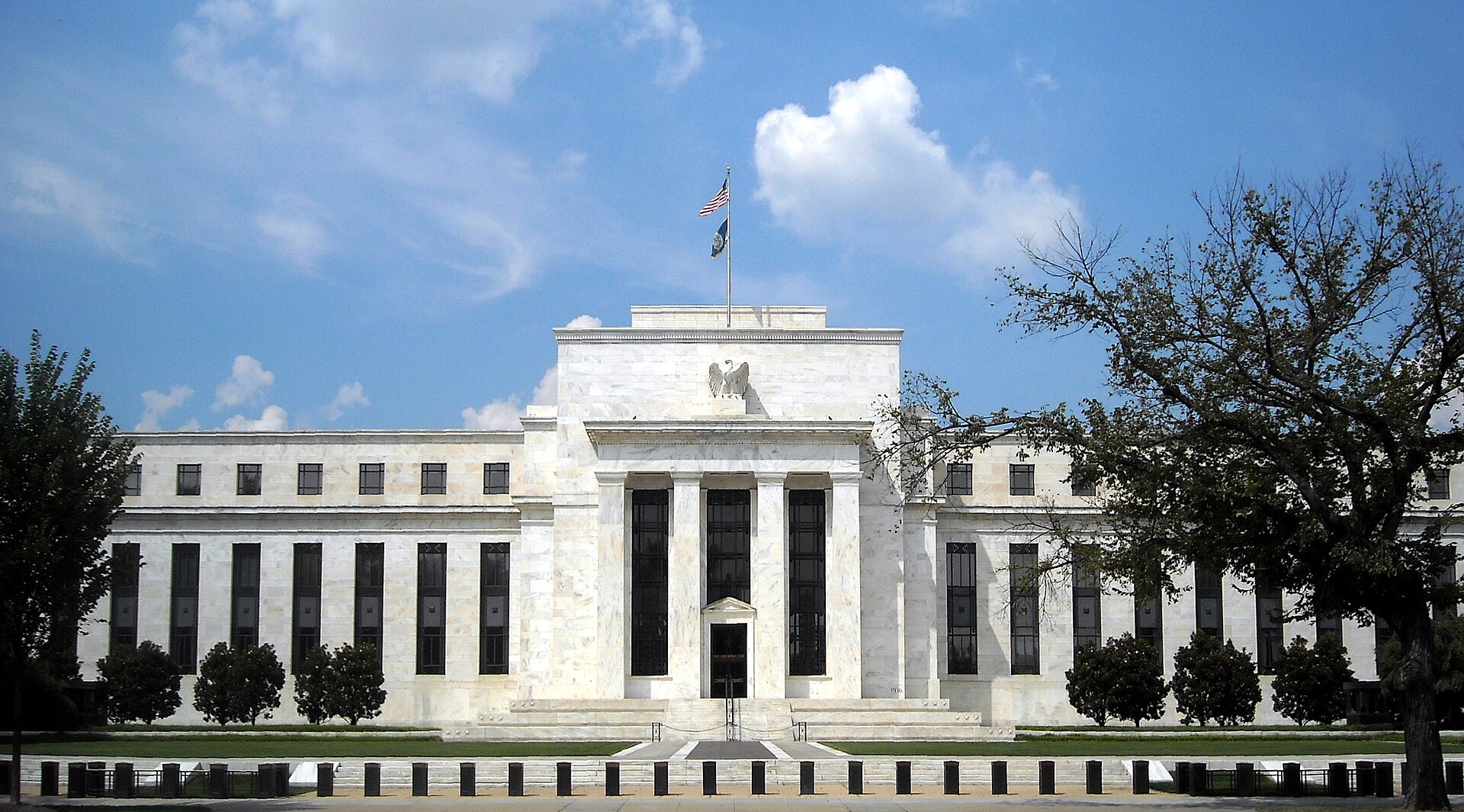
The Federal Reserve kept its benchmark rate unchanged on Wednesday, 28 October 2026, holding the target range for the federal funds rate at 3.75 to 4.00 per cent, the Federal Open Market Committee’s statement said. The statement was approved on a 10-2 vote, and it was released for a 2 p.m. Eastern time press conference by Chair Kevin Warsh.
Two members voted against the hold. Governor Lisa Cook and Cleveland Fed President Beth Hammack “preferred to raise the target range for the federal funds rate by 1/4 percentage point at this meeting”, the statement recorded. Cook’s was her first dissent on a central bank policy decision, and she is the governor President Donald Trump has been trying to remove from the central bank, Reuters reported. Hammack has been a consistently hawkish voice on the committee.
The wording of the statement is where the news sits. It upgraded the economy’s description to “expanding at a strong pace”, while keeping the sentence that “inflation remains elevated” and saying the committee needed “more information” to decide on a policy stance that returns inflation to its 2 per cent goal. That combination is what Al Jazeera English described: a hold that leaves the door open to a hike rather than signalling an end to the tightening cycle.
Why two governors wanted to raise rates
Energy and food costs are the pressure point. “Energy and related prices have moved higher again in recent weeks, and our job is to ensure that relative price changes in some sectors do not broaden out across the economy”, Warsh told reporters, France 24 reported. US consumer inflation rose to 3.7 per cent in September from 3.4 per cent in August, with energy prices largely accounting for the monthly increase, Al Jazeera English noted.
On growth, Warsh pushed back on the idea that the economy was running too hot. “Is the economy running too hot? Is the economy running too strong? That isn’t the judgment of most of my colleagues”, he said, according to Reuters. His argument was that productivity gains, which he said predate the artificial intelligence investment boom, could let the economy grow faster without the same inflation. Some of his colleagues do not accept that, and Reuters reported that several have said demand fuelled by artificial intelligence and healthy consumer spending is now driving prices higher.
Michael Pearce, chief US economist at Oxford Economics, put the balance bluntly: “The forces keeping the Federal Reserve hawkish haven’t faded. Diesel and gasoline prices remain elevated, AI-driven inflation isn’t easing, and the labour market remains resilient”, Reuters quoted him.
The political context is not incidental. The decision came six days before the 3 November midterm elections, in which Democrats are seeking control of both houses of Congress, and Trump has repeatedly pressed the Fed to cut rates. “Politics played no role in the decision”, Warsh said, according to France 24. On the day of the decision, the dollar was holding near two-week highs, The Express Tribune reported.
What this means for Pakistan
The immediate transmission runs through inflation and the exchange rate rather than through a policy decision Pakistan controls. Pakistan’s own central bank has just moved the other way: the State Bank of Pakistan raised its policy rate by 50 basis points to 12 per cent on 26 October, and KhabarWire examined what that decision rested on. That was the bank’s first increase since April, and it came with the State Bank of Pakistan tracker following the sequence.
A Fed that is holding rates while two of its own governors call for an immediate hike does not make the case for the State Bank to soften. Economists have already warned of more, not fewer, increases: the Sustainable Development Policy Institute’s Dr Abid Qaiyum Suleri expects little room for easing while energy prices stay elevated, and Dr Sajid Amin Javed, also at the institute, said the State Bank could introduce a series of gradual increases over the next three to four months if conflict fears kept oil prices high, with average headline inflation of 11 to 13 per cent projected for 2026-27, The Express Tribune reported. The State Bank’s own projection for 2026-27 growth is 3.5 to 4.5 per cent, and the IMF’s October forecast carries inflation at 9.9 per cent for the same year.
The local market has been reading the two tightening cycles together. The KSE-100 rose 1,269.55 points, or 0.77 per cent, on Wednesday to close at 165,736.76, with buying attributed partly to the State Bank’s hike landing below expectations while Brent crude hovered near 115 dollars a barrel, The Express Tribune reported. Foreign investors, however, sold shares worth 624 million rupees that session. Pakistan’s fuel and freight costs remain tied to the same Middle East energy shock that is driving US inflation: Brent crude was at 114.70 dollars a barrel on Monday, near six-month highs despite a 2.03 dollar fall, Reuters reported, and the petrol and diesel prices raised from 29 October reflect that.
What is still uncertain
The committee’s statement publishes no new forecasts, so nothing in it fixes the December path. Markets after the decision priced roughly an 80 per cent chance of a rate hike at the 8-9 December meeting, with another increase likely by March, Reuters reported. Data that arrives before then will carry the argument: September’s consumer price index was already published, while the personal consumption expenditures price index, which the central bank uses to assess inflation, was due on Thursday, Al Jazeera English reported.
For Pakistan, the open question is whether an oil market held near 115 dollars a barrel keeps the inflation impulse alive long enough for the State Bank to follow the Fed further rather than the other way round. The two dissenters are the signal to watch. If Cook and Hammack are joined by a third voter before December, the case for a higher-for-longer Fed, and by extension for a higher-for-longer State Bank, becomes considerably harder to argue against.
One structural change announced by Warsh has received less attention than the vote: from 2027 the Fed will meet eight times a year but will set rates only seven times in 2027 and six times in 2028, France 24 reported. Fewer rate-setting meetings means fewer opportunities to react between now and the end of 2027, which cuts both ways for a central bank that is waiting for more information.