Reporting snapshot · 4 November 2026 (Asia/Karachi). The usage figures are the PTA chairman's, given to a parliamentary committee on 3 November. The regulator has not published the underlying data, the committee's record was not publicly available, and the two published accounts of the briefing differ on one TikTok measure and on the number of 5G users.
Pakistan has 96 million YouTube users who watch about 560 million videos a day, the Pakistan Telecommunication Authority’s chairman told a National Assembly committee on 3 November, describing the total as the highest national YouTube viewership in the world. The same session heard lawmakers describe mobile networks that still drop calls, stall video and leave rural areas on 3G, a contrast that ran through the committee’s questions about the country’s digital growth.
What the PTA told the committee
Hafeez Ur Rehman, a retired major general who chairs the PTA, briefed the National Assembly Standing Committee on Information Technology and Telecommunications at Parliament House. The meeting was chaired by MNA Syed Aminul Haque, The Express Tribune reported.
Geo News reported that Rehman put YouTube users at 96 million and daily video views at 560 million, and said the country ranked first globally on that measure. He also said TikTok had 100 million registered accounts in Pakistan and that WhatsApp had 100 million accounts, with users making about one billion calls and sending 12 billion messages a day.
The two accounts diverge on TikTok. Geo News reported that 150 million Pakistanis watched videos on the platform, while The Express Tribune reported that nearly 150 million videos were watched and uploaded from Pakistan daily. Both figures were attributed to the PTA chairman. The committee’s record was not publicly available, so the difference could not be resolved from the briefing itself.
Federal information technology and telecom minister Shaza Fatima Khawaja told the committee that data consumption had risen sharply with social media and artificial intelligence use. She said 5G service was available in 24 cities. Geo News reported her figure for 5G users as 1.8 million; The Express Tribune reported 18 million. The tenfold gap is one of several places where the published accounts of the same meeting do not agree.
Why the numbers matter
The figures, if accurate, describe a market of unusual scale for video. A daily audience of 560 million views is the kind of metric that advertisers, telecom operators and creators watch closely, and it helps explain why global platforms treat Pakistan as a major market even when average incomes are low. It also points to how much of Pakistan’s internet use is entertainment rather than commerce or public services.
For mobile operators, video is the most bandwidth-intensive everyday traffic. High viewership can coexist with poor service: users retry failed videos, switch to lower resolution, move to Wi-Fi or simply stop watching. Independent network measurements give a less flattering picture than the user totals. Opensignal’s Pakistan report for the second quarter of 2026 put national 4G download speeds at 18.9 Mbps and the video experience score at 37.53 out of 100, a middling result that sits awkwardly beside a claim of world-leading viewership.
The numbers also matter for policy. Spectrum, fibre backhaul, rights of way and tower security all affect whether heavy video use turns into reliable service and revenue. The PTA regulates telecom operators rather than platform content, but its data shapes how the government talks about spectrum auctions, 5G roll-out and the digital economy.
The service-quality complaint
Committee members did not dispute the usage numbers. They questioned what those numbers say about the network. Ahmad Atiq said mobile networks barely worked in his constituency and along the route to Karachi, and that WhatsApp calls were often disconnected in Islamabad. “If this is the situation in Islamabad, what can one expect in rural areas, where even 3G does not work, while you are talking about 5G?” he asked, according to The Express Tribune. Asia Ishaq said 4G had deteriorated since 5G was introduced and asked whether lawmakers would have to approach the Supreme Court to get operators to improve.
Rehman said he had visited 41 districts with telecom operators to assess service quality and inspect mobile towers, and that the PTA had directed operators to improve. He said show-cause notices were the authority’s last resort because companies often obtained stay orders against financial penalties. The Senate has separately pursued allegations that Jazz overcharged subscribers by billions of rupees, a dispute the PTA has contested.
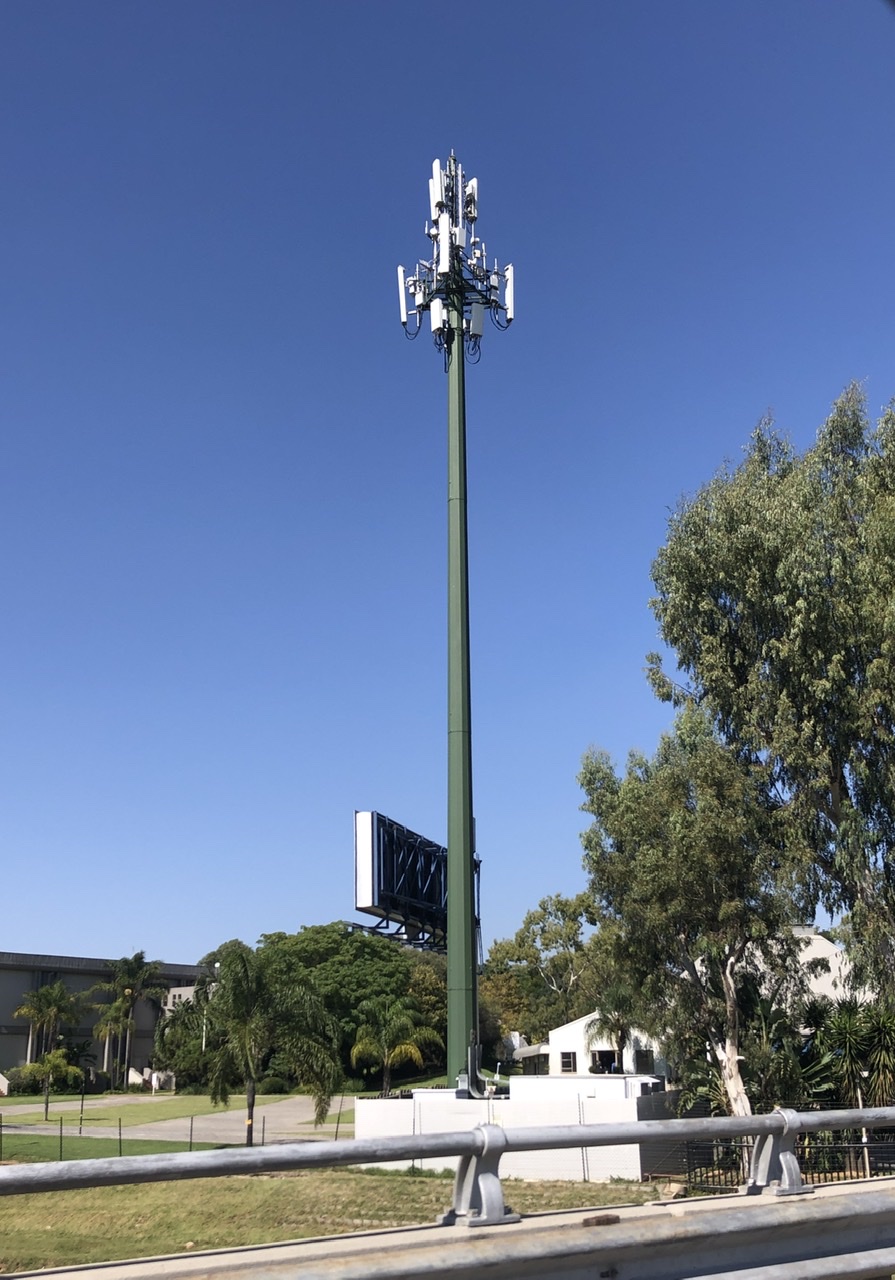
Khawaja cited theft of telecom infrastructure, including entire mobile towers and the diesel and generators that keep them running, as one cause of disruption. That explanation points to a security and maintenance problem as well as an investment one. It does not by itself explain why urban users report dropped calls, and the committee did not ask the PTA to reconcile the two accounts.
What is still uncertain
The central uncertainty is the data itself. The PTA chairman’s figures are not a published dataset. No minutes, attendance list or transcript was publicly available, and neither account of the briefing included a PTA statement setting out definitions. “Users” can mean accounts rather than people; shared devices, duplicate accounts and business accounts can inflate totals. “Views” can count repeat plays, autoplay and partial views. Without the underlying definitions, the figures should be read as the regulator’s description of the market, not an independently audited census.
The global ranking is also unverified. Rehman’s comparison was reported as a total, not per person or per broadband connection. Cross-country rankings depend on what is counted and by whom, and no methodology was released with the briefing. Pakistan’s scale is plausible given its large population and the reach of mobile broadband, but the claim that it leads the world has not been independently checked.
The 5G figures compound the problem. A tenfold difference between two reports of the same briefing is not a rounding error; it suggests a transcription or unit error somewhere in the chain. The committee’s record would settle it. Until then, the safer reading is that 5G adoption remains small relative to 4G, as the 1.8 million figure implies, rather than that 18 million people are on 5G.
The briefing also lands in the middle of a wider argument about how Pakistan regulates social platforms. The Lahore High Court is hearing a challenge over an under-16 social media ban, a case that turns on how platforms are used rather than how many accounts they host. Usage data of the kind Rehman presented is likely to be cited by both sides in that debate, even though its definitions remain unclear.
What happens next
The committee’s next steps are not public. The PTA’s show-cause process and the operators’ response will be the next test of whether the briefing produces changes beyond another round of statistics.
For readers, the practical question is not whether Pakistan watches a lot of YouTube. The figures suggest it does. The question is whether the networks can carry that demand reliably, and whether the regulator will publish the data behind its claims so that the answer can be measured rather than asserted.