Reporting snapshot · 6 October 2026 (Asia/Karachi). This account rests on court reporting by The Express Tribune, Dawn and Profit by Pakistan Today. The petition, the Pakistan Telecommunication Authority's report to the court and the National Commission on the Rights of Child's submission are not public documents, so this account follows those outlets rather than the filings. Two separate cases are involved: one before the Lahore High Court and one before the Islamabad High Court.
What the Lahore High Court has done
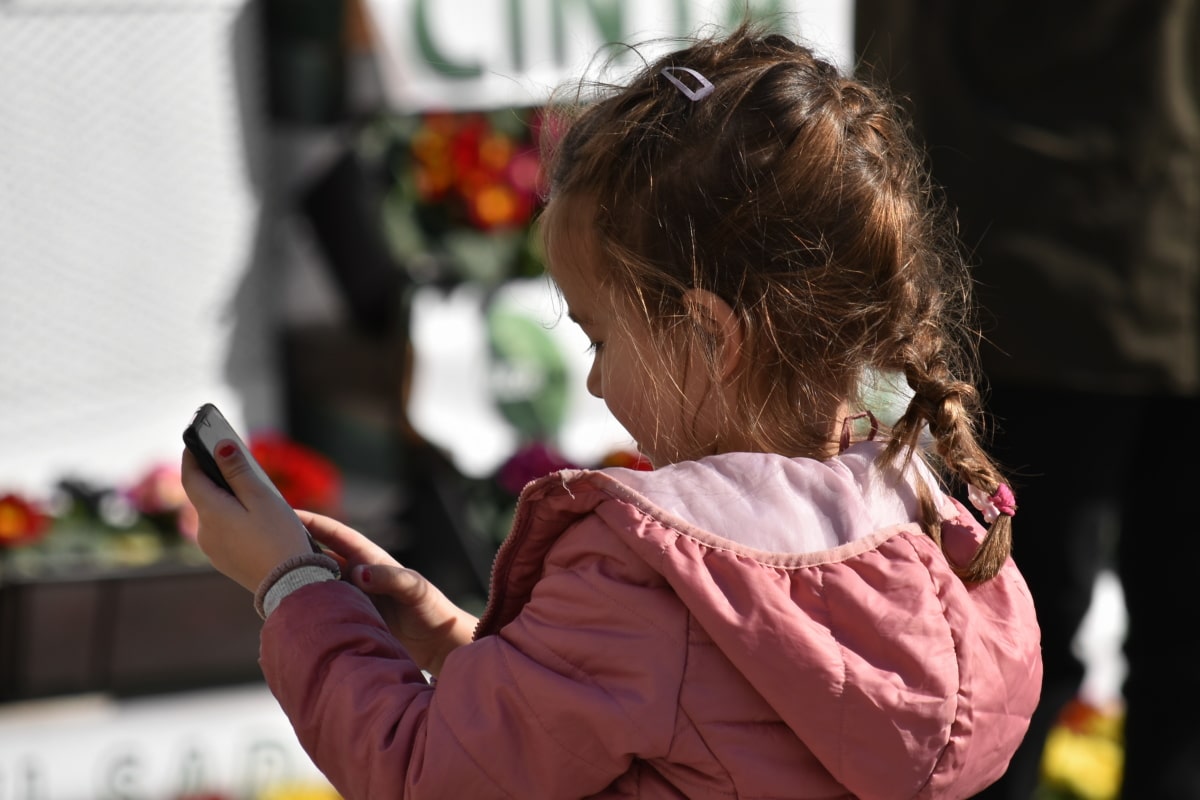
The Express Tribune reported on 6 October that the Lahore High Court has summoned the Attorney General for Pakistan to assist it in a petition seeking a ban on social media use by children under the age of 16. Chief Justice Aalia Neelum heard the petition, filed by Alia Saleem. The court had already received written responses from the Federal Ministry of Law and Justice and the Pakistan Telecommunication Authority (PTA) at an earlier hearing, and has now asked the attorney general to address the legal and regulatory questions.
According to The Express Tribune, the petitioner contends that Pakistan currently lacks a legal mechanism to verify the age of children under 16 on social media platforms. The petition asks the court to impose a restriction modelled on measures adopted in Australia, Italy and Brazil. It also seeks a complete ban on indecent scenes and depictions of alcohol in television dramas and advertisements, and amendments to the Prevention of Electronic Crimes Act (PECA) to introduce a mandatory age-verification system for children.
Separately, the same report says the National Commission on the Rights of Child (NCRC) has filed a 17-page response in the Islamabad High Court case, calling for strict age-verification systems and legal protections against online harm.
The regulator says it has no power to impose a ban
The Lahore petition is not the only one. In August, a writ petition filed by Waqas Nasir asked the Islamabad High Court to direct the federal government to introduce legislation and a comprehensive regulatory framework for children’s social media use. On 31 August the court sought responses from the relevant ministries and from the PTA, Dawn reported.
The PTA’s answer, set out in a detailed report to the court that Dawn reported on 1 and 2 October, is that it cannot do what the petitioners want. The authority told the Islamabad High Court it lacks the statutory authority to impose mandatory age verification or to restrict social media access for under-16s, arguing that a universal minimum age for social media accounts went beyond its existing legal mandate. Because it is a statutory regulator, the PTA says it can exercise only the powers the law expressly gives it, and it cannot create a new age-verification regime through administrative action alone.
Profit by Pakistan Today carried the same report, noting the PTA’s position that establishing a universal minimum age could not be done through administrative action under its existing powers, and that the regulator has asked the court to dismiss the petition to the extent that it seeks relief beyond the authority’s mandate.
Why age checks are technically hard
The PTA’s report also set out practical obstacles. It classifies Facebook, Google and X as “over-the-top” services that are neither licensed by the PTA nor registered in Pakistan, so they are not bound by local codes of conduct. When the regulator asks those platforms to act, they assess requests under their own community guidelines, which may not align with Pakistani law.
Technical enforcement is harder still. Most platforms use HTTPS encryption, which prevents third parties from identifying individual pages or pieces of content being accessed inside an encrypted connection. In practice, the PTA says, blocking a single URL on an HTTPS platform is nearly impossible without blocking the entire website and cutting off legitimate content with it. Artificial intelligence adds further complexity.
The PTA also defends its record. It says it has processed more than 17 million URLs and blocked about 88.20 per cent of them, and it lists digital-literacy work with UNICEF, TikTok, Meta and the GSMA.
A regulatory handover complicates the picture
Part of the reason for the PTA’s answer is that its role is changing. Under the Prevention of Electronic Crimes (Amendment) Act 2025, a new body — the Social Media Protection and Regulatory Authority (SMPRA) — is to take over the regulation of social media platforms from the PTA. Until SMPRA is formally notified, the PTA says it continues to work under the original PECA 2016 framework on a “best-efforts basis”, and its content-removal and blocking mandate has become “transitory in nature”.
That handover means the question of who can order an age-verification system may not be settled by the PTA’s current answer. The petition before the Lahore High Court, and the separate Islamabad case, both reach beyond the regulator to the federal government and the legislature. The PTA is already under separate parliamentary scrutiny over whether its tariff approvals protect consumers, a dispute KhabarWire has covered.
The pressure has been building for months
The court cases are the latest stage in a longer domestic push. On 15 July, Dawn reported, a resolution was submitted to the Punjab Assembly seeking a nationwide ban on social media accounts for children under 16 without parental consent, and calling on the PTA to enforce age verification. The resolution, moved by lawmaker Sarah Ahmad, cited cyberbullying, online sexual abuse and addiction, and recommended federal legislation with parental-consent age checks.
On 9 September, Dawn reported that two lawyers had filed a petition in the Federal Constitutional Court seeking to shield under-16s from unrestricted social media use and indecent television content. They argued that no Pakistani law currently mandates age verification for social media access, pointed to the same overseas examples, and accused the media regulator PEMRA of failing to enforce its code of conduct during child-viewing hours.
What is still uncertain
Several things remain unresolved. The Lahore High Court has summoned the attorney general but has not ruled, and the Islamabad High Court case is also pending. Neither the PTA’s report nor the petitions are public documents, and the accounts of them rest on the news organisations cited below. The NCRC’s specific recommended safeguards have not been published in full.
There is a definitional gap as well. The petitions and the Punjab resolution use the language of a “ban” and of “age verification”, but they do not set out who would verify ages, how such a system would work without a national digital identity check at sign-up, or how platforms that are not registered in Pakistan could be made to comply. The PTA’s report points to exactly those gaps when it says the current legal framework gives it no such power.
Finally, the domestic debate is unfolding alongside a broader international turn towards restricting minors’ access. The petition cites Australia, Italy and Brazil. How Pakistan’s courts and the incoming SMPRA translate those competing signals into rules for the country’s young users is the question the coming weeks should answer.
Sources & reporting notes
This is a synthesis of published material, not eyewitness reporting. Sources were reviewed on 6 October 2026. All times are Asia/Karachi.
- The Express Tribune — "Legal input sought on social media ban for teenagers"6 October 2026 · The Lahore High Court's summons to the attorney general over the Alia Saleem petition, the petitioner's arguments, the PTA and law ministry responses and the NCRC's Islamabad High Court submission.
- Dawn — "PTA tells IHC it can't impose social media age limits"2 October 2026 · The PTA report to the Islamabad High Court, its statutory-authority argument, the over-the-top classification, HTTPS limits, the 17 million URLs and 88.20 per cent figure, and the PECA 2025 and SMPRA transition.
- Profit by Pakistan Today — "PTA says it cannot impose under-16 social media ban, cites lack of legal powers"2 October 2026 · Independent account of the PTA's report to the Islamabad High Court and its request that the petition be dismissed to the extent it exceeds the authority's mandate.
- Dawn — "Punjab Assembly resolution seeks ban on social media accounts of kids under 16"15 July 2026 · Context on the Punjab Assembly resolution moved by Sarah Ahmad, its parental-consent age-verification proposal and its calls on the PTA.
- Dawn — "Federal Constitutional Court moved for ban on social media use by kids under 16"9 September 2026 · Context on the separate Federal Constitutional Court petition, its legal arguments and its allegations about PEMRA enforcement.
- Dawn — "IHC seeks replies from ministries, Pemra, PTA on plea seeking to regulate children's social media use"31 August 2026 · Context on the Islamabad High Court's request for responses to the Waqas Nasir petition.