Reporting snapshot · 2 October 2026. The Pakistani side and the International Monetary Fund staff mission have run into a deadlock this week on two specific questions tied to the fourth review of Pakistan's $7 billion programme: whether to keep the new fuel compensation scheme for motorcyclists and small-car owners, and whether to write off about Rs1.4 trillion in delayed-payment receivables of gas distribution companies. The account below rests on reporting in The Express Tribune on 2 October and on Profit by Pakistan Today the same day, drawing on Pakistani government and IMF sources who spoke on condition of anonymity. The figures and positions attributed to "sources" have not been confirmed in writing by either side; readers should treat the dollar and rupee numbers, the claimed subsidy cost, and the quoted positions as the negotiating stance of the cited sources as of this writing, not as a settled agreement.
What happened
Negotiations between Pakistani authorities and the visiting International Monetary Fund (IMF) staff mission have hit a deadlock over two specific questions, The Express Tribune reported on 2 October: the three-month fuel compensation scheme for motorcyclists and small-car owners, and a proposed write-off of about Rs1.4 trillion in delayed-payment receivables of Sui gas distribution companies. The same accounting was carried the same day by Profit by Pakistan Today, an independent Pakistan-allowlist business publication, both citing Pakistani government officials and the IMF team who spoke on condition of anonymity.
Officials told The Express Tribune that the Fund was of the view that the actual cost of the fuel compensation scheme may exceed the government’s Rs75 billion estimate for the initial three months. Pakistan has assured the IMF under its existing programme commitment that it will “refrain from introducing any fuel subsidy or cross-subsidy scheme”; the petrol subsidy terms passed in September breached the commitment, and the Fund wants the breach rectified before the review can conclude.
On the second front of the discussion — a proposed write-off of about Rs1.4 trillion in delayed-payment receivables of gas distribution companies, including late-payment surcharges — officials said the Petroleum Division does not agree, on the grounds that the federal government cannot walk away from commitments to gas distribution and exploration companies.
A detailed meeting on the gas-sector circular-debt management plan is expected next week; an earlier scheduled meeting was postponed.
Why it matters
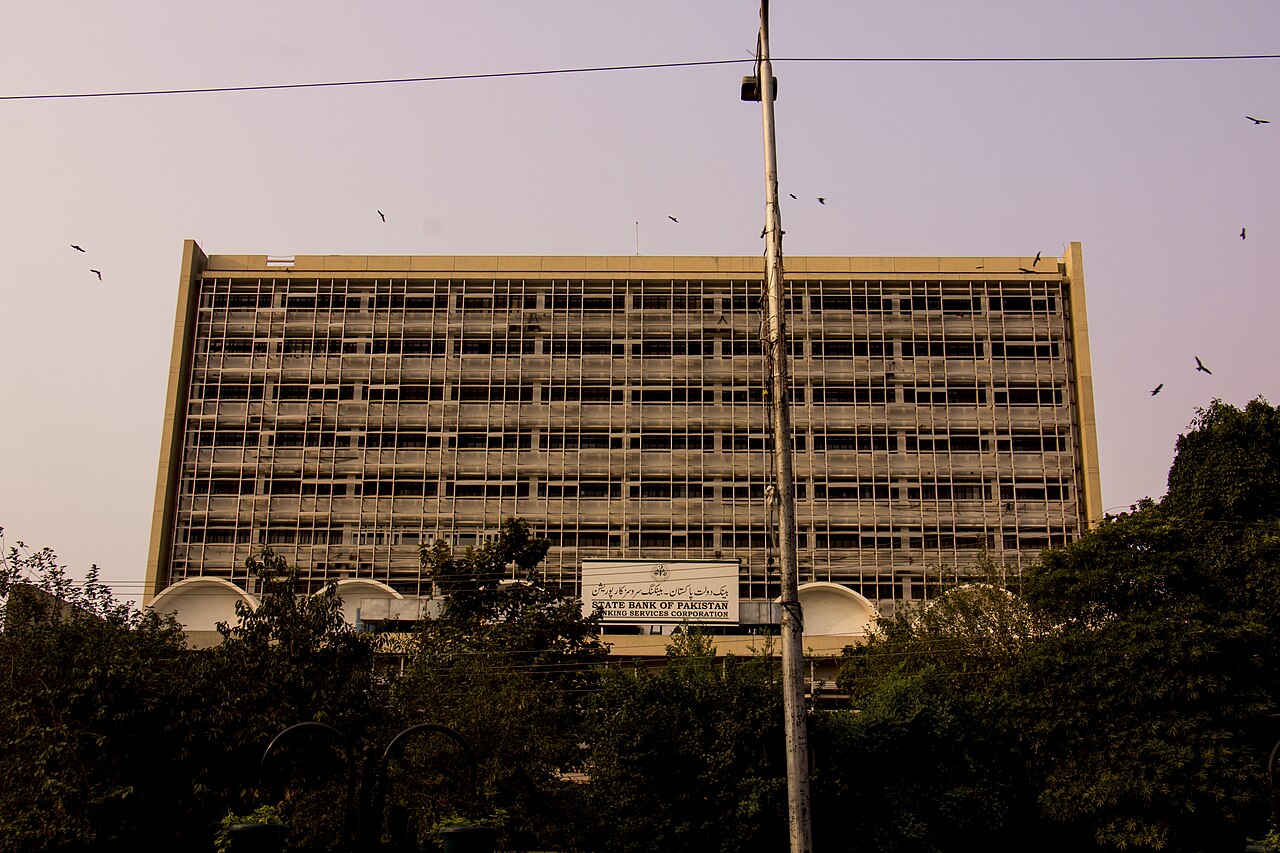
The deadlock comes as the IMF mission — led by Iva Petrova — is holding talks in Islamabad for the fourth review of Pakistan’s $7 billion Extended Fund Facility (EFF) and a parallel Article-IV consultation. The mission opened with a symbolic session earlier in the negotiation in Karachi before moving to the federal capital; the fuel subsidy and the gas-sector circular debt are both items the Fund has flagged as needing resolution before the review can conclude.
The Express Tribune reported that the Petroleum Division shared its fuel-price breakdown with the IMF. The imported cost of petrol before tax and margin was around Rs250 per litre, the government told the mission, while consumers paid around Rs390. The Petroleum Division argued the breakdown is unfair: about Rs110 per litre in taxes and Rs27 in various margins are added on top of the imported price. The IMF’s view is that setting expenditure priorities is the responsibility of the government and that any subsidy should be delivered through a targeted mechanism, The Express Tribune reported.
Officials said the government is unlikely to prematurely end the fuel compensation scheme for motorcyclists and small-car owners but its extension beyond three months may not be possible.
On the gas-sector circular debt, the Express Tribune reported that the Petroleum Division has proposed that the circular debt — estimated at Rs3.6 trillion — be settled through tariff differential claims of Sui gas companies, which would then pay off the exploration and production companies OGDC, PPL and GHPL, where the government holds major shareholdings. The plan envisages a net cash injection into the companies while accounting for their cash-flow projections and contractual obligations. The IMF has raised concerns over the potential leakage to non-controlling and minority shareholders and whether the proposed coverage through additional inflows — including the petroleum development levy and LNG-related savings — would be sufficient.
The gas-sector circular debt in context
The Rs3.6 trillion gas-sector circular debt, of which about Rs1.8 trillion is principal outstanding, has been a long-running concern. The 17 May 2026 IMF staff visit, covered by KhabarWire, flagged both the power-sector and gas-sector circular debt as programme issues that needed to be addressed. The 19 September preview of the fourth review, also by KhabarWire, noted that the talks would cover energy-sector reforms, privatisation and a plan to settle electricity and gas circular debt.
The dispute over how to settle the circular debt is not new. The 30 September 2026 Express Tribune report by the same journalist, Shahbaz Rana, said the IMF had pressed Pakistan to write off inter-corporate debt and waive late-payment surcharges estimated at Rs1.7 trillion in a previous meeting, while the Petroleum Division had argued that the federal government could not go back on commitments to gas distribution and exploration companies. The same report said the IMF had also raised reservations over using Rs850 billion in gas company dividends to settle the debt, arguing that the proposed arrangement was not fiscally neutral.
To resolve the issue, Prime Minister Shehbaz Sharif has constituted a committee to implement structural reforms in the petroleum sector, The Express Tribune reported. The government held several meetings with the IMF between March and July on the issue, but the two sides have yet to agree on a solution.
What is still uncertain
Several questions remain open. The first is the size and duration of the fuel compensation scheme: the Fund’s view that the actual cost may exceed Rs75 billion is a source-side estimate and has not been independently verified. The second is whether the gas-sector circular debt will be settled through the Petroleum Division’s proposed mechanism, an alternative, or carried over into the next budget year. The fourth is the wider programme: a successful conclusion of the fourth review would unlock a disbursement of about $1 billion (760 million Special Drawing Rights) under the EFF and a further $200 million under the parallel $1.4 billion Resilience and Sustainability Facility. Disbursements would follow an IMF Executive Board meeting, expected by the end of November or early December if the review is completed.
A related uncertainty is whether the government’s fuel subsidy position will soften. The 24 September 2026 Express Tribune report by Shahbaz Rana, also by KhabarWire, said that Prime Minister Shehbaz Sharif told The Express Tribune after his UNGA meeting with IMF Managing Director Kristalina Georgieva that the Fund had raised no serious concerns over Pakistan’s fuel subsidy. The 2 October Tribune report suggests that the Fund’s staff-level view, in the technical talks in Islamabad, is closer to the position the Fund has consistently pressed in past reviews — that any subsidy should be delivered through a targeted mechanism and not through the petrol pump. Whether that gap closes before the next round of talks next week, or whether it persists into the IMF Executive Board review, remains the open question for now.
Sources & reporting notes
This is a synthesis of published material, not eyewitness reporting. Sources were reviewed on 2 October 2026. The deadlock disclosures, the specific Rs1.4 trillion receivables figure and the Rs3.6 trillion circular-debt figure all come from Pakistani government and IMF sources cited on condition of anonymity by The Express Tribune and Profit by Pakistan Today, and have not been publicly confirmed by either side.
- The Express Tribune — "Petrol subsidy puts govt, IMF at odds"2 October 2026 · The detailed account of the deadlock, the petroleum cost breakdown, the IMF position on targeted subsidies, the Rs1.4 trillion gas receivables figure, the Rs3.6 trillion circular debt total, and the proposed OGDC/PPL/GHPL dividend mechanism, sourced to anonymous Pakistani authorities and IMF team members.
- Profit by Pakistan Today — "Pakistan, IMF talks hit deadlock over fuel subsidy, Rs1.4 trillion gas receivables"2 October 2026 · Independent same-day confirmation of the deadlock, the headline figures, and the programme context including the $7 billion EFF review and the Article-IV consultation.
- The Express Tribune — "IMF pushes targeted subsidies"30 September 2026 · The earlier account of IMF mission chief Iva Petrova's kick-off meeting, where the IMF pressed for targeted subsidies through BISP and flagged the gas-sector circular debt; this is the prior phase of the same review that is now at deadlock.