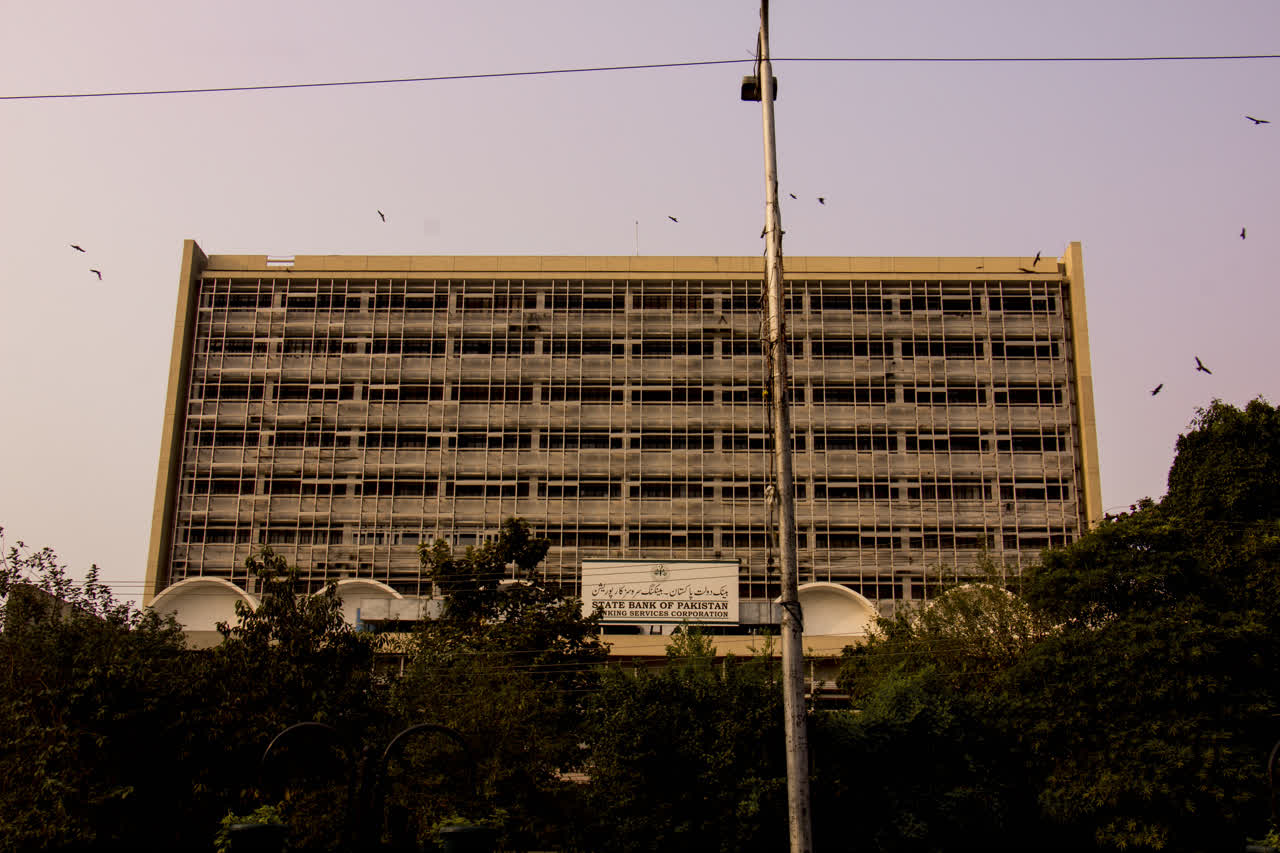
Reporting snapshot · 24 September 2026. The International Monetary Fund (IMF) staff mission opened Pakistan's fourth review under the $7 billion Extended Fund Facility (EFF) on Wednesday, 23 September, with technical discussions at the State Bank of Pakistan in Karachi. The specific reform gaps described below rest on unnamed officials cited by The Express Tribune; the IMF and the government have not publicly confirmed the details of the talks, which are scheduled to move to Islamabad on 28 September. The figures may be revised as the two-week review proceeds.
What happened
The IMF review mission opened Pakistan’s fourth review under the $7 billion Extended Fund Facility in Karachi on Wednesday, 23 September, alongside the third review of the $1.4 billion Resilience and Sustainability Facility (RSF) and an Article IV consultation, according to Profit by Pakistan Today. The technical discussions at the State Bank of Pakistan are focused on inflation, monetary policy and the exchange rate, and the mission is expected to move to Islamabad on 28 September for talks with the Ministry of Finance, the Federal Board of Revenue and other ministries, provided the federal capital remains open as the government prepares for a scheduled opposition march.
On the opening day, officials privy to the talks told The Express Tribune that Pakistan had shown progress on the programme’s fiscal and monetary numbers — enough to keep the review on track for a recommendation to release about $1.2 billion across two tranches — but had missed a handful of conditions tied to higher spending on education and healthcare and to improving governance.
The missed conditions
The most prominent gap, according to the officials cited by The Express Tribune, is spending. The five governments were required to cumulatively spend Rs3.47 trillion on health and education, but the outlay fell short by a wide margin of Rs370 billion. This could prove one of the more difficult points for the authorities, particularly because the Fund had imposed a limit to keep primary current spending at the projected inflation rate while explicitly reallocating fiscal space to social protection, health and education.
Governance reform also lagged. The government has not fully implemented the condition to table bills in parliament amending the laws of ten state-owned enterprises (SOEs) to strengthen their governance and corporate culture. A separate condition requiring the government to publish, by June 2026, a plan outlining the post-2027 financial-sector strategy has also not been met — a benchmark framed in light of the constitutional provision to end the interest-based economy. An earlier requirement to amend the Sovereign Wealth Fund (SWF) Act to adopt international-standard governance mechanisms and fiscal safeguards was tabled in parliament but could not be approved, and the condition that the federal and provincial governments agree and the federal cabinet adopt a national policy for sugar-market liberalisation — covering licensing, price controls, import and export permissions, zoning and implementation timelines — was also missed.
The officials also said the IMF remains concerned about the lack of implementation of structural reforms aimed at improving SOE governance, continued market interventions, and a lack of budget transparency reflected in large statistical discrepancies. The government surpassed the condition to produce a primary budget surplus — calculated after excluding interest payments — but the Fund has concerns about Rs853 billion in statistical discrepancies and is expected to hold detailed meetings on the discrepancy in the accounts of the last fiscal year.
On the tax side, the Federal Board of Revenue’s performance is under scrutiny. The IMF held a virtual meeting on Wednesday on tax matters, including the agricultural taxation regime with the Balochistan Revenue Authority, and acknowledged the FBR’s role in data-sharing arrangements with provinces. One outstanding issue could be property-sector taxation, particularly the fake withholding-tax payments unearthed in the Multan region.
What Pakistan has met
Not everything was negative. The condition to timely adjust gas and electricity prices has been met, and the government delivered the primary budget surplus the programme demanded. Officials said the Fund’s focus on the external side is expected to be the external financing requirement, the higher import bill resulting from regional tensions, and interbank exchange-rate movement.
The State Bank’s assessment, according to the Tribune report, is that external financing conditions and reserve adequacy remain broadly supportive, helped by multilateral and bilateral official inflows and continued central-bank foreign-exchange purchases. The central bank is targeting gross international reserves of more than $21 billion by end-June 2027 on a permanent basis; the current level is temporary and will be reversed once $3 billion is repaid to Saudi Arabia. Its monetary policy committee noted that the external outlook remains susceptible to elevated global commodity prices and supply constraints amid the unfolding Middle East conflict, and it expects economic activity to pick up in the current fiscal year but at a slower pace than previously anticipated, with the current account deficit widening yet staying below 1% of GDP.
The review is being conducted against a stronger external position than earlier rounds: the State Bank’s reserves reached a record high of about $21.4 billion in mid-September, helped by the proceeds of Pakistan’s $3 billion Eurobond return to the international market, while the current account deficit narrowed sharply in July and August. The IMF mission’s arrival on 23 September coincided with a Finance Ministry rebuttal of the “fiscal numbers-only” characterisation, and the review is proceeding alongside a planning-ministry request for a seat in the core negotiation team.
Why it matters
A successful conclusion would make Pakistan eligible for a further disbursement of about $1 billion under the EFF and about $200 million under the RSF, which the government would expect to receive after the IMF Executive Board approves the outcome — a step that could come by late November or early December. Pakistan has already received about $4.8 billion under the two arrangements. The reform gaps matter because they define the points of friction the two sides must resolve before a staff-level agreement can be reached: the health and education spending shortfall, the statistical discrepancies, and the unfinished SOE legislation are the clearest outstanding conditions identified on the opening day.
The review also carries a message for the reform agenda itself. The missed conditions cluster around the human-capital and governance reforms that the IMF has repeatedly identified as central to Pakistan’s longer-term programme — expanding health, education and social protection spending, and tightening the governance of the large state-owned sector. Whether the Fund treats the shortfalls as waivable or seeks corrective measures in FY27 conditionality will be one of the substantive questions of the talks.
What is still uncertain
The opening-day account is preliminary and attributed to unnamed officials; the IMF and the government have not publicly confirmed the specific figures, and the two sides have not agreed on how the missed conditions will be treated. The exact disbursement figures also vary slightly between outlets — about $1 billion under the EFF and $200 million under the RSF — and the final amounts will only be fixed once the review is completed and approved. The immediate scheduling question is whether the mission can move from Karachi to Islamabad on 28 September as planned, given the security situation in the federal capital. As the talks continue into October, the treatment of the Rs370 billion spending shortfall, the Rs853 billion statistical discrepancies and the unfinished SOE legislation will determine whether the review concludes cleanly.
Sources & reporting notes
This is a synthesis of published material, not eyewitness reporting. Sources were reviewed on 24 September 2026. The account of the specific reform gaps — the Rs370 billion health and education spending shortfall, the Rs853 billion statistical discrepancies and the unfinished SOE and SWF legislation — rests on unnamed officials cited by The Express Tribune; Profit by Pakistan Today provides independent confirmation of the review's opening and scope; Dawn provides independent background on the review structure and the anticipated reform slippages.
- The Express Tribune — IMF talks begin with reform gaps24 September 2026 · Primary report of the reform gaps identified on the review's opening day, including the Rs370bn health/education spending miss, the Rs853bn statistical discrepancies, the SOE, SWF and sugar-policy conditions, and the external-sector outlook.
- Profit by Pakistan Today — IMF mission begins review of Pakistan's $7 billion EFF programme23 September 2026 · Independent confirmation that the review opened with SBP technical discussions, the scope of the EFF, RSF and Article IV reviews, and the disbursement figures at stake.
- Dawn — IMF mission due on Sept 23 for biannual review of Pakistan's economic performance10 September 2026 · Independent background on the review's leadership under Iva Petrova, the review structure and the anticipated slippages, including the FBR revenue shortfall, commodity-market interventions and lagging governance reforms.