Reporting snapshot · 19 September 2026. The talks are scheduled to begin next week, with Pakistani newspapers reporting the start date as either 22 or 23 September. The agenda details below come from government sources cited by The Express Tribune and Profit by Pakistan Today; the IMF had not publicly confirmed the specific agenda when this article was written, and the talks have not yet produced any agreement.
What happened
Pakistan and the International Monetary Fund (IMF) are set to begin talks next week for the fourth economic review under the country’s $7 billion Extended Fund Facility (EFF), with energy-sector reforms, privatisation and a plan to settle electricity and gas circular debt expected to dominate the discussions, government sources told The Express Tribune and Profit by Pakistan Today.
The talks, which Pakistani newspapers reported as starting on either 22 or 23 September in Karachi and Islamabad and continuing for about two weeks, will assess Pakistan’s performance against the programme’s end-June 2026 targets. The government will brief the mission on reforms in electricity and gas transmission systems, measures to increase private-sector participation in the energy sector, and changes to the basic electricity tariff. A revision to the base tariff is expected in January 2027, while the government has set a target of keeping the power sector’s circular debt at Rs1,614 billion.
What is on the agenda
According to the sources cited by The Express Tribune on 19 September, the government has finalised the tariff structure for the competitive electricity market, although the bidding process has yet to begin. Notices inviting expressions of interest have already been issued for the privatisation of the Islamabad, Faisalabad and Multan electric supply companies — the distribution utilities known as DISCOs — and both local and foreign investors have expressed interest in acquiring them.
For the coming fiscal year, the government has proposed providing electricity subsidies to eligible consumers through the Benazir Income Support Programme (BISP). However, the proposed move towards full cost recovery in electricity tariffs and the elimination of cross-subsidies could lead to higher tariffs, the reports noted. The IMF has long pushed Pakistan towards cost-reflective pricing as part of efforts to make the power sector financially viable.
The fourth review is being coupled with an Article IV consultation — the Fund’s regular health check of a member economy — for the first time since September 2024, according to Geo News. The IMF Resident Mission Chief, Mahir Binci, told Geo that the mission was expected to visit Pakistan in the coming weeks for the programme review and the Article IV consultation, and that a review mission typically takes two weeks. Pakistani officials also confirmed that the mission was expected soon. The Fund will also scrutinise the implementation plan on the Governance and Corruption Diagnostic Assessment report, and the government has submitted revised and updated import data, which reports say removes discrepancies worth billions of dollars.
The broader programme context
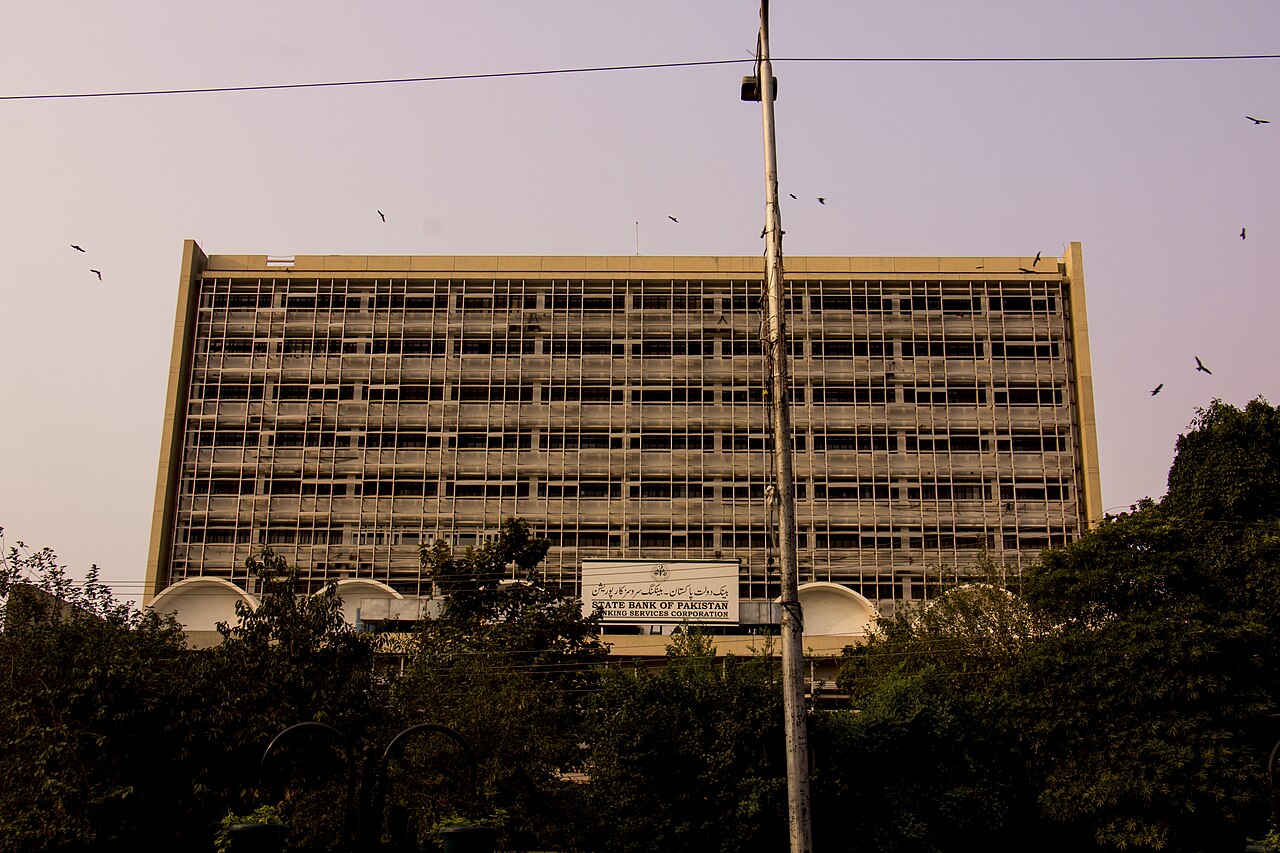
Pakistan is currently under a 37-month EFF arrangement approved in September 2024, designed to stabilise the economy through fiscal discipline, structural reforms and measures to support long-term growth. The staff mission for the fourth review is led by Iva Petrova, who also led the IMF team that concluded a staff visit to Islamabad in May 2026 with talks on the FY2027 budget and reform implementation still open. The mission will begin with technical discussions at the State Bank of Pakistan, followed by meetings with the government’s sectoral teams and an inaugural meeting with Finance Minister Muhammad Aurangzeb.
The talks come against a backdrop of improving external accounts. Pakistan’s record $3 billion dual-tranche Eurobond in September drew nearly $6 billion in orders, and the State Bank of Pakistan’s foreign exchange reserves subsequently reached an all-time high of about $21.4 billion, with total liquid reserves above $26.7 billion. The central bank has attributed the jump to the receipt of Eurobond proceeds. Analysts have read the reserve build-up as strengthening the case for the review to pass, although revenue collection and structural benchmarks remain the points of risk.
Why the review matters
Successful completion of the fourth review would make Pakistan eligible for a disbursement of about $1 billion (760 million Special Drawing Rights) under the EFF and a further $200 million under the $1.4 billion Resilience and Sustainability Facility (RSF), which is being reviewed alongside. Disbursements would follow an IMF Executive Board meeting, expected by the end of November or early December if the review is completed.
The review will test Pakistan’s consistency in implementing a programme that has already produced a third EFF review completed in May 2026. Programme performance against the fiscal targets for the period ending June 2026 has mostly been on track, according to reporting in Dawn, but with a major revenue shortfall and slippages in the policy matrix. These include the government’s intervention in commodity operations, particularly wheat and sugar, in violation of an IMF condition requiring the authorities to stay out of the commodities market. Official reports cited by Dawn suggest that while qualitative performance criteria on the fiscal and monetary side were mostly on track, progress on economic-governance reforms lagged far behind requirements, with only a couple of targets out of more than three dozen met.
What is still uncertain
The most important uncertainty is the outcome of the talks themselves, which have not yet begun. The start date itself is reported differently by different outlets — 22 September according to Geo News, 23 September according to Dawn — and the IMF has not publicly confirmed the precise agenda. Whether the government and the Fund can agree on the energy-reform and tariff measures, how quickly the competitive-market bidding and DISCO privatisation move forward, and whether a revenue shortfall complicates the review will only become clear as the two-week mission proceeds.
The tariff outlook is also uncertain. The government has said a basic-tariff revision is expected in January 2027, but the size of any increase, its timing, and how far cross-subsidies are eliminated remain open questions. A shift towards full cost recovery would, on the government’s own account, push tariffs higher for some consumers, even as the BISP-linked subsidy proposal is intended to shield the poorest. The circular-debt target of Rs1,614 billion is a commitment rather than a settled outcome, and past tariff adjustments have not always arrested the growth of the power sector’s accumulated liabilities.
Sources & reporting notes
This is a synthesis of published material, not eyewitness reporting. Sources were reviewed on 19 September 2026. The agenda details for the talks are drawn from unnamed government sources cited by The Express Tribune and Profit by Pakistan Today, and have not been confirmed by the IMF or the government.
- The Express Tribune — IMF talks to focus on reforms, privatisation19 September 2026 · Primary report of the government sources on the fourth-review agenda: energy reforms, DISCO privatisation, circular debt target and the January 2027 tariff revision.
- Profit by Pakistan Today — Pakistan, IMF to begin fourth review talks next week with reforms, privatisation in focus19 September 2026 · Independent report of the same agenda details, including the BISP subsidy proposal and the competitive-market tariff.
- Geo News — Pakistan, IMF to begin $7bn EFF review talks on September 2211 September 2026 · Independent report of the 22 September start, the coupled Article IV consultation, Mahir Binci's confirmation and the GCD review.
- Dawn — IMF mission due on Sept 23 for biannual review of Pakistan's economic performance10 September 2026 · Independent background on the mission's timing, Iva Petrova's role, the EFF and RSF reviews, and programme slippages including the revenue shortfall.