Reporting snapshot · 15 October 2026 (Asia/Karachi). The 2026 Global Hunger Index was released on 14 October and reported in Pakistan the following day. Its scores rest on data covering 2021 to 2025 rather than conditions measured in 2026, and the index cautions that its rankings are not directly comparable between reports. This is a dated account of the release, not a live measure of food security.
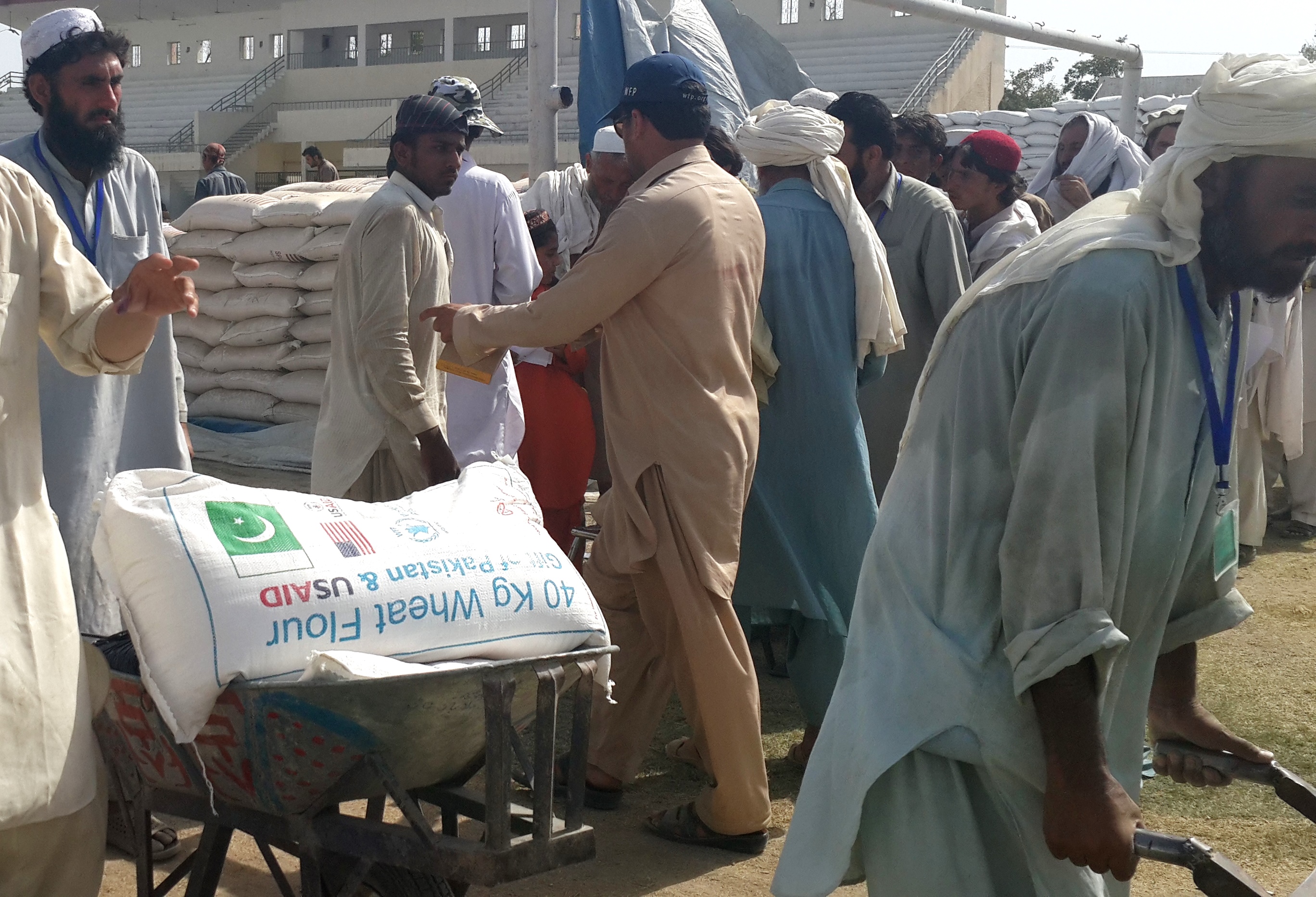
What the index found
Pakistan ranked 106th of the 122 countries scored in the 2026 Global Hunger Index (GHI), with a score of 25.5 on a 100-point scale where a higher figure means more hunger. That places Pakistan in the index’s “serious” category, Dawn reported on 15 October. Profit, the business section of Pakistan Today, carried the same score and rank and noted that the figure had risen from 24.0 in 2018 — a deterioration of about 6.3 per cent on the last methodologically comparable reading.
The GHI is published jointly by Welthungerhilfe, the Institute for International Law of Peace and Armed Conflict at Ruhr University Bochum, and the Swiss development organisation Helvetas, under the theme “No Security Without Food Security,” according to Dawn. It combines four indicators: the share of the population that is undernourished, child wasting (acute malnutrition), child stunting (chronic malnutrition) and the under-five mortality rate.
Within South Asia, only Afghanistan scored higher, at 28.6, ranking 108th. India placed 100th on 24.1, Bangladesh 84th on 19.2, Nepal 72nd on 14.5 and Sri Lanka 53rd on 10.2, Profit reported. On those figures Pakistan is the second-worst performer in the region, and the worst in South Asia outside Afghanistan.
Why Pakistan’s score worsened
The deterioration is driven mainly by the undernourishment and child-wasting measures rather than by child survival. Pakistan’s undernourishment rate rose from 10.9 per cent in 2018 to 16.1 per cent in 2026, and child wasting rose from 7.1 per cent to 9.8 per cent over the same period, according to Profit. Child stunting, however, fell from 38.1 per cent to 33.6 per cent, and the under-five mortality rate declined from 6.8 per cent to 5.6 per cent. Nationally, Pakistan’s score remains far below its 2000 level of 36.2, when the country was in the “alarming” category — long-term improvement that the GHI’s own country page records.
The report attributes the recent reversal to economic instability, the lingering effects of sharp food price inflation and climate-related disruption, Dawn reported. It notes that heavy monsoon rains and flash floods in 2025 affected more than six million people and damaged agricultural land and infrastructure, and that localised crop losses occurred in parts of Pakistan and Bangladesh. Households’ purchasing power, and with it access to sufficient food, weakened as food prices stayed high.
That picture sits alongside other recent findings reported by this outlet: Pakistan holds nearly half of the MENAAP region’s people living on under $3 a day, a World Bank analysis found this month, and consumer inflation eased to 10.3 per cent in September but stayed in double digits on energy costs. Agriculture, meanwhile, entered the Rabi season short of water after a weak monsoon, as reported here.
Region and world
South Asia’s regional score stands at 23.5, the second-highest of any region after Africa south of the Sahara at 27.5, and remains in the “serious” range, Profit reported. The region’s child-wasting rate of 15.8 per cent is the highest in the world. The report estimates that 218 million people in South Asia — including Iran for that particular estimate — were undernourished between 2023 and 2025, roughly a third of the global total.
Globally, hunger is rising again after nearly two decades of decline. The 2026 global score of 18.1 is higher than 17.6 in 2018, Dawn reported. Hunger has worsened in 32 countries since 2018, and 57 countries are on track to miss even low hunger levels by 2030. Three of the four indicators — undernourishment, child stunting and child wasting — have worsened, while only child mortality has continued to fall. The index classifies eight countries as facing “alarming” hunger.
The report links the reversal to overlapping shocks: state-based armed conflict at its highest level since the Second World War, extreme weather, and economic disruption. It points specifically to the war in Iran and shipping disruption in the Strait of Hormuz and the Bab al-Mandab Strait, which it says are raising fuel, transport and fertiliser costs, and to Russia’s war in Ukraine and Black Sea export restrictions, which threaten higher wheat prices. Profit reported the GHI’s separate warning that the US–Israel–Iran war could push 45 million more people into acute hunger. International spending on food security has fallen back to 2016–2017 levels, forcing cuts to aid and emergency rations, the report said.
What is still uncertain
The GHI is a composite and an estimate, and its headline figures should be read with that in mind. Its 2026 scores use data spanning 2021 to 2025 rather than a single year, so they are a smoothed picture rather than a snapshot of conditions in October 2026, as Profit noted. The index also states that its rankings are not directly comparable across reports, which means Pakistan’s movement is best read through its score and indicators rather than its position alone; a change in the number of countries scored can shift a rank without any change on the ground.
Several drivers are only partly measurable. The report’s figures for flood exposure and crop losses are retrospective, and the effect of the Gulf conflict and elevated freight costs on household food access is still working through the economy. The Pakistani government has not issued a detailed response to the 2026 findings, and the report’s central recommendation — that governments reverse cuts to humanitarian assistance and to data collection — is a policy argument rather than a forecast.
The next firmer data point will come when Pakistan’s own statistical and nutrition systems publish updated figures. Until then, the GHI’s central finding is directional: after two decades in which Pakistan moved out of the “alarming” category, progress has stalled and, on the index’s measures, partly reversed. World Food Day on 16 October is likely to keep the findings in public view.
Sources & reporting notes
This is a synthesis of published material, not field reporting. Sources were reviewed on 15 October 2026 (Asia/Karachi). The GHI scores and indicator values are the index's own estimates; the release is reported here through Dawn and Profit by Pakistan Today. Where the outlets and the index differ, the figures above follow the primary index.
- Global Hunger Index — Pakistan country page and 2026 ranking (primary report)Published 14 October 2026 · Pakistan's 2026 GHI score of 25.5, its "serious" classification, the four component indicators (undernourishment, child wasting, child stunting, under-five mortality), the comparison with the South Asian regional score of 23.5 and the global score of 18.1, and the methodology note that 2026 scores use 2021–2025 data and are not comparable across reports.
- Dawn — "Pakistan worst hit by hunger in South Asia" (Amin Ahmed)15 October 2026 · That Pakistan recorded the highest score in South Asia outside Afghanistan, the joint publishers and the report's theme, the regional score of 23.5 and its stagnation since 2018, the 218 million undernourished people in South Asia, the global score of 18.1 against 17.6 in 2018, the 32-country and 57-country tallies, and the report's links to the Iran war, the Strait of Hormuz and Bab al-Mandab shipping, Russian wheat-export restrictions and falling food-security spending.
- Pakistan Today (Profit) — "Economic instability, food inflation and climate shocks worsen hunger in Pakistan, ranks 106th globally" (Saddam Hussain)15 October 2026 · Pakistan's rank of 106 out of 122, its score of 25.5 against 24.0 in 2018, the country comparisons (India 24.1, Bangladesh 19.2, Nepal 14.5, Sri Lanka 10.2, Afghanistan 28.6), the change in undernourishment, child wasting, child stunting and under-five mortality, the 2025 flood exposure of more than six million people, the regional and global totals, the 45-million acute-hunger warning, and the note that 2026 scores use 2021–2025 data.
.jpg)