Reporting snapshot · 13 October 2026 (Asia/Karachi). This account rests on the Pakistani Petroleum Division's official readout as carried by Radio Pakistan on 12 October, the Express Tribune's same-day report from the IEF meetings, Oilprice.com's separate write-up citing the federal minister, and a Business Insider Africa piece filed the same evening on Libya's crude output. Neither side has published a binding supply deal or volumes; the agreement reached in Riyadh is at the ministerial-cooperation stage, with Pakistani refineries now asked to evaluate whether Libyan crude is suitable for their configurations.
What was agreed in Riyadh
Pakistan’s Petroleum Minister, Ali Pervaiz Malik, met his Libyan counterpart, Khalifa Rajab Abdulsadek, on the sidelines of the 17th International Energy Forum (IEF) Ministerial in Riyadh on Monday, 12 October 2026, Radio Pakistan reported that evening. The two sides agreed to enhance bilateral energy ties and to facilitate crude-oil imports, with Malik asking Libyan state energy companies to make volumes available and Tripoli assuring Pakistan of its support. Both ministers also expressed an interest in sharing technical expertise on refinery upgrades.
The agreement is at the ministerial level. Oilprice.com, in a separate write-up by Tsvetana Paraskova the same day, quoted Malik as saying Pakistan had “encouraged its refineries to explore the possibility of importing Libyan crude oil.” The Express Tribune’s report from the IEF meetings reported that Libya was also “planning to upgrade its refineries” and had asked to learn from Pakistan’s recent refinery-upgradation deals.
No volumes, freight terms or timing have been published, and neither government has announced a binding supply agreement. Libya’s National Oil Corporation has not yet published a public statement, although the Petroleum Division’s official X account confirmed that Malik met Abdulsadek “to discuss oil and gas cooperation, including Libyan crude oil supplies to Pak and collaboration on refinery upgradation.”
Why Pakistan is reaching for Libyan crude now
The IEF meetings in Riyadh come against a backdrop of repeated disruptions to crude and product flows through the Strait of Hormuz since the United States and Iran went to war on 28 February 2026. Pakistan imports roughly 90 per cent of its oil and a significant share of its LNG through that waterway, according to a Ministry of Energy document carried by Arab News in May, and refiners have spent much of 2026 paying record premiums for middle-distillate cargoes. Refiners have already asked traders for alternative supply from the United States, Nigeria and Central Asia, and Cnergyico (formerly Byco), Pakistan’s largest refiner, imported 8.1 million barrels of US crude worth about $750 million in the financial year that ended in June, according to Business Insider Africa.
Libya fits the diversification logic because it sits on the other side of Africa from the Gulf and ships most of its crude to Mediterranean ports. The Business Insider Africa piece, drawing on figures from the Libyan National Oil Corporation, put Libya’s September 2026 crude output at around 1.34 million barrels per day, the second-highest in Africa after Nigeria. The country has won back buyers in Europe (Italy, Germany, Spain, France and Greece) and added Nigeria and Egypt as customers in 2026, so a Pakistani channel would open a new Asian corridor.
The Libyan crude discussion is one part of a wider ministerial programme. Malik also met Qatar’s Minister of State for Energy Affairs, Saad Sherida Al-Kaabi, “to explore potential cooperation in the Liquefied Natural Gas sector,” Radio Pakistan reported. Separately, Turkish Energy Minister Alparslan Bayraktar told Malik that the Turkish Petroleum Corporation (TPAO) was sending a seismic vessel to Pakistan next month “to start data acquisition in Indus Basin,” the Petroleum Division X account posted. Pakistan’s Oil and Gas Development Company Limited (OGDC) has separately signed a deal with the Canadian firm Synergetic Oil Tools Inc. to deploy Passive Energy Tool technology, a parallel domestic push Malik also cited.
How this fits the refining and import picture
Pakistan runs five oil refineries, the largest being Pak-Arab Refinery Limited (Parco) at Mahmood Kot in Punjab and Cnergyico’s facility at Hub in Balochistan, with Byco Petroleum Pakistan, Pakistan Refinery Limited and National Refinery Limited accounting for the rest of the operating capacity. The country has spent most of 2026 on a refinery-upgradation drive that includes a series of upgrade contracts signed at end-September 2026, covered separately by KhabarWire. Libya’s light and medium sweet grades are broadly compatible with the lighter distillate blends Pakistan’s refineries have been configured to run, but the country has limited experience handling high-TAN Libyan grades such as Sarir and Mesla.
The Petroleum Division’s overall strategy — articulated alongside the Libya announcement — is to maintain “alternative supply options in the event of disruptions to key maritime routes, including the Strait of Hormuz and the Bab al-Mandab Strait,” tying the Libya channel to LNG cooperation with Qatar and to foreign investment in domestic refining and exploration. Malik also thanked Saudi Energy Minister Prince Abdulaziz bin Salman for “personally steering energy cooperation with Pakistan” at the IEF, an acknowledgement that the Gulf’s dominant supplier remains central to Islamabad’s planning.
The Turkey track is more tangible in the near term. TPAO’s seismic vessel is expected to begin the Indus Basin survey in November, with Bayraktar’s visit to follow; the block-level and acreage details have not yet been published.
What remains uncertain
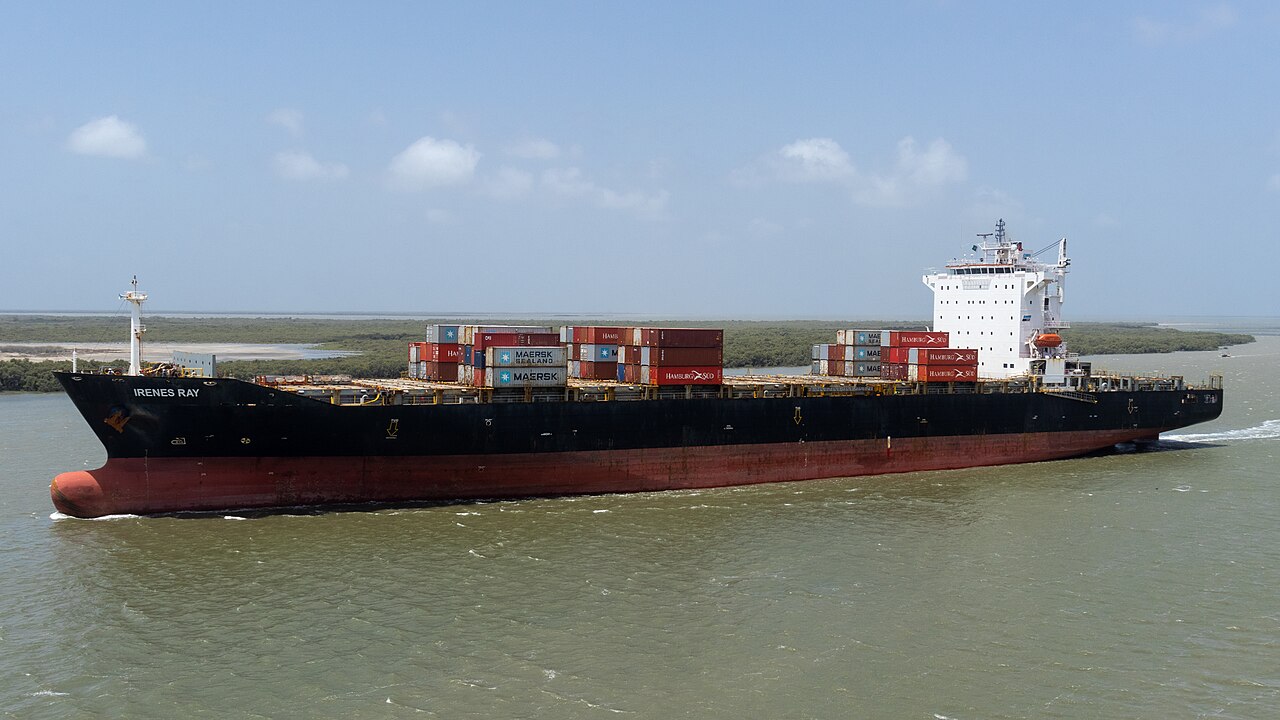
Three things remain unresolved. First, Pakistan has not disclosed any contract or binding commitment with Libya’s NOC, and none of Pakistan’s five refineries has confirmed a Libyan crude trial. Second, no shipping route has been announced — Pakistani refineries importing from Libya would typically see crude arrive at Port Qasim via the Suez Canal, a longer voyage than current Gulf shipments that would add days and freight to the landed cost. Third, Pakistan has not addressed whether the Libyan channel is intended to substitute for existing Gulf supply or to sit alongside it as an additional option.
The sustainability of the broader situation also remains in question. The 60-day technical-talks track between the United States and Iran under the Islamabad Memorandum of Understanding of 17 June is the framework under which Strait of Hormuz normalisation is being negotiated, a process KhabarWire has tracked, and the Strait remains central to Pakistan’s import bill. Libya is being positioned as diversification, not replacement. KhabarWire will update this article if a Pakistani refinery, the NOC or the Petroleum Division publishes terms, volumes or a delivery date.
Sources & reporting notes
This is a synthesis of the Petroleum Division's ministerial readout, independent reporting from the IEF ministerial in Riyadh, and international energy-press coverage of the Pakistan–Libya channel. The agreement was struck on 12 October 2026 in Riyadh, with this article published the following morning in Asia/Karachi.
- Primary source — Radio Pakistan: "Pakistan, Libya agree to enhance bilateral energy ties"Published 12 October 2026 · The Petroleum Division's official readout of Malik's bilateral meetings with Libya on crude supply, with Qatar on LNG and with Türkiye on TPAO seismic data acquisition, at the 17th IEF Ministerial in Riyadh.
- Independent source — The Express Tribune: "Pakistan stands shoulder to shoulder with Saudi Arabia: petroleum minister"Published 12 October 2026 · Same-day report of Malik's IEF remarks, the Libya bilateral, the Qatar LNG talks, the Türkiye seismic-vessel announcement, and the energy-minister's solidarity statement on the Houthis.
- Independent source — Oilprice.com: "Pakistan Looks to Import Crude Oil from Libya to Diversify Supply"Published 12 October 2026 07:30 CDT · Direct quote from Ali Pervaiz Malik, confirmation that the offer to Pakistani refiners is to "explore" Libyan crude, and the strategic context of supply diversification amid the Middle East crisis.
- Independent source — Business Insider Africa: "Pakistan turns to Africa's second-largest crude oil producer, Libya, as Middle East supply disruptions drive search for alternatives"Published 12 October 2026 21:30 · Libya's September 2026 crude output (1.34m bpd), Europe's import volumes, and the Cnergyico US-crude reference for Pakistan's FY26 import diversification.
- Petroleum Division, Ministry of Energy (Pakistan) — X post: "Federal Minister Ali Pervaiz Malik met Libya's Minister of Oil & Gas, H.E. Khalifa Rajab Abdulsadek"Posted 12 October 2026 · Official Pakistani readout of the bilateral, confirming the discussion covered Libyan crude-oil supplies to Pakistan and refinery-upgradation cooperation.
- Context — KhabarWire: "Pakistan refineries sign $5bn upgrade deals as Cnergyico, Parco and Byco seek Saudi, UAE offtake"Published 24 September 2026 · Earlier KhabarWire report on the September 2026 refinery upgradation programme, which the IEF meetings build on for potential Libya-grades processing.
- Context — KhabarWire: "Pakistan eyes cheaper Iranian oil and gas after US sanctions waiver"Published 28 June 2026 · The earlier Pakistan crude-diversification step under the US-sanctions waiver for Iranian petroleum, distinct from the Libya channel announced in October 2026.