Reporting snapshot · 7 October 2026 (Asia/Karachi). The World Bank released its October 2026 MENAAP Economic Update, "From Divide to Opportunity: AI, Jobs, and Growth," in Washington on 6 October. Pakistan-specific figures are drawn from the report's text and from the bank's macro-poverty country note for Pakistan. The bank has not issued its own country diagnostic since April 2026, and the IMF staff-level agreement with Pakistan expected this week has not yet been finalised. Numbers attributed to the World Bank come from the MENAAP Economic Update and the bank's "Macro Poverty Outlook" country page; figures attributed to "Pakistan authorities" come from Finance Ministry releases summarised by the bank.
What the World Bank reported
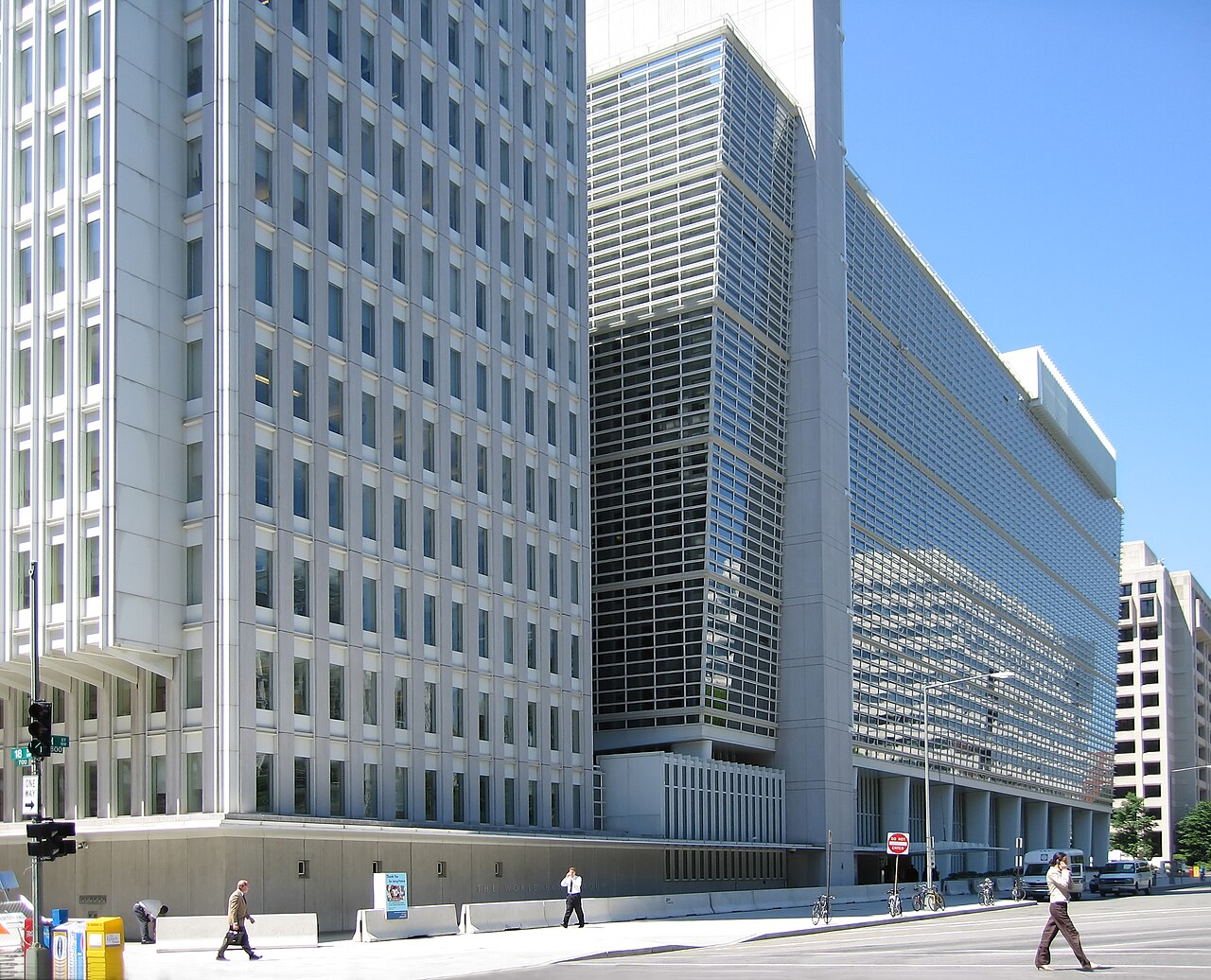
The World Bank’s October 2026 MENAAP Economic Update, titled “From Divide to Opportunity: AI, Jobs, and Growth,” was published in Washington on 6 October. Pakistan, which the bank has grouped with the Middle East and North Africa rather than South Asia in its country products, now accounts for an estimated 48% of the people in the region living below the bank’s $3-a-day poverty line, The Express Tribune reported, citing the report. Afghanistan, Syria and Yemen together account for another 47%, with the remainder spread across other MENAAP economies. The headline comes against a backdrop in which the country’s broader economic picture has been shaped by an IMF adjustment programme that has been periodically extended since 2024, most recently with Finance Minister Muhammad Aurangzeb’s talks on a fourth review in late September.
The report projects Pakistan’s population-growth-adjusted real GDP growth at 2.2% in fiscal year 2026-27, almost matching the 2.1% recorded in the previous year, and headline inflation at 8.2%. The current-account deficit is projected at 0.8% of GDP and the fiscal deficit at 3.5%, both wider than in fiscal year 2025-26 but inside the range the bank has previously described as manageable.
Why poverty has risen
The bank traces the rise in Pakistan’s poverty rate between 2018-19 and 2024-25 to a “succession of adverse shocks,” beginning with the Covid-19 pandemic and the 2022 floods, followed by a macroeconomic crisis marked by high inflation and a sharp rupee depreciation, and then by a “prolonged period of economic adjustment that weakened real household incomes and employment opportunities.” At the $3-a-day line, the poverty rate rose by 6.4 percentage points, and at the higher $4.20-a-day line by 3.2 percentage points.
Within MENAAP, the bank’s regional data show the region now accounts for 14% of the world’s extreme poor — second only to Sub-Saharan Africa — and is the only one in which poverty levels rose over the last decade while they declined elsewhere. The Express Tribune report placed Pakistan’s annual salaried-class contribution to income tax at Rs629 billion by June 2026, up from Rs391 billion before the IMF programme began, against a near-halving of the real estate sector’s contribution after a 50% rate cut also endorsed by the lender. The bank does not itself take a position on the domestic tax mix, and the comparison with neighbouring sectors is from the bank’s underlying data as summarised by the newspaper rather than from the bank’s own commentary.
Reclassification and the regional picture
Pakistan’s move from the South Asia regional grouping into MENAAP is the institutional change that underpins the report’s headline figure, and the bank does not hide it. The country is now treated as a Middle East and North Africa economy for analytical purposes, alongside Afghanistan, with which it shares a long border and a recent conflict that the bank’s regional updates have tracked since 2024. The reclassification does not affect Pakistan’s bilateral ties with South Asian neighbours, but it does change the peer group for comparative statistics.
The bank’s regional forecasts in the October update are grim for the region as a whole. Regional output is projected to contract by 2.1% on average in 2026 after expanding 3.3% in 2025, with Gulf Cooperation Council economies contracting by 4.3% on average because of the closure of the Strait of Hormuz and its impact on Gulf oil exports. Pakistan, as an oil importer, is one of the economies that has been comparatively resilient, the World Bank’s press release of 6 October said, even though inflationary pressures have risen across the region through higher food prices and shipping disruption.
The forecast takes the IMF’s recently launched fourth review of the $7 billion EFF programme as a given; the IMF mission is due to leave Islamabad later this week with a staff-level agreement possible by week’s end, Geo News reported on 6 October, and the bank has not adjusted its growth forecast since the review opened.
AI, jobs and productivity
The substantive section of the October update focuses on artificial intelligence, arguing that the region’s near-term exposure to AI is more about productivity augmentation than job displacement. The bank estimates that less than 10% of jobs in the MENAAP region face near-term automation risk, but that between 13% and 20% carry significant augmentation potential. The report identifies Pakistan as having the highest absolute number of AI conversations of any country in the region — concentrated in arts and media, including graphic design, content creation and translation on international freelance platforms, rather than in software. The bank frames this as a sign of the country’s large freelance economy, and a sign of an opportunity to extend that lead into more productive uses of the technology.
The report does not say how much of the projected growth in Pakistan’s fiscal year 2026-27 depends on AI adoption. It does note that Pakistan falls below the benchmark line for mobile broadband subscriptions, suggesting that infrastructure, not just skills, will be a binding constraint.
What is still uncertain
Three things remain to be seen. First, the IMF’s fourth review is not yet concluded, and a delay would in practice shift some of the structural reforms the bank has assumed — including the public-sector enterprise policy changes the government has begun to legislate — into the next fiscal year. Second, the closure of the Strait of Hormuz is treated in the report as continuing through the end of 2026, with the regional rebound in 2027 conditional on the strait’s reopening. A slower withdrawal of the closure would change the bank’s regional growth call. Third, the bank’s Pakistan-specific poverty data depend on household surveys that the bank and the Pakistan Bureau of Statistics do not always publish on the same schedule; the 6.4 percentage-point increase cited in the report uses 2024-25 as its endpoint, and a more recent household-survey round would update the figure.
Sources & reporting notes
This is a synthesis of published material, not eyewitness reporting. Sources were reviewed on 7 October 2026 (Asia/Karachi). The article relies primarily on the World Bank's October 2026 MENAAP Economic Update and its accompanying press release, supplemented by The Express Tribune's 7 October coverage of Pakistan's country figures and by Geo News's 6 October report on the IMF review.
- World Bank — Middle East, North Africa, Afghanistan & Pakistan Economic Update, October 2026: From Divide to Opportunity, AI, Jobs, and GrowthPublished 6 October 2026 · Primary source for the MENAAP framing, the 48% Pakistan poverty share, the 2.2% per-capita growth forecast, the 8.2% inflation forecast, and the AI and productivity analysis.
- World Bank — Middle East Conflict Further Weakens Regional Outlook, with Gulf Oil Exporters Hit HardestPublished 6 October 2026 · World Bank press release accompanying the MENAAP Economic Update; source for the 2.1% regional contraction, the 4.3% GCC contraction, the oil-importer resilience framing and the quoted World Bank Vice President Ousmane Dione.
- The Express Tribune — Pakistan bears region's biggest poverty burden: World Bank says 48% poor in MENAAP region live in PakistanPublished 7 October 2026 · Independent reporting on the MENAAP Economic Update's Pakistan country figures, including the 48% share of regional $3/day poor, the 6.4 percentage-point rise in poverty at the $3/day line, the separation of Pakistan from the South Asia regional grouping, and the comparison of salaried-class and real-estate tax contributions.
- Geo News — Pakistan, IMF expected to reach staff-level agreement this weekPublished 6 October 2026 · Independent reporting on the IMF fourth review, the expected timeline for a staff-level agreement, and the policy text changes to the State-Owned Enterprises (Ownership and Management) Policy, 2023 that the government amended to align with IMF conditions.