Reporting snapshot · 22 November 2026 (Asia/Karachi). The result itself is settled and the Pakistan Blind Cricket Council has published its own account of it, but neither the World Blind Cricket Council nor the match referee has issued a statement, the tournament's playing conditions have not been made public, and the allegations made against the governing body's president rest on unnamed sources. India's position inside the World Blind Cricket Council was still unresolved when this was written.
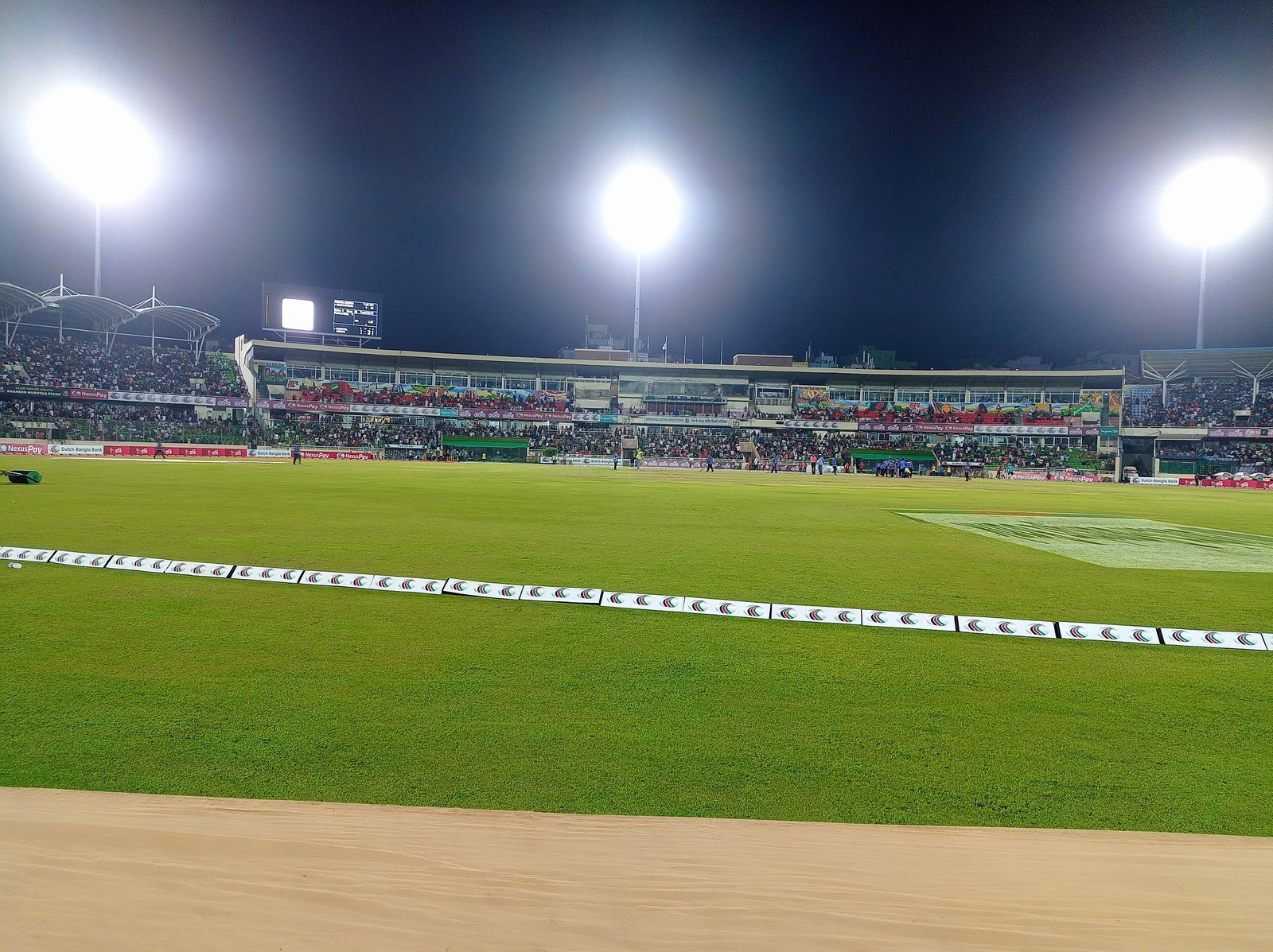
Pakistan were declared champions of the Asia Cup Blind T20 on Friday, 20 November, without playing a ball of the final. Persistent rain washed out the scheduled decider against India at the Anwar Cricket Stadium in Bashundhara, Dhaka, and the match referee awarded Pakistan the title under the tournament’s playing conditions, the Pakistan Blind Cricket Council said in a media release published on 21 November.
That release calls the tournament the second edition of the Asia Cup Blind T20 and records that it closed in Dhaka on 20 November. It also sets out the mechanics: the playing conditions had been circulated to every participating team on 7 November, before the competition opened on 15 November, and Clause 27 provided that where no play was possible the side with the superior net run rate would be declared the winner. The Express Tribune, reporting from Dhaka on the evening of the match, describes the same provision as Article 27 of the regulations.
Pakistan reached the final having won all three of their league-stage matches, against Sri Lanka, Bangladesh and India, and finished ahead of India on points, net run rate and the head-to-head record, the council said. The Express Tribune put the basis of the award more narrowly, citing the superior net run rate and the league-stage victory over India.
How a final that was never played settled a championship
The wait was long and the outcome was procedural rather than sporting. After the rain stopped the match from being played, officials abandoned it and applied the rule that had been circulated before a ball was bowled, and Pakistan Today reported that the decision was taken by the Bangladeshi match referee in accordance with those regulations.
Two features of the tournament explain why the fallback clause mattered so much. Pakistan entered the final with a perfect record, and their win over India in the league stage meant that the head-to-head sat in Pakistan’s favour as well as the net run rate. Because the conditions had been circulated on 7 November, the case for the outcome rested on a rule the teams had accepted in advance rather than on a judgement made in the heat of the moment.
That is also the reason the dispute is narrow. Nobody involved has suggested the rules were altered after the tournament began. The argument is about whether the rules were applied correctly, and about who applied them. The three-member technical committee that ran the event — one representative each from Pakistan, Bangladesh and Australia — did not award the trophy. The decision was the match referee’s, from Bangladesh.
Why the Indian team left without the trophy
Pakistan’s side stayed for the closing ceremony. India’s did not.
The Pakistan Blind Cricket Council’s account records that, after the announcement, the Indian team held a prolonged discussion with the umpires and the match referee before leaving the venue, and that it did not attend the closing ceremony or collect the runner-up trophy. The Express Tribune reported that India boycotted the ceremony and that Indian officials approached members of the technical committee to contest the outcome, including the Australian representative, who replied that the playing conditions had already been circulated and that the decision had been taken under them. The same report said the final decision was taken by the match referee from Bangladesh.
The sharper allegation came from the Indian side. Pakistan Today reported that the Indian association accused the World Blind Cricket Council’s president, Syed Sultan Shah, of having opposed a proposal from the technical committee to declare both teams joint winners and of having influenced the referee to rule in Pakistan’s favour. Sources familiar with the matter rejected the suggestion that the rules had been changed, saying the relevant provisions had been settled before the tournament began. The Express Tribune carried the same allegation and the same rebuttal, and reported separately that Indian representatives had warned they would leave the World Blind Cricket Council.
Neither the World Blind Cricket Council nor the match referee has published a statement on the decision, and the playing conditions themselves have not been released, so the reasoning behind the referee’s call cannot be checked against the document itself. The allegation that the referee was pushed towards a decision has been put to the council’s president by the Indian association and repeated in Pakistani newspapers; it has not been put to him in any published statement, and he attended the closing ceremony in Dhaka, where the trophy was presented.
The ceremony Pakistan attended, and the prize it took home
The closing ceremony went ahead with Bangladesh Cricket Board director Abdullah Al-Fuad as chief guest, distributing awards among the players. The Pakistan Blind Cricket Council listed the other guests as Rangpur Riders director Shahzad Akbar Subhan, Pakistan’s high commissioner to Bangladesh Imran Haider, the World Blind Cricket Council president Syed Sultan Shah and the council’s international director Moeen Iqbal. The council said Pakistan received a cash prize of 300,000 taka along with the championship trophy, and reported the team’s captain saying he was proud that the championship had been secured after winning all three league-stage matches.
The presence of the governing body’s president at a ceremony handing over a title his organisation’s referee had awarded, while the losing side was contesting that award, is the sharpest single image the tournament produced.
Where this sits in Pakistan cricket
Blind cricket runs as its own international circuit, outside the structures that cover Pakistan’s Test and one-day game. The Pakistan Blind Cricket Council, the body that runs Pakistan’s national blind cricket side, is registered with the Securities and Exchange Commission of Pakistan under number 0046061 and is certified by the Pakistan Centre for Philanthropy. KhabarWire’s cricket coverage has concentrated on the national team that plays Tests and T20 internationals — most recently Pakistan’s eight-wicket win over Sri Lanka that sealed the Test series — while this is the outlet’s first report on the national blind cricket team, which is tracked under our Pakistan cricket coverage.
What has not been settled in Dhaka
Three things remain open. No published statement from the World Blind Cricket Council explains why a joint-winners proposal from the technical committee, if one was tabled as the Indian association says, was not adopted. The match referee has not given a reason of his own. And nothing has been announced about whether India, which the Express Tribune reported had warned of withdrawal, stays inside the organisation that runs the tournament.
What is settled is narrower but firmer. Pakistan won the Asia Cup Blind T20 without playing the final, did so under a clause that had been circulated to every team before the tournament began, and collected the trophy and 300,000 taka in prize money. India’s complaint that a final should not be decided by a rule instead of a run of play has not yet been answered by the body that wrote the rule.