Reporting snapshot · 5 November 2026 (Asia/Karachi). The cabinet has approved a joint investigation team's conclusions but has not released the report itself, so the findings below are as ministers described them on Wednesday, 4 November. The three-month investigation deadline, the refund formula and the terms of a fresh auction are stated intentions rather than settled outcomes.
What the cabinet decided
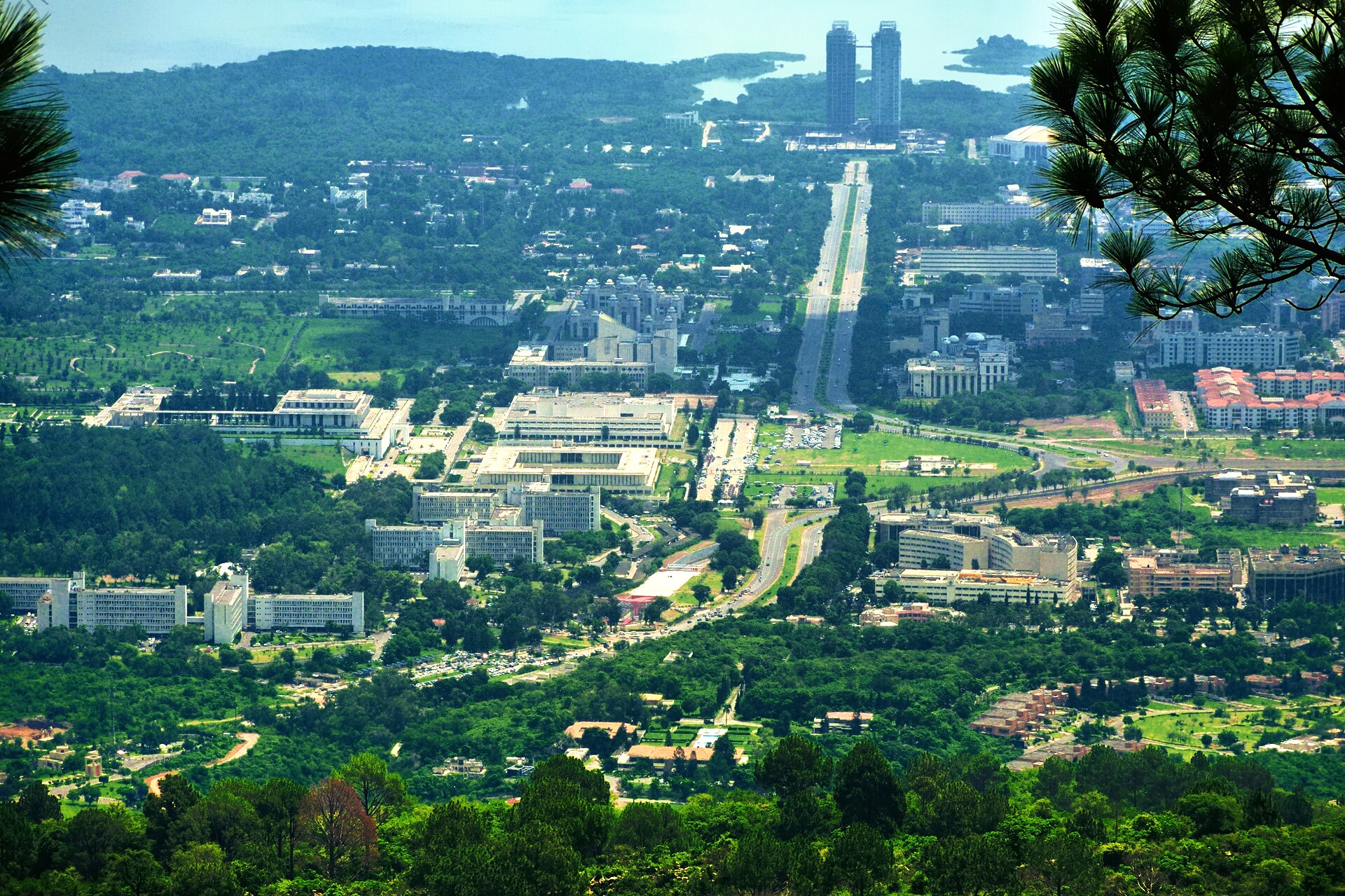
The federal cabinet approved the recommendations of a joint investigation team into the One Constitution Avenue project in Islamabad on Wednesday, 4 November, and the government said it would take legal possession of the property and return it to its original purpose as a five-star hotel.
Interior Minister Mohsin Naqvi told a news conference in Islamabad that the cabinet’s approval of the team’s findings gave the government the legal basis it needed to take possession of the building, Radio Pakistan reported. Naqvi said the Capital Development Authority already held possession in official records, that the CDA’s member administration would take over management of the building, and that the government would approach a major international hotel chain to operate it. “We will convert this building to a five-star hotel in the coming months, which was its basic purpose in the first place,” he said, citing a shortage of hotels in the capital.
The decision follows the inquiry ordered on 1 May, when Prime Minister Shehbaz Sharif constituted a high-level committee and stayed official action after the authorities took control of a multi-storey residential building following a court ruling on the cancelled lease. KhabarWire reported on the inquiry when it was ordered.
What the investigation found
Planning Minister Ahsan Iqbal presented the team’s conclusions alongside Information Minister Attaullah Tarar and Minister of State for Interior Talal Chaudhry. The team, Radio Pakistan said, drew members from the National Accountability Bureau, the Federal Investigation Agency, the Federal Board of Revenue, the Securities and Exchange Commission of Pakistan, the Inter-Services Intelligence and the Intelligence Bureau.
Iqbal said the report found that the bidding and auction processes had been manipulated, that rules were relaxed to favour a particular party, and that the company awarded the lease was not eligible for it. The CDA itself was found to have been involved, he said, and the requirement for a bank guarantee had been removed to benefit the developer. Apartments were sold illegally, Iqbal said, even though the project had been approved as a five-star hotel.
The report identified Abdul Hafeez Sheikh as the alleged mastermind, alongside former CDA chairman Kamran Lashari and several other former CDA officials, The Express Tribune reported. Sheikh’s company has been blacklisted from future public-sector projects, and his name is on the Exit Control List, according to Geo News.
The minister said the irregularities had caused losses to the national exchequer and had left ordinary buyers “defrauded of their hard-earned savings”. He said the report had found that 254 apartments had been sold through 99-year sub-leases, that the first auction had been cancelled without approval from the CDA board, that a later auction ran on revised terms, and that height, covered-area and parking restrictions had been relaxed without board approval.
The building, the buyers and the next auction
The government has not published the report or the legal basis it says it now holds, so the practical steps it has announced carry more weight than the findings themselves.
For buyers, the recommended remedy is a refund of the principal amount with interest calculated on the Karachi Interbank Offered Rate, or an inflation adjustment. Iqbal said the government had decided to compensate affected investors that way, and the report noted that the authority had collected fees before disclaiming responsibility for the project. Tarar said the government would protect bona fide purchasers wherever they lived, including abroad, and that compensation would follow the proposed redesign and restructuring of the site.
For the building, the sequence is possession, management by the CDA’s member administration, and a fresh transparent auction of the land and the structures, with security clearances and fire-safety protocols required before any operator is signed. The report also recommended that the project be renamed, because the Ministry of Foreign Affairs had objected to the use of the One Constitution Avenue address, which it says belongs to its own premises.
NAB has been directed to investigate everyone named in the report and anyone who facilitated them. Tarar said that investigation would be fast-tracked and completed within three months, with the trial process beginning afterwards, and the government said NAB would be required to file a reference against those found responsible. Chaudhry said seven or eight people summoned to substantiate their claims had failed to appear despite repeated calls, among them former prime minister Imran Khan, and that the project had been contested under two previous PML-N governments.
The review of the land authority itself is as much a part of the package as the building. The report recommended reviewing the CDA Ordinance, creating an independent master plan commission, digitising official records, rotating officers in the state planning, enforcement and building control departments every two years, and bringing in third-party experts for pre-audits, auctions and contract matters. Naqvi used the same platform to announce that 1,000 acres adjoining the Prime Minister’s House, along with land belonging to Safari Park, had been recovered, with retrievals under way in sectors E-12, C-14, C-15 and C-16. The CDA has drawn criticism in Islamabad before over how it manages the federal capital, including over tree felling around Shakarparian, as KhabarWire reported in January, and it has previously faced a NAB recovery operation on state land in Karachi, KhabarWire reported in February.
What is still uncertain
The first gap is the paper itself. The cabinet has approved recommendations, but neither the JIT report nor the cabinet’s notification has been released, so the findings that anchor this article are the ministers’ account of a document the public has not seen. Any of them could be restated differently once the text is published.
The second is money. The audit trail of the original transaction is contested and long. The project began with a 13.5-acre plot awarded to BNP Group at an auction on 9 March 2005 for Rs4.88 billion, with Rs800 million paid on handover and Rs1.02 billion collected since, The Express Tribune reported. The CDA cancelled the lease in July 2016; the Islamabad High Court upheld that decision in 2017 and declared the conversion of a planned hotel into luxury apartments illegal; the Supreme Court set that judgment aside in early 2019 and ordered the developer to pay Rs17.5 billion in instalments, of which about Rs2.9 billion is reported to have been paid. The Islamabad High Court’s detailed verdict of 4 May found that buyers have no ownership rights because the lease was terminated and ownership was never properly transferred. How much of the money is recoverable, and from whom, is what NAB’s three-month timetable is meant to establish.
The third is the hotel. Naming a chain, securing clearances and running a fresh auction are all steps still to come, and the report’s recommendation that the address be renamed means even the building’s identity is unsettled. A building that took two decades to reach the cabinet may take longer to reach a ribbon-cutting.