What Iran’s authorities signalled on Saturday
Iran’s authorities signalled on Saturday 10 January 2026 that they would intensify their response to the two-week-old anti-government protest movement, as the Revolutionary Guards (IRGC) blamed the unrest on terrorists and vowed to safeguard the governing system, according to an AFP report carried by Dawn and a parallel Anadolu Agency dispatch on the same day’s death-toll update. Major Iranian cities were gripped overnight by new mass rallies denouncing the Islamic Republic, as activists expressed fear that authorities were pressing their suppression of the demonstrations under cover of an internet blackout.
The two-week-old protest movement has entered a different phase from the moment KhabarWire last documented it — the 8 January 2026 nationwide internet and telephone blackout that the Associated Press and The Guardian reported on the twelfth day of protests. By Saturday, the most visible international signal was no longer the communications cut, but the IRGC’s first explicit framing of the unrest as the work of “terrorists”. After the movement’s largest protests yet on Thursday 8 January, new demonstrations took place late on Friday 9 January, according to images verified by AFP and other videos circulated on social media, the Dawn report said.
The death toll and what was independently verified
According to a report by the US-based Iran Human Rights Activists News Agency (HRANA), the death toll in the protests rose to 65 by Saturday, as carried in the Anadolu Agency wire report and reported from Dubai by AFP for Dawn. HRANA’s tally — which the agency says it cross-checks with hospital and family sources — recorded protests in 512 locations across 180 cities in all 31 provinces, with 50 protesters, 14 law enforcement and security officials, and one government-affiliated civilian among the dead. Demonstrations also left dozens injured and 2,311 detained, with injuries largely attributed to pellet shots and plastic bullets.
Norway-based Iran Human Rights, a separate monitor, claimed at least 51 people had been killed in the crackdown so far but warned the actual toll could be higher. Iranian authorities had not issued a statement about those killed or injured by Saturday, leaving HRANA’s count and Iran Human Rights’ lower estimate as the only public tallies. Amnesty International said it was analysing “distressing reports that security forces have intensified their unlawful use of lethal force against protesters” since Thursday, in what the rights group characterised as an escalation that “has led to further deaths and injuries”.
The internet blackout enters its second day
The crackdown signal came against the backdrop of a communications blackout that entered its second day. Internet-observatory group NetBlocks reported early on Saturday that “Iran has now been offline for 48 hours”, a development that AFP and Anadolu cited alongside HRANA’s tally. The blackout has sparked fears among activists that authorities are violently suppressing the protests with less chance of the proof reaching the outside world — a dynamic Nobel Peace Prize winner Shirin Ebadi flagged on Friday when she warned that security forces could be preparing to commit a “massacre under the cover of a sweeping communications blackout”.
Ebadi said she had already received reports of hundreds of people being treated for eye injuries at a single Tehran hospital. Prize-winning filmmakers Mohammad Rasoulof and Jafar Panahi, both in exile, said Iranian authorities were using the “most blatant tools of repression”, pointing to the internet blackout and adding that “experience has shown that resorting to such measures is intended to conceal the violence inflicted during the suppression of protests”.
Street-level evidence despite the blackout
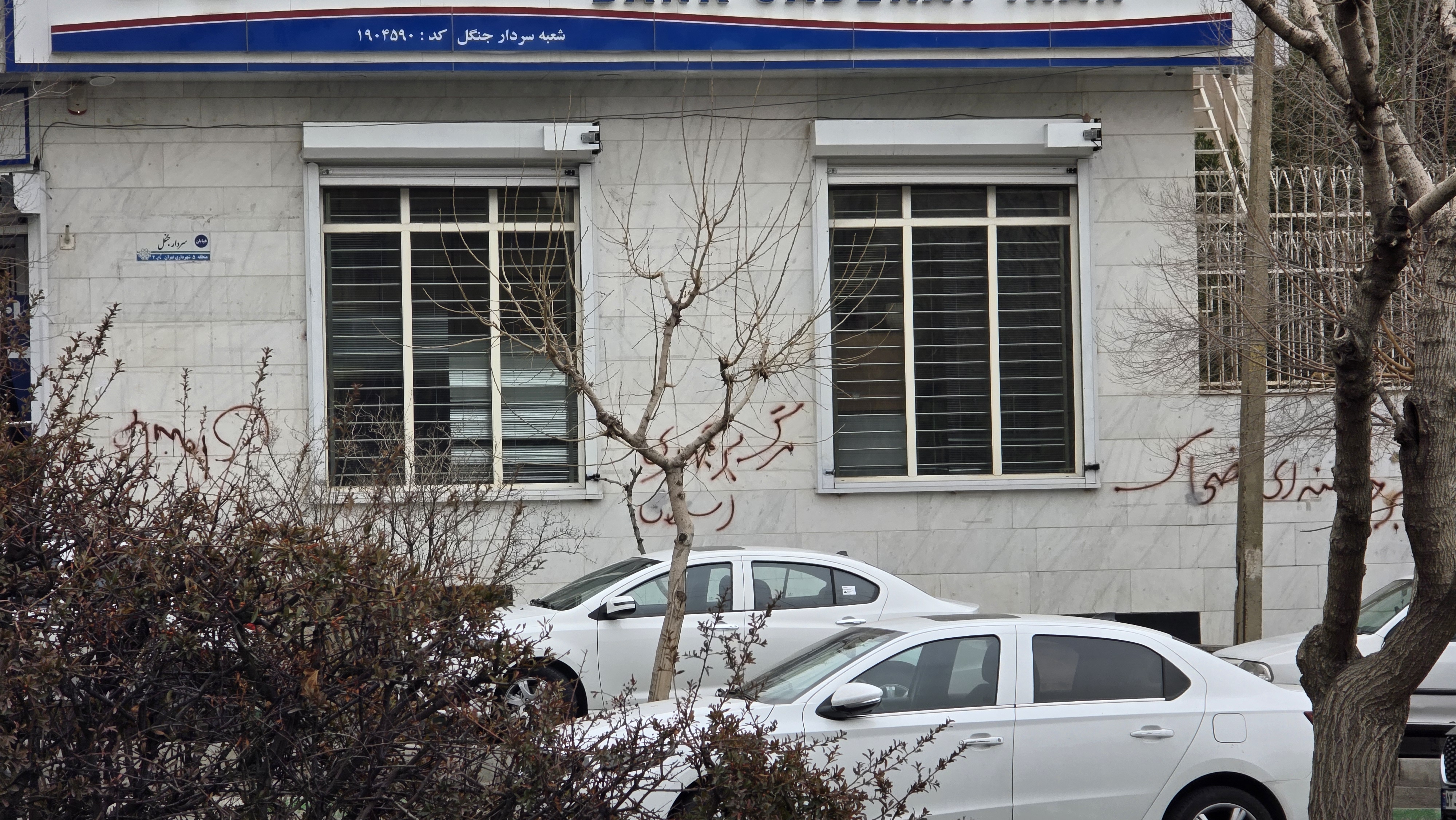
Despite the cutoff, video continued to leave Iran. In Tehran’s Saadatabad district, AFP-verified footage showed people banging pots and chanting anti-government slogans as cars honked in support. Other images disseminated by Persian-language television channels outside Iran showed similarly large protests in Mashhad in the east, Tabriz in the north, and the holy city of Qom. In Hamedan in the west, AFP said a man was shown waving a Shah-era Iranian flag featuring the lion and the sun. In the Pounak district of northern Tehran, people were filmed dancing round a fire in the middle of a highway.
Outside Iran, protests also drew crowds in solidarity. AFP footage showed demonstrators on the balcony of the Iranian embassy in central London on Saturday chanting “Democracy for Iran. Shah Reza Pahlavi. Justice for Iran” after pulling down the current flag and briefly raising a pre-revolutionary Iranian flag with the lion-and-sun emblem. One demonstrator, Taraneh, 33, told AFP: “I’m here to support Iranians, my loved ones inside Iran — they’ve been protesting for two weeks today … The internet has been shut down … We get very little information from inside Iran. But people are still in the streets. They’re being attacked.”
What remained uncertain on 10 January
By day’s end on Saturday, several questions remained open. Iranian authorities had not publicly released an official death toll, casualty count or number of detainees, leaving HRANA’s 65 and Iran Human Rights’ 51 as the only public figures and the discrepancy between them unresolved. Authorities had also not confirmed the duration of the internet blackout or the geographic extent of any selective restoration; NetBlocks’ 48-hour observation was based on real-time connectivity data from outside Iran and could not capture internal services that remained reachable.
The IRGC’s Saturday statement framing the unrest as the work of “terrorists” was a notable rhetorical shift from earlier official language blaming “rioters” and “mercenaries for foreigners”, but it was not accompanied by any new legal or operational measures that would clarify what “intensification” would mean in practice. President Masoud Pezeshkian, who on 31 December had publicly said his government recognised the protests and would set up a dialogue mechanism, had not commented publicly on the IRGC’s Saturday statement by the time AFP filed its dispatch.
The protests’ underlying economic trigger — a rial that has lost nearly half its value against the dollar this year and inflation that reached 42 per cent in December — also remained in place, with no new fiscal or monetary intervention reported by Saturday evening. Reuters reporting on the unrest’s economic origins, also carried by Dawn on 31 December, put the rial at 1.4 million to the dollar, a record low after starting the year at 817,500.