Reporting snapshot · 2 October 2026. The Federal Board of Revenue (FBR) reported that income-tax return filings rose about 45 per cent by the 30 September deadline, yet the tax paid with those returns fell 7 per cent, and the government has now ordered officers to map shops and markets nationwide. The return figures come from FBR data reported by Profit by Pakistan Today and Geo News; the shop-mapping decision comes from a Finance Ministry statement carried by The Express Tribune and Profit by Pakistan Today. None of the figures has been published as a standalone FBR dataset, and the corporate-filing decline is attributed by officials to timing, not to a final annual outturn.
What happened
Pakistan’s income-tax return filings rose about 45 per cent year on year to 5,767,384 by the night of 30 September, up from 3,980,692 on the same date in 2025, Profit by Pakistan Today reported on 1 October, citing FBR data. Geo News carried the same figures on 2 October, adding that the total was an increase of about 1.79 million returns.
Non-salaried individuals — traders, shopkeepers, professionals and the self-employed — supplied about four-fifths of that increase. Their returns rose 60 per cent to 3.81 million from 2.38 million, an addition of about 1.43 million people. Salaried returns grew 22 per cent to 1.9 million, and returns from associations of persons, including partnerships, rose 33 per cent to 53,756.
The tax paid with those returns, however, moved the other way. Total tax paid with returns stood at Rs77.3 billion, about 7 per cent below the Rs83.3 billion recorded by the same point last year. About 39 per cent of returns filed this year were “nil” returns showing no payable income, a share broadly unchanged from 2025.
Why the payments did not follow the filers
Most of the decline came from companies. A total of 7,953 company returns had been filed by 30 September, against 11,206 a year earlier, and tax paid with company returns fell to Rs39.1 billion from Rs49 billion. Payments by individuals rose 11 per cent to Rs34.5 billion, and by associations of persons 16 per cent to Rs3.7 billion, but they did not offset the corporate fall.
FBR officials attributed the drop in company filings largely to timing, saying many firms had delayed filing in anticipation of an extension of the deadline — which the FBR then granted on the evening of 30 September, moving the date to 15 October. Officials expect company filings and associated payments to rise in the coming weeks.
Even so, the composition matters. Returns declaring income above the taxable threshold rose 37 per cent to just under 2.5 million, and “payment filers” — those whose returns show tax paid — rose 38 per cent to 3.35 million, with non-salaried payment filers up about 50 per cent to 1.75 million. But five years ago threshold-crossing returns already numbered about 900,000 and payment filers about 1.29 million, while the filing base has grown from 1.86 million returns in September 2022 to 5.77 million this year.
The pattern suggests the expansion drew in many filers whose declared liability is nil or small, while the largest block of tax paid at filing — corporate tax — shrank. Officials say the next step is testing those declarations through risk-based audit, using the same data that identified the new filers, Geo News reported. This is a preliminary comparison of one filing window, not a final annual figure.
The Asaan scheme and the shop-mapping pivot
On the same day, the government acknowledged that its separate fixed-tax scheme for small traders had failed to attract them. Under the scheme, traders were offered a 1 per cent tax payment in return for immunity from audit and the liberty to deal in cash. By the statutory deadline, only 787 returns had been filed under it, of which just four came from new filers, The Express Tribune reported on 2 October, citing FBR Chairman Rashid Mahmood Langrial.
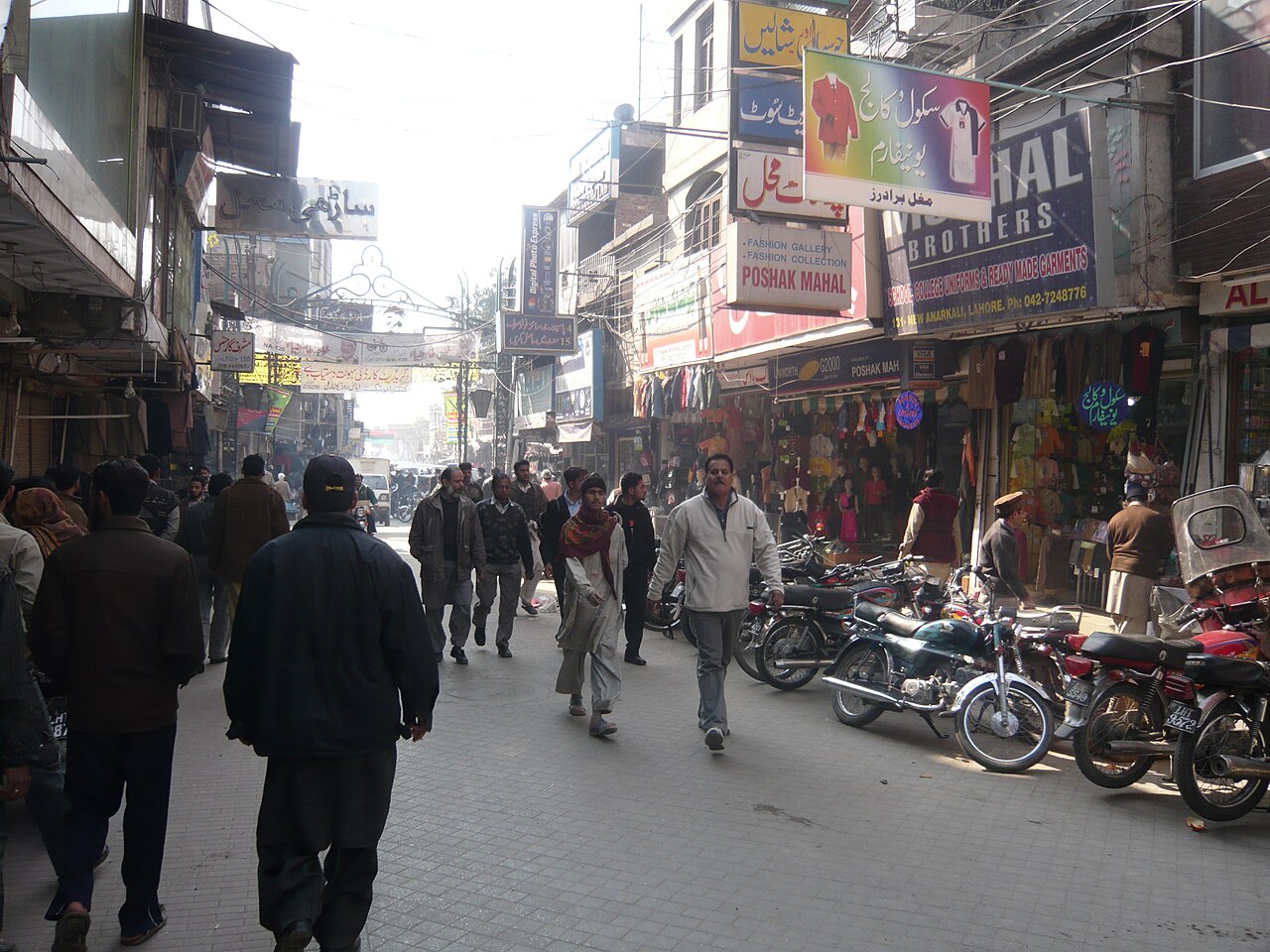
A review meeting chaired by Minister of State for Finance Bilal Azhar Kayani decided that FBR officers, working with traders’ representatives, would begin mapping markets and every individual shop across the country from Friday 2 October, according to The Express Tribune and Profit by Pakistan Today. Shopkeepers are to be briefed on the scheme during the mapping, and officers are to visit markets on a daily schedule. Officials said a technical problem in the “other income” column of the traders’ return, which traders had flagged, had been resolved.
The FBR is targeting between 500,000 and one million retailers out of about 3.7 million traders it estimates are outside the tax net. Pakistan has roughly 4.3 million commercial WAPDA electricity meters, but only about 600,000 of those meter holders filed returns, Profit reported. Around 200,000 retailers are expected to join voluntarily, with the rest to be brought in through enforcement. The FBR has received about 5.7 million returns, while there are roughly 19 million registered taxpayers, the Express Tribune reported, meaning about 30 per cent of registered taxpayers filed.
The penalty schedule after the deadline is Rs10,000 in the first month, Rs25,000 in the second and Rs50,000 in the third. The government has budgeted at least Rs50 billion from the scheme; the FBR chairman said collections could exceed Rs100 billion if it succeeded and would be negligible if it failed.
How it fits the IMF target
The filing data land in the middle of the FBR’s most sensitive year. The FY2026-27 revenue target agreed with the International Monetary Fund is Rs15.263 trillion, about 17.4 per cent higher than last year’s outturn, and the fund’s fourth review of Pakistan’s $7 billion programme is under way in Islamabad. The FBR’s income-tax collections lagged in the first two months, and its digitisation and cashless reforms had not yet visibly widened the active taxpayer base.
A larger filer count with a smaller payment total is the mismatch the target cannot absorb. The extension shifts some payments into mid-October, still inside the first half for IMF reporting, but the size of those payments — not the number of returns — will decide whether the FBR narrows its shortfall.
What is still uncertain
Several questions remain open. How much of the 7 per cent fall is a genuine decline and how much is timing is unclear; the mid-October figures will show whether company payments recover. Whether the market-mapping drive produces filings or merely fines is also untested — the target of 500,000 to one million retailers is an ambition, not a result. And with about four in ten returns showing no tax payable, the outcome depends on how well the FBR’s risk-based audit tests declarations against third-party data, a capability whose results are not yet public.
Sources & reporting notes
This is a synthesis of published reporting and FBR data as reported by allowlisted outlets, not independent on-the-ground reporting. The cited pages were reviewed on 2 October 2026. The return-count, tax-paid and nil-return figures originate from FBR data reported by The News/Geo News and Profit by Pakistan Today; the specific tax-paid figures have not been published as a standalone FBR dataset.
- Profit by Pakistan Today — "Income tax return filings jump 45% to 5.77 million as non-salaried filers drive growth"1 October 2026 · The FBR return data: 5,767,384 returns filed, the 45% rise, the non-salaried and salaried breakdowns, the 39% nil-return share, the Rs77.3 billion tax-paid total, and the corporate decline.
- Geo News — "Tax paid with returns declines despite 45% rise in number of filers"2 October 2026 · Same-day account of the FBR data, with the company-return and payment breakdowns and the statement that risk-based audit using the filer data is the next step.
- The Express Tribune — "Govt decides to map non-compliant shops"2 October 2026 · The Finance Ministry statement on the shop-mapping decision, the Asaan scheme's 787 returns and four new filers, the FBR's 3.7 million-trader target, the penalty schedule and the 19 million registered-taxpayer figure.
- Profit by Pakistan Today — "FBR to map markets, shops nationwide after poor response to Asaan tax scheme"2 October 2026 · Independent confirmation of the market-mapping plan, the 4.3 million commercial electricity meters versus 600,000 filers, and the 500,000–1 million retailer target.
- FBR — Federal Board of RevenuePrimary record · The federal revenue authority's official website, referenced for the agency's mandate over income-tax returns and the fixed-tax scheme.