Reporting snapshot · 8 November 2026. The audit covers BISP's 2024-25 financial year and records management responses. Its figures describe irregular disbursements and control gaps, not proven fraud; recovery and verification outcomes may change.

What happened
An audit of the Benazir Income Support Programme (BISP) has found that Rs25.7 billion was paid in 601,850 cases in which the spouse’s computerised national identity card (CNIC) was either missing from the beneficiary record or linked to several women, according to the Auditor General of Pakistan’s report for audit year 2025-26.
Nearly all of that sum — Rs25.46 billion across 596,252 cases — involved beneficiaries whose records did not contain a spouse CNIC at all. In a further 5,598 cases, a single spouse CNIC was linked to as many as seven female beneficiaries, with payments of Rs239.04 million.
The report covers BISP’s 2024-25 financial year and was laid before the National Assembly with the government’s other audit reports. The Express Tribune reported its main findings on 8 November.
Why the spouse data matters
The audit does not conclude that every one of the 601,850 households was ineligible. Its concern is that BISP could not demonstrate that they were eligible, because the spouse data needed to apply the federal cabinet’s exclusion rules was absent or unreliable.
Cabinet decisions in December 2019 excluded serving and retired government employees, their spouses, beneficiaries who had travelled abroad and owners of vehicles above a set engine capacity. BISP’s management information system uses spouse CNICs and other records to screen applicants against those categories. Auditors found that missing or duplicated spouse records weakened those filters and left the programme exposed to payments that should not have been made.
The report also questions whether BISP’s board had the authority to relax the rules. Management told auditors that the board removed the foreign-travel exclusion in August 2023 and the vehicle-ownership filter at a later meeting. Auditors replied that a board decision cannot override a federal cabinet directive, and the Departmental Accounts Committee directed BISP to produce the relevant minutes and carry out field verification.
Other failures the audit found
The spouse-CNIC cases were the largest single category, but not the only one. The report records:
- Government employees and pensioners: 12,078 serving or retired employees, or their spouses, received Rs515.71 million despite the cabinet’s exclusion.
- Foreign travel: 261 spouses of beneficiaries continued to receive payments after travelling to countries outside the Middle East, Gulf and South Asia, amounting to Rs13.04 million.
- Vehicle ownership: a sample of 275,000 vehicle registrations in Islamabad found 1,719 beneficiaries owning vehicles above the permitted threshold. They had received Rs69.74 million, and auditors said the national figure could be substantially higher.
- Duplicate stipends: 165 schools run by Pakistan Bait-ul-Mal were also enrolled in the Benazir Taleemi Wazaif programme, producing duplicate payments of Rs17.69 million.
- Marital-status errors: 7,020 women recorded as married since 2017 were later found to be unmarried, and had received Rs104.73 million.
- Multiple welfare scores: 97,179 cases had more than one Proxy Means Test score recorded against the same household head, leading to the irregular enrolment of 18,964 beneficiaries and an estimated misallocation of Rs533.54 million.
The audit estimates an inclusion error rate of 6.8 per cent — about 692,597 beneficiaries out of 10.19 million active cases — against a benchmark of 5 per cent. It puts the exclusion error at 13.27 per cent, meaning about 5.56 million eligible households were not enrolled, against a 10 per cent benchmark.
What BISP says
The report records management’s responses to each finding. On the government-employee payments, BISP said the data had been analysed and recoveries would be made through the relevant offices. On duplicate stipends, it said an application programming interface was being developed with Pakistan Bait-ul-Mal to prevent future overlap. On the multiple welfare scores, it cited revised standard operating procedures approved in September 2025, though auditors said no documentary evidence of implementation was provided.
For the spouse-CNIC cases, the Departmental Accounts Committee directed BISP to seek clarification from NADRA and to set up an independent verification mechanism for spouse relationships rather than relying only on NADRA’s profiling data.
Why it matters
BISP is the federal government’s flagship social protection programme. The audit puts its expenditure for the year at Rs592.48 billion and its active caseload at 10.19 million households, most of them women. The programme is central to poverty relief and to the government’s wider effort to target subsidies as it manages the IMF programme and rising energy costs.
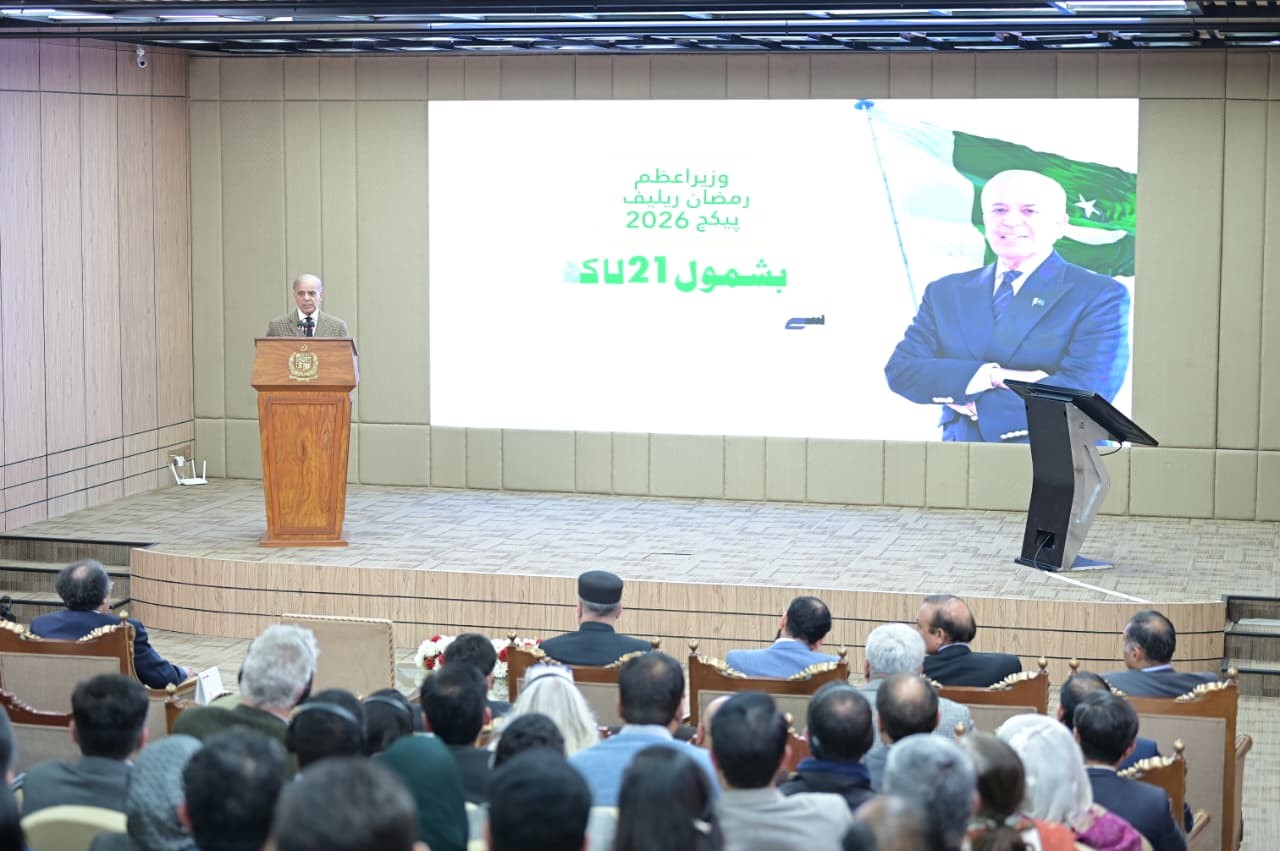
That makes the audit’s two error rates matter in opposite directions. Payments to ineligible households divert money from the poor, while an exclusion rate of 13.27 per cent means millions of eligible households are still outside the net. The findings also sit alongside BISP’s role in delivering cash transfers such as the Ramazan relief package, where errors in beneficiary data can affect whether relief reaches the intended family.
What is still uncertain
The report describes irregular disbursements and control weaknesses; it does not establish that all of the Rs25.7 billion was lost to fraud. Some missing spouse records may be data-entry failures rather than evidence that a household was ineligible, and the audit itself recommends verification before recovery.
It is also unclear how much has been recovered, how many of the flagged cases have been blocked, and whether the board’s contested changes to the exclusion rules will be reversed. The Public Accounts Committee and the Departmental Accounts Committee are the next forums for those questions. Until they report, the audit’s figures should be read as the scale of the exposure it identified, not a final tally of losses.