Reporting snapshot · 24 November 2026 (Asia/Karachi). Every figure here comes from speeches made at the 23 November ceremony or from the finance ministry's own progress statements; no bank-level or household-level disbursement data has been published, and the two official figures for approved financing do not match. The Rs1 trillion figure is a directive to banks rather than a budgeted allocation, so what it becomes depends on lending decisions that have not been taken yet.
Prime Minister Shehbaz Sharif addressed a ceremony in Islamabad on Monday, 23 November, telling banks they should disburse Rs1 trillion in loans under the Apna Ghar housing programme over the next six months and saying the government would not limit the number of homes it finances for low-income families. Radio Pakistan carried the address, and The Express Tribune and Pakistan Today reported the same instructions to the finance minister, the State Bank of Pakistan governor, the housing minister and commercial banks.
The numbers attached to the instruction were smaller than the headline. The prime minister said Rs100 billion had been disbursed for 18,500 homes in the six and a half months since the programme launched in April, a figure that has since risen to Rs112 billion, Radio Pakistan reported. Approved financing stood at about Rs500 billion, The Express Tribune and Pakistan Today said. Set against Rs1 trillion in six months, the money lent so far is roughly a ninth of what banks are now being asked to move.
A directive to banks, not a budget line
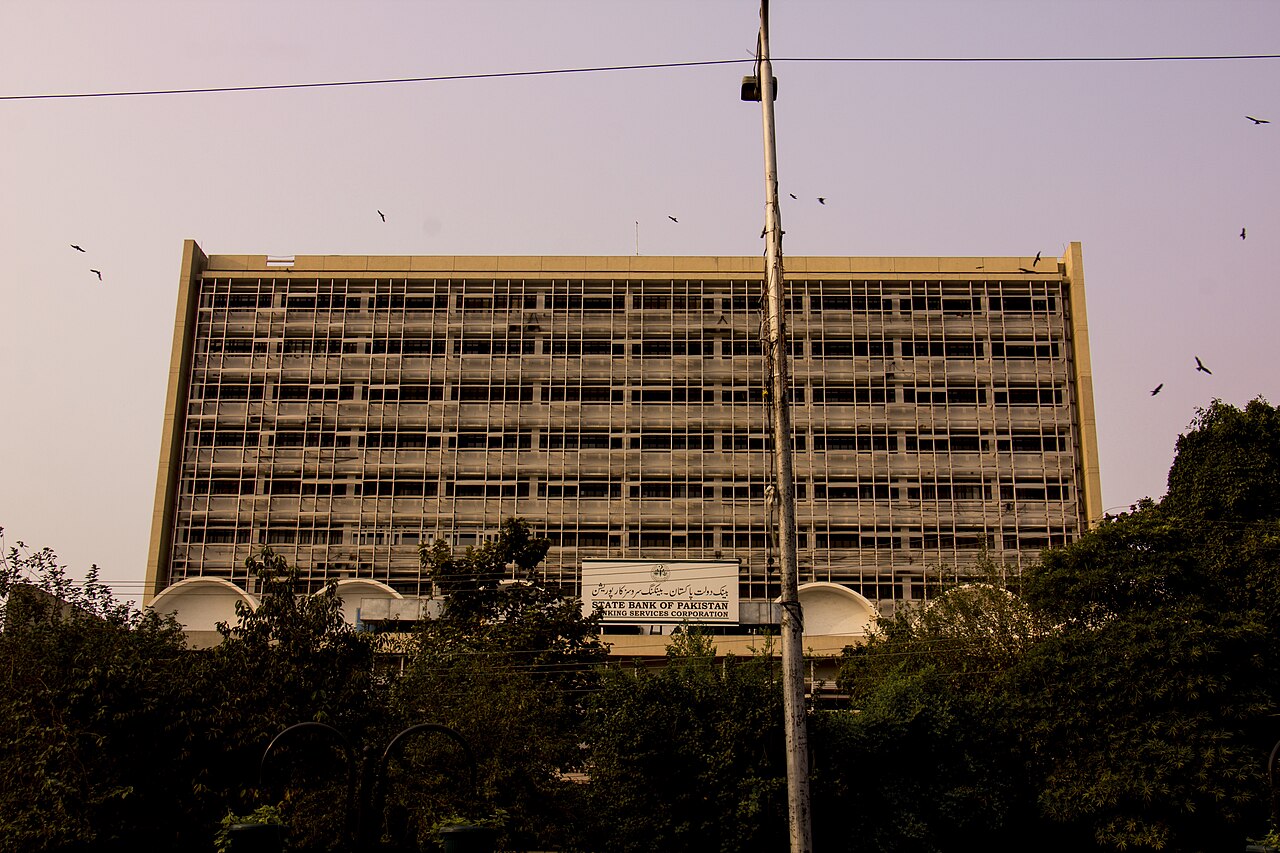
The instruction is aimed at the institutions that hold the money rather than at the federal budget. Shehbaz directed the finance minister, the SBP governor, the housing minister and the banks to accelerate approvals and to clear administrative and legal obstacles together, Radio Pakistan said, while assuring banks that the push would not expose them to undue risk.
The reason banks needed pushing was set out by the prime minister himself: returns on treasury bills and government deposits had made housing finance less attractive when the scheme began, The Express Tribune reported. The State Bank raised the policy rate by 50 basis points to 12 per cent on 26 October, KhabarWire reported, a rate that makes government paper and deposits a competitive use of a bank’s funds — the connection is this article’s reading, not a statement by the central bank.
The ceremony also produced rewards and warnings. Five high-performing banks are to receive blue passports, with a notification due the same day, The Express Tribune reported, and the recognition carries a warning: genuine loan approvals that stall will be attributed to the banks that won it. Shehbaz said some banks had claimed they were unaware of the programme, which he called unacceptable, and urged them to set up dedicated units to process applications. Banks should help applicants with paperwork rather than turn them away, he said, with a clear, unencumbered title on the land as the main test.
Builders asked for a formal tripartite coordination, and Shehbaz agreed to convene a meeting of the Association of Builders and Developers of Pakistan, the State Bank, the government and the builders, with the finance minister, housing minister and housing secretary involved, Radio Pakistan and The Express Tribune reported. ABAD, which says it has about 1,500 members, told the ceremony it would work with banks and government to expand affordable housing.
The pipeline behind the milestone
The finance ministry’s own progress figures, published in late August, show how much of the scheme was still in the pipe three months ago. Approved financing under the programme had nearly doubled from Rs144 billion to Rs279 billion since June, while total housing finance rose from about Rs294 billion at the end of June to about Rs307 billion by mid-August, The Express Tribune reported. Applications under the programme were up 52 per cent to nearly 139,000, approvals up 84 per cent to more than 46,000 and loans disbursed up 59 per cent to more than 7,600.
On their face, those counts and the 18,500 homes cited on 23 November describe a sharp acceleration over about three months, and the 46,000 approvals already in hand give banks a queue large enough to support a much faster pace. But the comparison rests on two official statements with different bases and dates, and the ministry has not published a monthly series that would settle it.
The regulatory groundwork moved in the same period. The State Bank’s revised prudential regulations for housing finance and the Financial Institutions (Recovery of Finances) (Amendment) Act 2026, which strengthens recovery and enforcement of mortgage lending, were cited by the finance ministry as supports for the push.
An October bank meeting shows how fast the gap has been closing. On 9 October the prime minister was told that Apna Ghar loans worth Rs426 billion had been approved but only Rs76 billion disbursed, against a financial year 2026-27 financing target of Rs700 billion for 125,000 housing units, Pakistan Today reported. The State Bank governor and ten commercial bank chief executives were in the room, and the prime minister directed the central bank to simplify approval and disbursement procedures. Six weeks later the disbursed figure was Rs112 billion and the approved figure about Rs500 billion.
Two numbers for approved financing
The gap between approved and disbursed money is where the Rs1 trillion target has to be won, and the approved figure is itself unsettled. The prime minister put approved financing at about Rs500 billion. Radio Pakistan, reporting the same ceremony, recorded Finance Minister Muhammad Aurangzeb saying loans worth Rs560 billion had been approved. The two figures were given on the same stage on the same evening and have not been reconciled publicly.
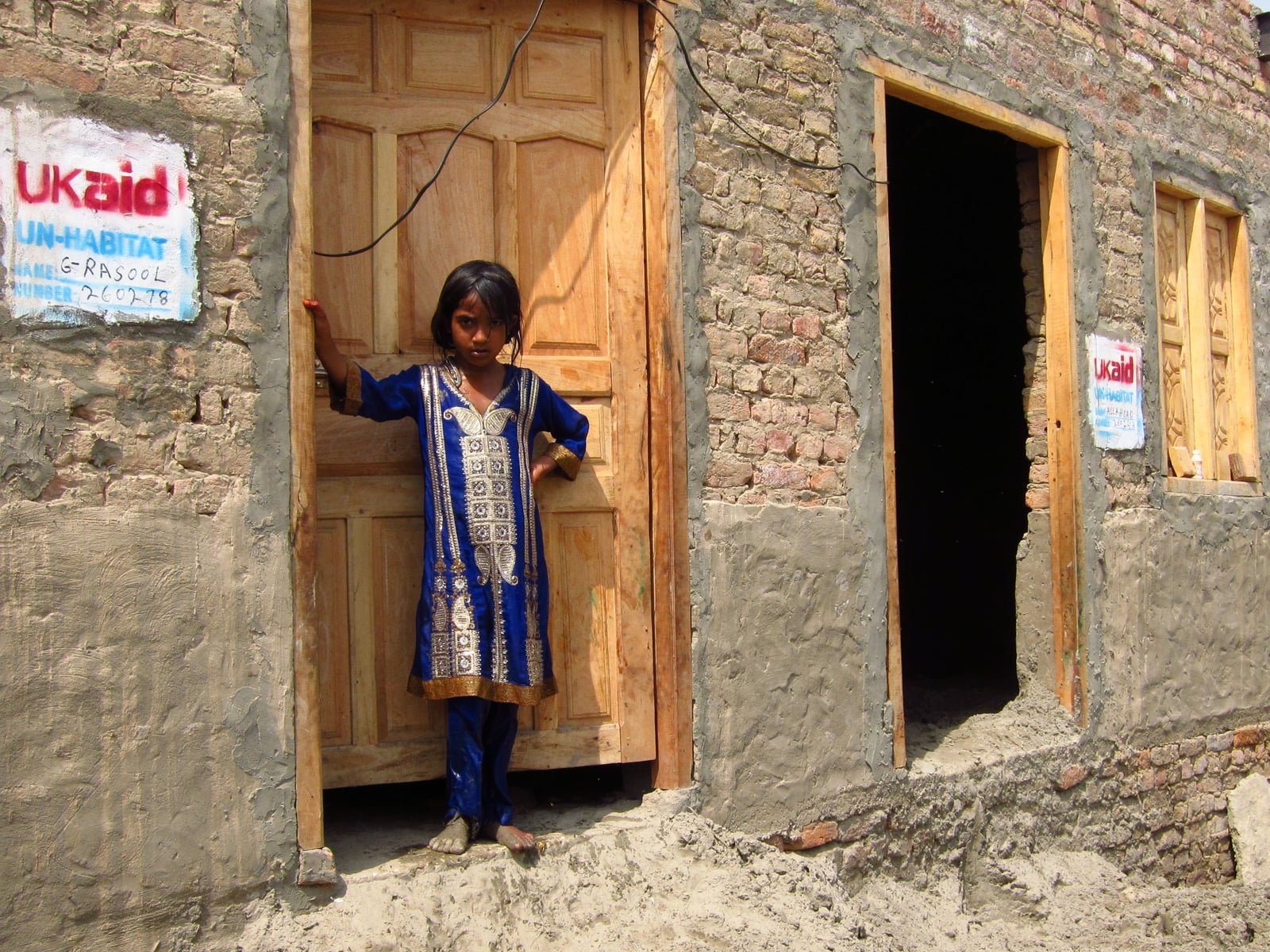
Either way the pipeline is large: against Rs112 billion disbursed, the approved book is between four and a half and five times the money actually lent. The ceremony’s beneficiary accounts, from Karachi, Rawalpindi, Quetta, Rahim Yar Khan, Azad Jammu and Kashmir and Khyber Pakhtunkhwa, described loans that let families finish or buy a house after years of renting.
The shortage the scheme is answering
The programme was built against a housing shortfall estimated at nine to 10 million units, with about half the country’s urban population living in informal settlements, The Express Tribune and Pakistan Today said, citing a January seminar by the Pakistan Institute of Development Economics that identified weak housing finance, regulatory gaps and climate vulnerability as the main barriers.
The terms announced at the launch in April 2026 describe the programme as it now stands: a five-year, Rs3.2 trillion plan for 500,000 homes, 50,000 homes and Rs321 billion earmarked for the first year, a 20-year repayment term with a 5 per cent markup for the first ten years before the market rate applies, and loans of up to Rs10 million for plots of up to 10 marlas, The Express Tribune reported. No change to those terms was announced at the 23 November ceremony. KhabarWire covered the launch and the loan conditions that came with it.
Two comparisons follow from the ceremony, and both are arithmetic rather than official verdicts. Rs1 trillion in six months is more than the Rs700 billion the government set as its financing target for the whole of financial year 2026-27, so the new instruction is not simply an instalment on the yearly plan. And at the roughly Rs5.4 million a home implied by Rs100 billion for 18,500 homes — an average of the programme’s lending, not a published per-unit figure — Rs1 trillion would cover about 185,000 homes in six months, more than the 125,000 units the fiscal-year target assumes. No published statement reconciles the new target with either allocation.
What the next six months will show
Radio Pakistan said another ceremony would be held in six months to mark the Rs1 trillion figure. The measures that decide whether it is reached are already named: bank-level disbursement data, the notification issuing the blue passports, the tripartite meeting with builders, and whether the fiscal-year financing target and the eligibility rules survive the new pace. For the families now waiting on a title deed and a signature, the arithmetic of the pipeline matters more than the pledge.
KhabarWire’s Apna Ghar housing file tracks the disbursement milestones, the loan terms and the regulatory changes behind the programme.