What the investigation found
A New York Times investigation published on 23 April 2026, and reported by Dawn the following day, found that the United States has burned through a substantial share of its most advanced munitions stockpile in the war on Iran, leaving inventories in several categories that the newspaper described as “worryingly low.” Citing internal Defence Department estimates and congressional officials, the NYT report put the total munitions bill at between $28bn and $35bn, or “just under $1bn a day” since the war began on 28 February 2026. Defence officials told the NYT that the first two days of war alone had consumed $5.6bn worth of munitions.
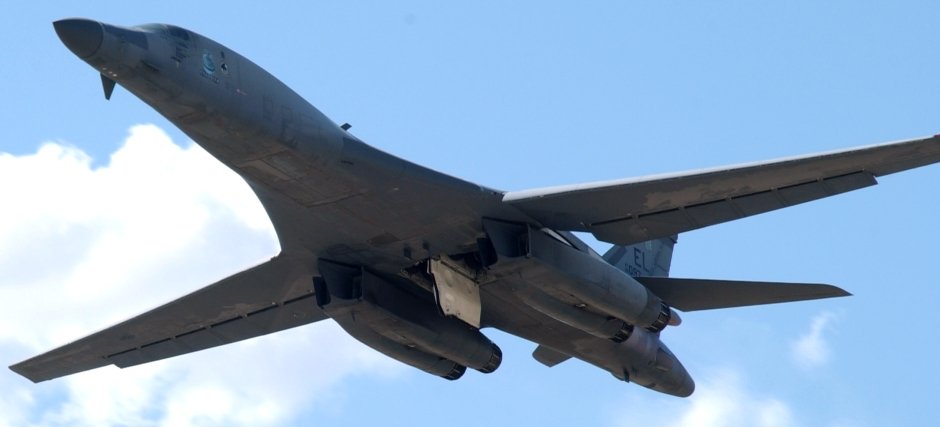
The categories most exposed are the same ones Pakistan’s military planners have long assumed underpin US force posture in the Gulf: more than 1,200 Patriot interceptor missiles — each worth more than $4m — were expended in less than eight weeks, the NYT reported, citing internal estimates. Roughly 1,100 of the US Air Force’s long-range stealth cruise missiles built for a potential war with China were also used, leaving what the newspaper described as close to the total number remaining in the stockpile. Over 1,000 Tomahawk cruise missiles — about ten times the US military’s annual production — and more than 1,000 Precision Strike and ATACMS ground-based missiles were fired in the same period. Around 1,100 JASSM-ER missiles, each valued at roughly $1.1m, were also used, leaving approximately 1,500 in the active inventory.
Why the categories matter
The pattern is the one strategists had warned about in the years before the war. The JASSM-ER and long-range cruise missile inventories were sized for a single high-end fight against a near-peer adversary, not a multi-week campaign against a regional Iranian target set that often requires multiple munitions per aimpoint. The 13,000 targets cited by the Pentagon mask “the vast number of bombs and missiles it used because warplanes, attack planes and artillery typically strike large targets multiple times,” the NYT reported. Independent estimates cited by the NYT, including an American Enterprise Institute study by Elaine McCusker — a senior Pentagon official during the first Trump administration — put the cost between $25bn and $35bn.
Mark F. Cancian, a retired Marine Corps colonel and senior adviser at the Centre for Strategic and International Studies, told the NYT that “the US has many munitions with adequate inventories, but some critical ground-attack and missile-defence munitions were short before the war and are even shorter now.” The Defence Department was, the NYT added, “still waiting for Congress to approve additional funding before it can pay manufacturers to replenish the military’s drained supplies,” and Pentagon officials told the newspaper that the department was “still scrambling to find the funding it needs” despite announced agreements with major defence contractors.
The White House denial
White House press secretary Karoline Leavitt rejected the findings in a statement to the NYT. “The United States of America has the most powerful military in the world, fully loaded with more than enough weapons and munitions, in stockpiles here at home and all around the globe, to effectively defend the homeland and achieve any military operation directed by the commander in chief,” she said. The NYT reported the White House characterised the story’s “entire premise” as false, but did not contest the specific munition category numbers.
What it means for Pakistan’s mediation
For Islamabad, the timing matters. Pakistan is hosting a second round of US-Iran talks in the days after the investigation was published, with Field Marshal Asim Munir acting as the primary backchannel and Prime Minister Shehbaz Sharif pressing publicly for a ceasefire. A US negotiating position that relies on the implicit threat of resumed bombing is, on the NYT’s account, more constrained than it was at the war’s outset. The NYT reported that “the existing situation had left the US military ‘less ready’ to confront threats from Russia and China” — language that, in a Pakistan context, points to the same force posture Islamabad has been tracking through the year. The depletion is not so severe that it changes the diplomatic horizon in the next week, but it is large enough that congressional approval for replenishment — and the politics of that fight in a midterm year — is now part of the backdrop to any settlement that emerges from the Islamabad talks.
What is still uncertain
Two things remain open at the editorial cutoff. First, the Pentagon has not publicly confirmed the specific munition-category figures the NYT attributed to internal estimates, and the Leavitt statement leaves the precise inventory position officially contested. Second, no replenishment funding has been signed into law, and the timing of any congressional action is unclear. The NYT report does not name the officials who provided the internal estimates; the congressional officials it relies on are likewise unnamed. Whether the depletion reshapes the next round of US-Iran talks in Islamabad depends on whether the diplomatic track can hold long enough for the munitions question to recede from the negotiating math.
Sources & reporting notes
This is a synthesis of published material, not eyewitness reporting. Sources were reviewed on 2026-04-24.
- Primary source — The New York Times: "Iran War Has Drained U.S. Supplies of Critical, Costly Weapons"23 April 2026 · Original investigation, reporting from Washington, based on internal Pentagon estimates and congressional officials; documents the 1,200 Patriot interceptors, 1,100 long-range cruise missiles, 1,000 Tomahawks, 1,000 ATACMS, 1,100 JASSM-ER figures and the $28-35bn total cost estimate; carries the Mark F. Cancian (CSIS) quote on inventory strain and the Leavitt denial.
- Independent source — Dawn: "US has exhausted billions of dollars worth of weapons stockpile in war on Iran: NYT report"24 April 2026 · News Desk republication that summarises the NYT investigation, embeds the Pentagon's 13,000-target figure and the McCusker/AEI cost range, and contextualises the war's drain against the USS Abraham Lincoln and USS George H.W. Bush carrier deployments that framed the opening weeks.