Reporting snapshot · 12 October 2026 (Asia/Karachi). Attacks on shipping in and around the Strait of Hormuz resumed over the weekend after a relative lull, with Iran's Revolutionary Guard and the United States giving competing accounts of which vessels were hit. Vessel identities, weapon types and casualty figures were still unclear at the time of writing, so this is a dated account rather than a live tracker.
What happened in the strait
Iran’s Islamic Revolutionary Guard Corps (IRGC) Navy said over the weekend that an unnamed crude-oil supertanker struck a naval mine and suffered a major fire while using an unauthorised route through the Strait of Hormuz with its navigation system switched off, as Al Jazeera reported from Tehran. In a statement, the IRGC warned that any oil tanker that “wishes to ignore the security and rules” of the waterway could meet the same fate.
The Express Tribune, citing Anadolu Agency, said the IRGC described the vessel as a supertanker capable of carrying about 2 million barrels of oil, reported an explosion in its engine room, and called it the third ship to strike naval mines along the prohibited route since Saturday. The IRGC also said vessels that switched off their navigation systems would be classified as “hostile vessels.”
Those were not the only incidents. The United Kingdom Maritime Trade Operations (UKMTO) agency said an outbound tanker in the strait was hit on its port side by an unidentified projectile on Sunday afternoon, causing a fire on board; the crew was reported safe and the damage and environmental impact were unknown, Al Jazeera reported. It also said the United Arab Emirates’ coastguard had rescued 22 crew members after a fire broke out on an unnamed tanker close to its shores, without identifying a cause.
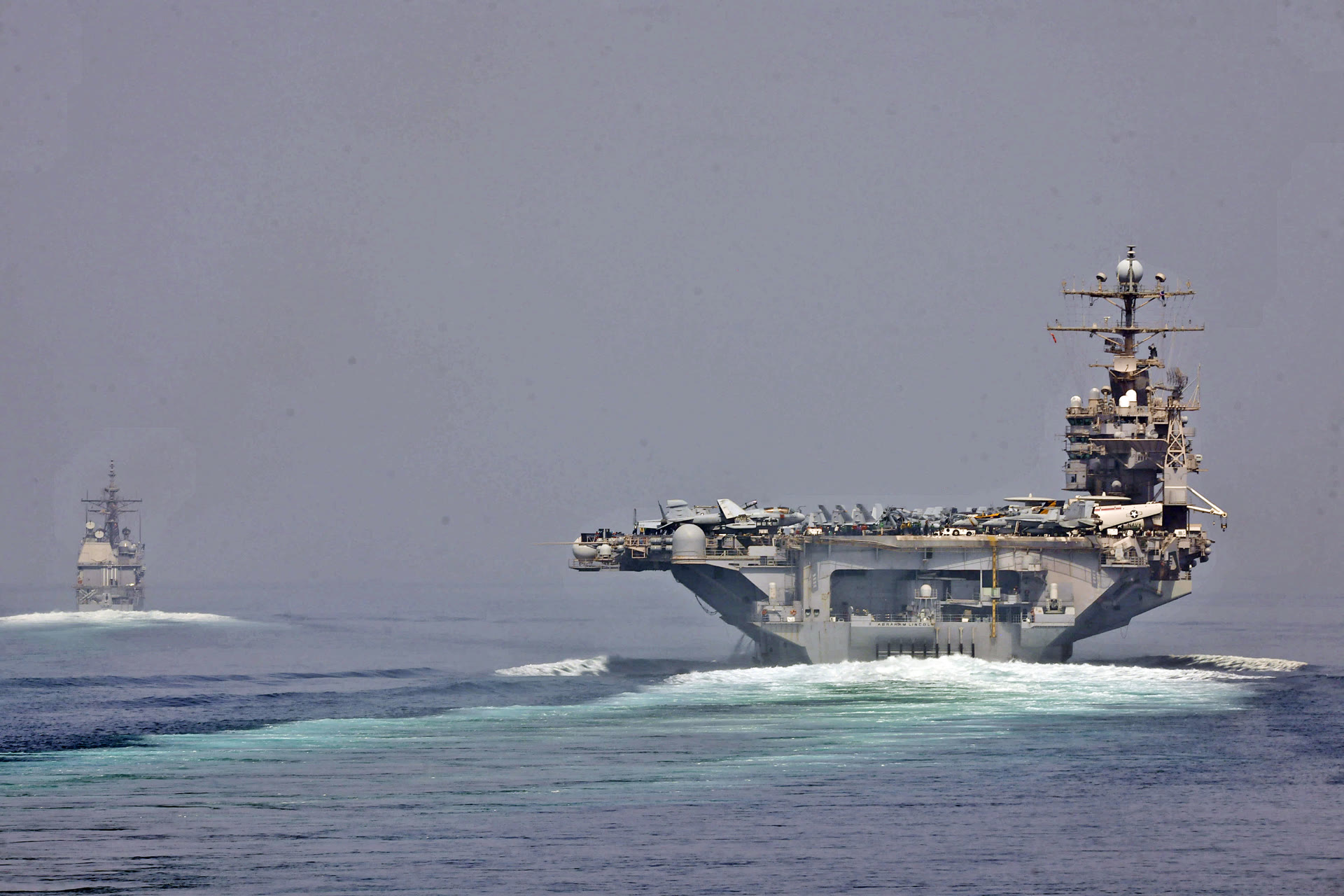
Separately, the United States said its forces had disabled a cargo ship in the Gulf of Oman. US Central Command (CENTCOM) said a fighter jet struck the stern of the Panama-flagged M/V Ocean Molica, also known as the Arika Sun, on Saturday, “fully disabling the ship’s propulsion without harming the crew” after it “ignored repeated warnings and attempted to run the ongoing naval blockade against Iran.” CENTCOM said that since the blockade was reimposed on 14 July it had disabled four commercial vessels, turned around 135 ships and destroyed 10 tankers linked to the IRGC’s shadow network.
For its part, the IRGC said it had struck a liquefied petroleum gas carrier it identified as NV Sunshine, owned by NatWit, for taking what it called the illegal route south of the strait, and claimed Iranian forces had “taken control of the administration of the Strait of Hormuz.”
Why the attacks matter
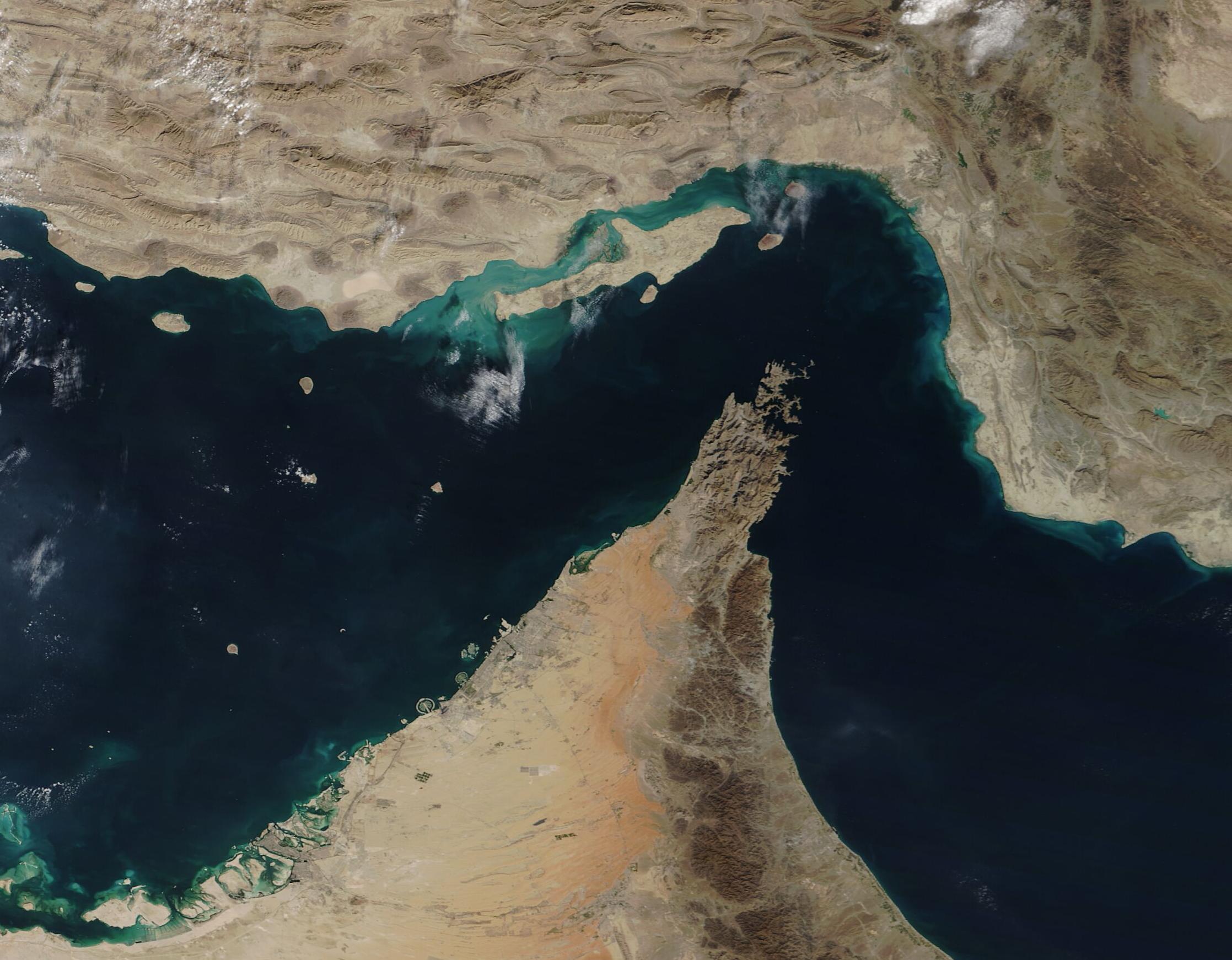
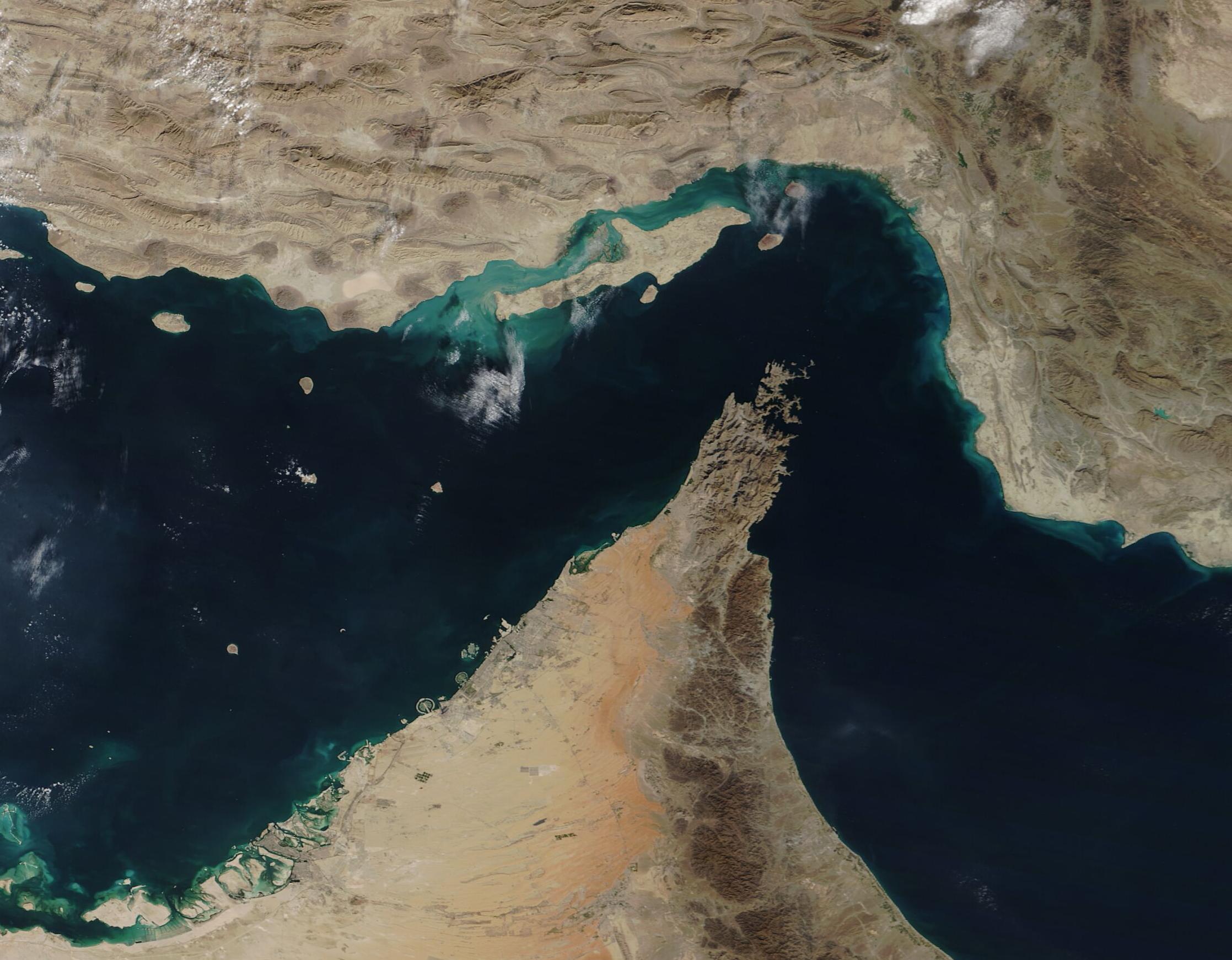
The Strait of Hormuz is the only maritime exit from the oil-rich Gulf and, before the war that began in late February, carried roughly a fifth of the world’s crude oil and liquefied natural gas. The renewed strikes have again pushed shipping volumes down. Data from the ship-tracking firm Kpler, cited by CNBC and reported by Al Jazeera, put average crude passing through the strait in the week to 7 October at about 8.5 million barrels a day — roughly 40 per cent below the normal level. At least a dozen ships were attacked in the week ending 5 October, the highest weekly total since the war began.
That is a reversal of the picture earlier this month. As this outlet reported on 5 October, Middle East crude exports had briefly climbed back above pre-war levels even as tanker attacks continued. The latest week shows how fragile that recovery was: flows fall sharply whenever the attacks intensify, and war-risk insurance and freight premiums for the remaining traffic stay elevated.
Pakistan is directly exposed. It imports the bulk of its crude oil and a significant share of its liquefied natural gas through the strait, making the waterway central to its fuel-import bill and power-generation fuel, as earlier coverage of Islamabad’s contingency planning set out. Prolonged disruption raises landed fuel costs and feeds through to the government’s daily pricing formula and its fuel-relief programme. Pakistan is also one of the mediators between Washington and Tehran, so any escalation narrows the diplomatic space in which Islamabad has been operating.
The reopening talks remain stalled
The renewed attacks come as the diplomatic track shows little movement. Iran’s security chief, Mohsen Rezaei, the secretary of the Supreme National Security Council, said the United States’ response to Iran’s seven conditions for reopening the strait was “insufficient,” the Express Tribune, citing Anadolu, reported. Rezaei said Iran had presented a proposal at the United Nations General Assembly under which the waterway could be reopened and normal maritime passage restored within seven days if the conditions were met, and that Washington had replied through Qatari intermediaries. “In their response, they have accepted some of our conditions, while others remain unclear,” he said, adding that Iran was “no longer in the process of responding to the Americans.” The White House did not immediately respond to a Reuters request for comment.
Tehran’s conditions are tied to the collapsed memorandum of understanding agreed in June and to a separate Iran–Oman arrangement that would designate temporary, coordinated entry and exit routes for vessels, as this outlet set out on 4 October. Al Jazeera reported that messages are still being exchanged through mediators but that no breakthrough is expected before the US midterm elections on 3 November and Israel’s election on 27 October. Iran’s foreign minister, Abbas Araghchi, also said on Sunday that US-Israeli strikes on Iran’s oil facilities and refineries had raised serious environmental risks.
What is still uncertain
The two sides’ accounts of the weekend do not fully align. Iran says mines and “illegal” routes are the problem; the United States says its forces cleared Iranian mines from the shipping lanes in August and is now policing its own blockade of Iranian ports. UKMTO has not identified the weapon used in the projectile strike, and the cause of the fire on the tanker near the UAE coast has not been established. The IRGC did not name the supertanker or give its flag or nationality, and no operator has confirmed the NV Sunshine account. Whether the weekend marks a sustained new phase of attacks or a short burst is not yet clear, nor is the effect on crude and gas volumes in the coming week. None of these questions can be settled from a single weekend of statements.
Sources & reporting notes
This is a synthesis of published material, not eyewitness reporting. Sources were reviewed on 12 October 2026 (Asia/Karachi). The IRGC and CENTCOM statements are reported second-hand through the outlets below; the two accounts of which vessels were struck on 10–11 October conflict and are attributed separately.
- Al Jazeera — Hormuz attacks intensify as efforts to end war on Iran stallPublished 11 October 2026 · The IRGC claim that a supertanker hit a mine, UKMTO's account of the projectile strike and the UAE rescue, the Kpler crude-flow figure of 8.5 million barrels a day, the "highest weekly total" of ship attacks, and Iran's stated conditions.
- Al Jazeera — US forces disable ship attempting to run Iran blockade in Gulf of OmanPublished 11 October 2026 · CENTCOM's statement on the M/V Ocean Molica (Arika Sun), its blockade statistics since 14 July, UKMTO's acknowledgement, and the IRGC's NV Sunshine claim.
- Express Tribune / Anadolu Agency — Iran's Revolutionary Guard Navy says oil tanker struck mine in Strait of HormuzPublished 12 October 2026 · That the vessel was the third to hit a mine since Saturday, its reported 2-million-barrel capacity, the "hostile vessels" warning, and the background of the strait's closure and the June memorandum.
- Express Tribune / Anadolu Agency — Iran: US response to proposal to reopen Hormuz 'insufficient'Published 12 October 2026 · Mohsen Rezaei's remarks on the US reply, the seven conditions, Qatar's role as intermediary and the White House's lack of immediate comment.

.jpg)